
Introduction
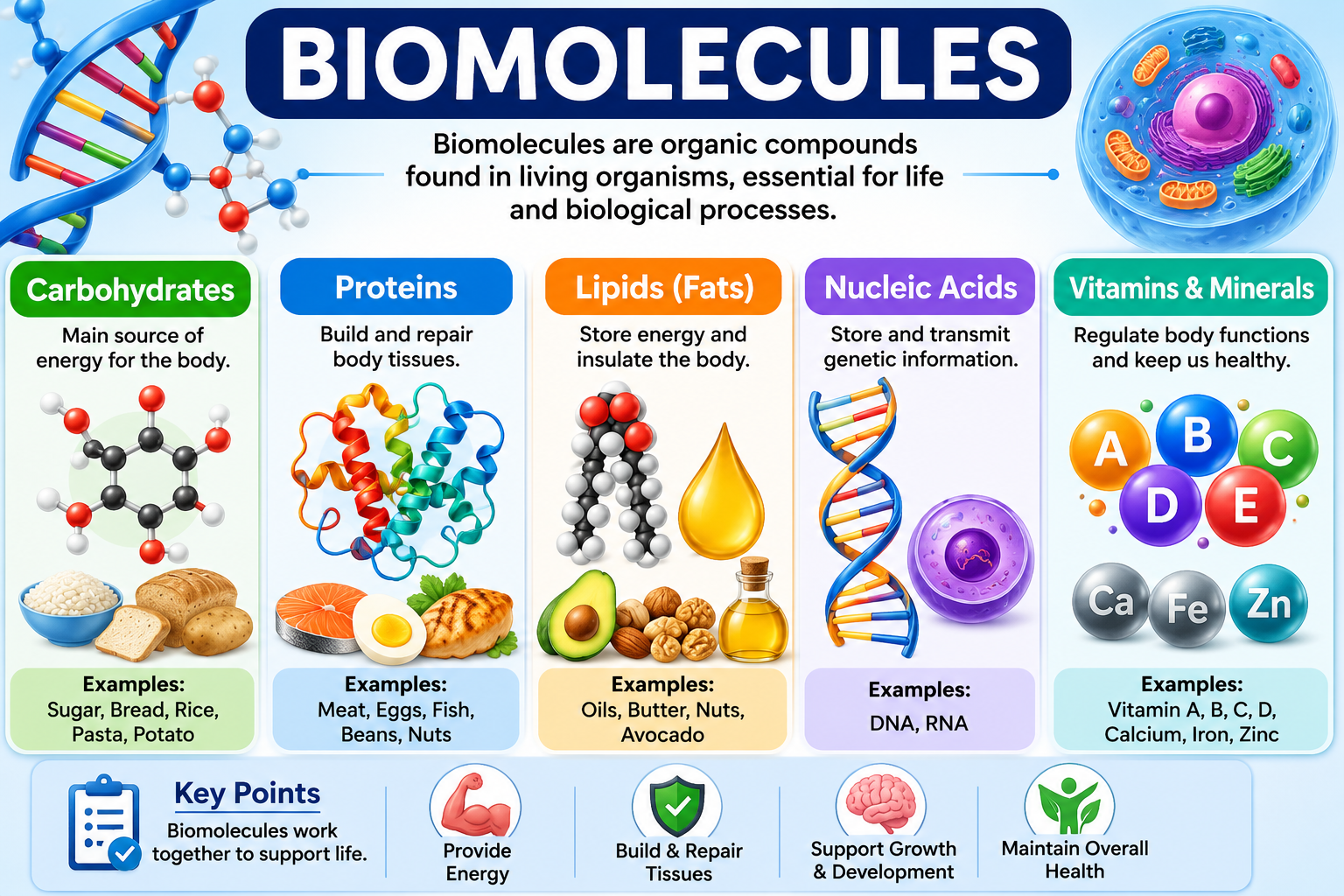
Every living thing on Earth — from a single bacterium to a blue whale — is built from the same fundamental chemical toolkit. Whether you’re thinking about the muscles in your legs, the DNA in your cells, the fat stored in adipose tissue, or the sugar your brain runs on, all of it comes down to four major categories of molecules that biology calls biomolecules.
This Biomolecules Study Guide is designed to give you a thorough, well-organized understanding of what biomolecules are, how they’re structured, what they do in living systems, and why they matter both biologically and for your exams. These molecules show up in virtually every area of biology — from cell biology and genetics to nutrition, physiology, and biochemistry — so getting a firm grip on them early pays dividends throughout your entire biology education.
Here’s the honest truth about biomolecules: students who struggle with them usually do so because they try to memorize the details before understanding the logic. Once you see that the structure of each biomolecule type directly explains its function, the whole topic becomes far more coherent. Cellulose is rigid because plants need structural support. Phospholipids have a water-loving head and water-fearing tail because that arrangement naturally forms a membrane that separates a cell from its environment. DNA is a double helix because that geometry protects the genetic information while still allowing it to be copied.
Throughout this guide, we’ll work through all four major classes of organic biomolecules — carbohydrates, proteins, lipids, and nucleic acids — plus the essential roles of water, vitamins, and minerals. You’ll find clear diagrams, comparison tables, real-world examples, and a complete set of practice questions with answers.
Let’s build your understanding from the ground up.
Key Takeaways
Before You Dive In — Key Takeaways
- Biomolecules are carbon-based molecules found in living organisms; they are essential for life.
- The four major classes of organic biomolecules are carbohydrates, proteins, lipids, and nucleic acids.
- Carbohydrates are the primary energy source; their basic unit is a monosaccharide (simple sugar).
- Proteins are built from amino acids and perform structural, enzymatic, transport, and immune functions.
- Lipids include fats, oils, phospholipids, and steroids; they serve in energy storage, membrane structure, and signaling.
- Nucleic acids (DNA and RNA) store and transmit genetic information; their basic unit is the nucleotide.
- Water is an inorganic biomolecule critical to virtually all biological processes.
- Large biomolecules (polymers) are built from smaller repeating units (monomers) through dehydration synthesis and broken apart by hydrolysis.
What Are Biomolecules?
Biomolecules are chemical compounds that are produced by and found in living organisms. The word “bio” simply means life, so biomolecules are, quite literally, the molecules of life. They include everything from the simple water molecule to the enormous, intricately folded proteins and the extraordinarily long DNA strands packed inside every cell nucleus.
The vast majority of biomolecules are organic compounds — meaning they contain carbon atoms bonded to hydrogen, oxygen, nitrogen, sulfur, or phosphorus. Carbon’s unique ability to form four stable covalent bonds simultaneously makes it an extraordinarily versatile building block, capable of forming long chains, branching structures, and rings of almost unlimited variety.
Large biomolecules are typically polymers — long chains built by linking smaller repeating units called monomers together. This assembly process uses a reaction called dehydration synthesis (also called condensation), in which a water molecule is released each time two monomers join. The reverse process — breaking polymers apart — is called hydrolysis, in which water molecules are used to break the bonds between monomers.
Understanding this monomer-polymer relationship is central to understanding all four major biomolecule classes:
- Monosaccharides are the monomers of polysaccharide carbohydrates
- Amino acids are the monomers of proteins
- Nucleotides are the monomers of nucleic acids
- Glycerol and fatty acids are the components of fat (lipids are somewhat different — they don’t form true polymers in the same way, but the monomer-component concept still applies)
Why Are Biomolecules Important?
The reason biology teachers spend so much time on biomolecules is that they underlie absolutely everything in biology. You cannot understand cell structure without understanding phospholipids and proteins. You cannot understand genetics without DNA and RNA. You cannot understand metabolism without carbohydrates and enzymes (which are proteins). You cannot understand hormones, nutrition, or disease without lipids, vitamins, and minerals.
From a clinical and health perspective, biomolecule imbalances cause disease. Too much cholesterol (a lipid) contributes to cardiovascular disease. Insufficient dietary protein causes malnutrition. Mutations in DNA cause cancer and genetic disorders. Abnormal protein folding leads to conditions like Alzheimer’s disease and prion diseases. Blood glucose regulation (carbohydrate metabolism) is the central issue in diabetes.
Important Fact: About 70% of the human body by weight is water. Of the remaining dry weight, approximately 50–55% is protein, 10–20% is lipid, 15% is carbohydrate, and around 2% is nucleic acids — with minerals and other compounds making up the remainder. The composition varies considerably between different tissues and organs.
Characteristics of Biomolecules
Several features are shared across the major classes of biomolecules:
- Carbon-based structure: Nearly all biomolecules contain carbon as their structural backbone.
- Built from monomers: Large biomolecules are polymers assembled from smaller repeating monomer units.
- Assembled and disassembled using water: Dehydration synthesis builds polymers; hydrolysis breaks them down.
- Specific shape determines specific function: The three-dimensional structure of a biomolecule is directly linked to what it does. Change the shape, and you change (or destroy) the function.
- Contain multiple functional groups: Hydroxyl, carboxyl, amino, phosphate, and other chemical groups give biomolecules their reactivity and properties.
- Interact specifically with other molecules: Most biomolecular interactions — enzyme-substrate, antibody-antigen, hormone-receptor — depend on precise molecular recognition.
Classification of Biomolecules
Organic Biomolecules
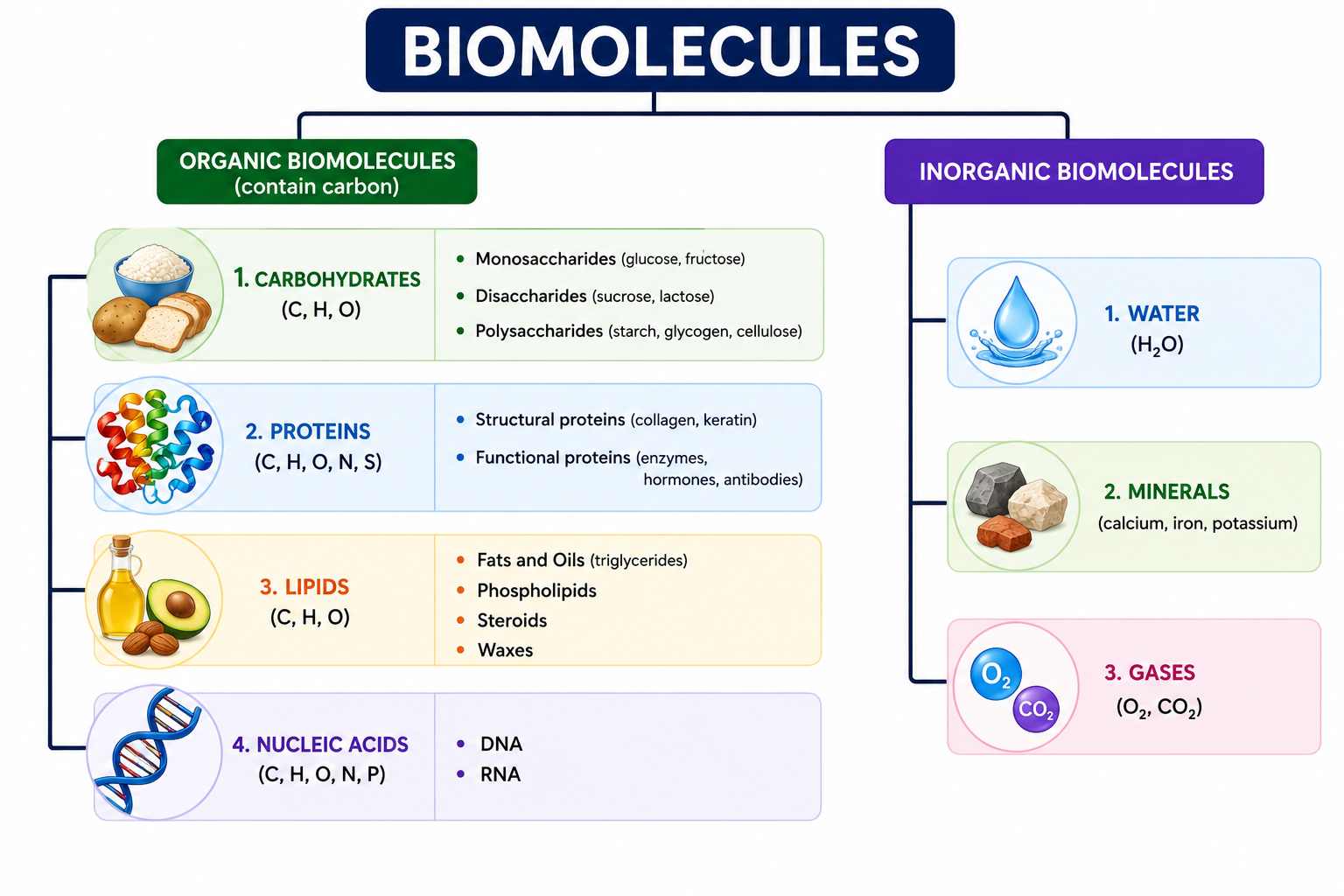
Organic biomolecules are the four major classes described above. They are built around carbon skeletons and are synthesized by living cells. Their complexity ranges from simple monosaccharides with six atoms to proteins with tens of thousands of atoms folded into precise structures.
Inorganic Biomolecules
Inorganic biomolecules do not contain carbon (or contain it only in simple forms like CO2) and are not synthesized by cells — they come from the environment. Water is the most critically important inorganic biomolecule. Minerals such as calcium, phosphorus, iron, and potassium serve essential structural and regulatory roles. Dissolved gases like oxygen and carbon dioxide are also involved in fundamental biological processes.
Carbohydrates
Definition
Carbohydrates are organic molecules composed of carbon, hydrogen, and oxygen, typically in a ratio of approximately 1:2:1 (CH2O). The name literally means “hydrated carbon,” reflecting this ratio. They serve as the primary energy source for most living organisms and also play important structural and communication roles.
Structure
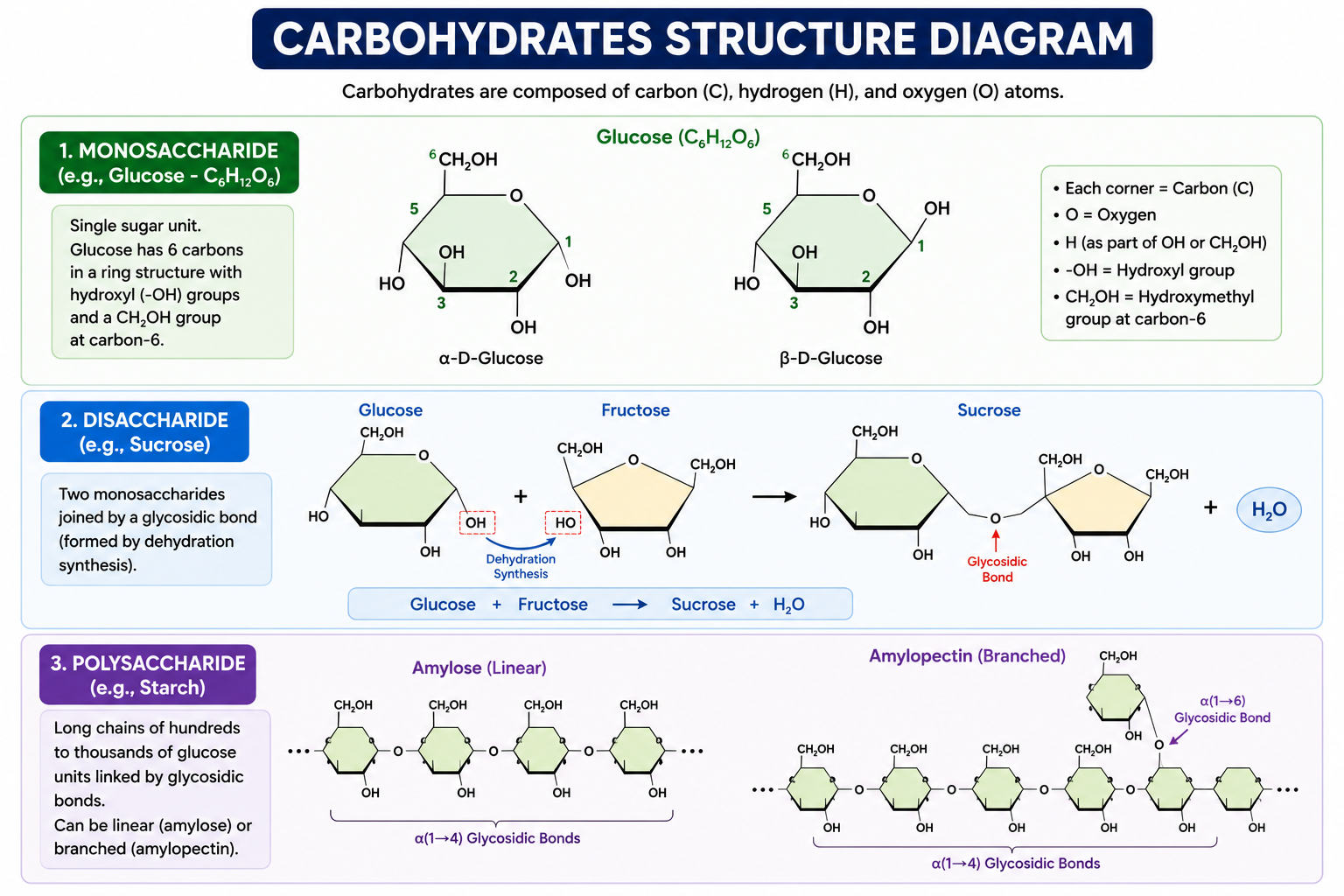
The basic building block of carbohydrates is the monosaccharide. Two monosaccharides join via a glycosidic bond (formed by dehydration synthesis) to create a disaccharide. Many monosaccharides joined together form a polysaccharide. The properties of a polysaccharide — whether it’s digestible, rigid, or soluble — depend critically on which monosaccharides are used and how the glycosidic bonds connect them.
Types of Carbohydrates
Monosaccharides
Monosaccharides are the simplest carbohydrates — single sugar units that cannot be broken down further by hydrolysis. They are the monomers from which all larger carbohydrates are built. They are generally sweet, water-soluble, and rapidly absorbed in digestion.
Common examples:
- Glucose (C6H12O6) — the primary fuel for cellular respiration; the sugar that circulates in your blood
- Fructose (C6H12O6) — fruit sugar; same molecular formula as glucose but different structure (an isomer)
- Galactose (C6H12O6) — found in dairy products; a component of lactose
- Ribose (C5H10O5) — five-carbon sugar; the backbone of RNA
- Deoxyribose (C5H10O4) — slightly modified ribose; the backbone of DNA (lacks one oxygen atom compared to ribose)
Disaccharides
Disaccharides form when two monosaccharides join through a glycosidic bond, releasing one water molecule. They need to be broken down into monosaccharides before they can be absorbed and used.
| Disaccharide | Component Monosaccharides | Where Found |
|---|---|---|
| Sucrose | Glucose + Fructose | Table sugar, plants |
| Lactose | Glucose + Galactose | Milk and dairy products |
| Maltose | Glucose + Glucose | Germinating seeds, malt products |
Polysaccharides
Polysaccharides are long chains of monosaccharides linked together. They are generally not sweet and are often insoluble. Their function depends on their structure:
- Starch — the energy storage polysaccharide in plants; made of glucose units; two forms: amylose (linear) and amylopectin (branched). Humans have amylase enzymes to digest it.
- Glycogen — the energy storage polysaccharide in animals; stored primarily in liver and muscle cells; similar to amylopectin but more heavily branched, allowing faster glucose release when needed.
- Cellulose — the structural polysaccharide of plant cell walls; also made of glucose, but the glycosidic bonds between units (beta-1,4 linkages) create a configuration that most animals cannot digest. This is why cellulose is dietary fiber.
- Chitin — a structural polysaccharide found in insect exoskeletons and fungal cell walls; contains nitrogen in addition to carbon, hydrogen, and oxygen.
Functions of Carbohydrates
- Primary source of energy (glucose yields approximately 4 kcal/gram)
- Structural support (cellulose in plant cell walls, chitin in fungal walls and insect exoskeletons)
- Energy storage (starch in plants, glycogen in animals)
- Cell recognition and communication (carbohydrate chains on cell surface glycoproteins act as identity markers)
- Nucleic acid backbone (ribose in RNA, deoxyribose in DNA)
- Spare the breakdown of proteins and fats for energy when carbohydrates are adequate
Food Sources
Carbohydrates are found most abundantly in plant-based foods: grains (bread, rice, pasta), fruits, vegetables, and legumes. Dairy products provide lactose. Processed foods often contain added sugars (sucrose and fructose).
Proteins
Definition
Proteins are large, complex organic molecules composed of carbon, hydrogen, oxygen, nitrogen, and usually sulfur. They are the most diverse and functionally varied of all biomolecules — acting as enzymes, structural components, transport molecules, hormones, antibodies, and much more. A single human cell contains thousands of different proteins.
Amino Acids
The monomers of proteins are amino acids. All amino acids share a common core structure:
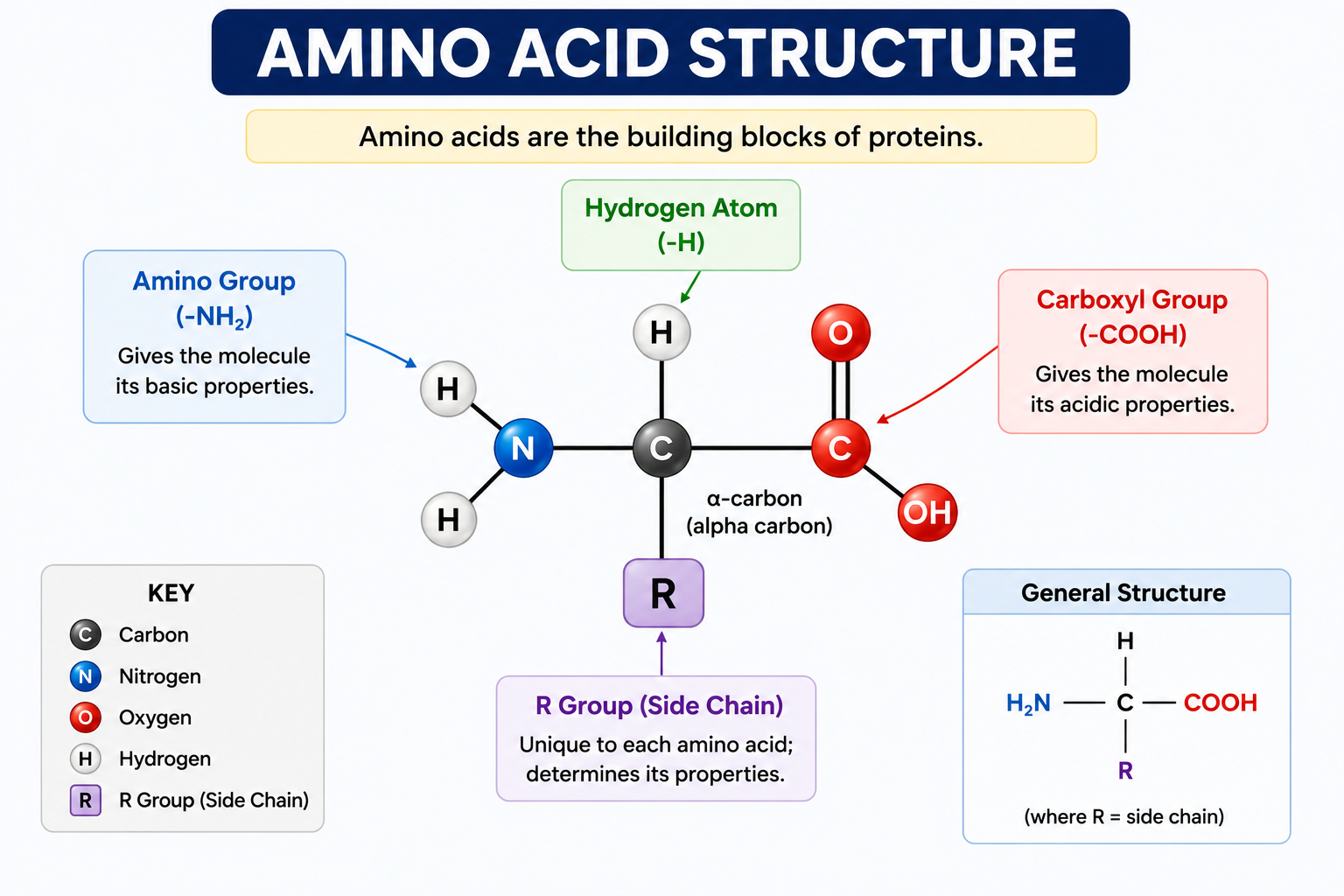
The R group (also called the side chain) is what distinguishes one amino acid from another. There are 20 standard amino acids in living organisms, each with a different R group that gives it unique size, charge, polarity, and chemical reactivity.
Of these 20, 9 are essential amino acids in humans — meaning the body cannot synthesize them and they must be obtained from the diet (histidine, isoleucine, leucine, lysine, methionine, phenylalanine, threonine, tryptophan, and valine). The remaining 11 are non-essential — not because they’re unimportant, but because the body can make them from other molecules.
Amino acids are joined by peptide bonds (formed between the carboxyl group of one amino acid and the amino group of the next, releasing water). A chain of amino acids is called a polypeptide. A functional protein may consist of one or more polypeptide chains folded into a precise three-dimensional shape.
Protein Structure
Protein structure is described at four levels of organization:
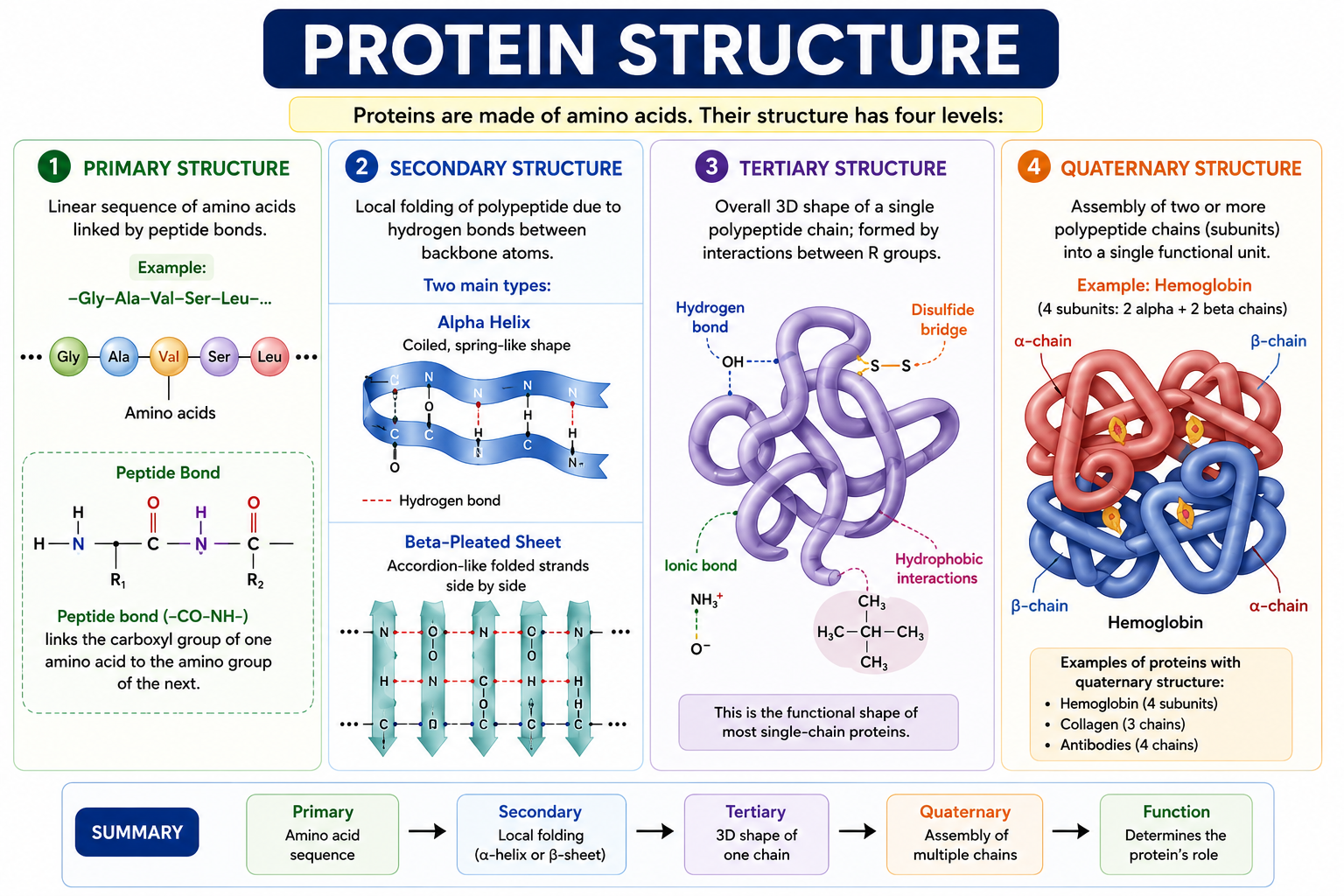
Each level builds on the one before. The primary structure (amino acid sequence) determines everything that follows — secondary, tertiary, and quaternary structure all arise from that initial sequence through the chemical interactions between amino acids. This is why even a single amino acid change can sometimes destroy a protein’s function, as seen in sickle cell anemia (one amino acid substitution in hemoglobin drastically alters red blood cell shape).
Types of Proteins
| Type | Function | Examples |
|---|---|---|
| Structural | Physical support and framework | Collagen (connective tissue), keratin (hair, nails) |
| Enzymatic | Catalyze biological reactions | Amylase, DNA polymerase, catalase |
| Transport | Carry molecules through blood or across membranes | Hemoglobin (O2), albumin, membrane transporters |
| Hormonal | Chemical signaling between cells | Insulin, glucagon, growth hormone |
| Immune/Defensive | Recognize and neutralize pathogens | Antibodies (immunoglobulins) |
| Receptor | Detect signals and trigger cellular responses | Cell surface receptors, G-protein-coupled receptors |
| Motor/Contractile | Generate movement | Actin and myosin (muscle contraction) |
| Storage | Store amino acids or minerals | Casein (milk protein), ferritin (iron storage) |
Functions of Proteins
- Catalysis — enzymes are proteins that drive virtually all biochemical reactions
- Structure — collagen is the most abundant protein in the body, forming the framework of skin, bone, tendon, and ligament
- Transport — hemoglobin carries oxygen; lipoproteins carry lipids through blood
- Defense — antibodies protect against pathogens; clotting proteins prevent blood loss
- Movement — muscle contraction depends on actin and myosin proteins
- Regulation — protein hormones (insulin, growth hormone) control metabolism and development
- Cell signaling — receptor proteins on cell membranes detect hormones, neurotransmitters, and growth factors
- Energy — at approximately 4 kcal/gram, proteins can be used for energy if carbohydrates and fats are insufficient
Food Sources
High-quality (complete) protein sources contain all 9 essential amino acids: meat, poultry, fish, eggs, and dairy. Plant-based sources like legumes, soy, nuts, and grains generally lack one or more essential amino acids (incomplete proteins), but combining different plant sources provides all essential amino acids.
Lipids
Definition
Lipids are a diverse group of hydrophobic (water-fearing) or amphipathic organic molecules composed primarily of carbon, hydrogen, and oxygen. Unlike carbohydrates and proteins, lipids are not polymers built from repeating monomer units in the same way — they are defined more by their property of being insoluble in water and soluble in nonpolar solvents like ether and chloroform.
Their hydrophobic nature arises from their predominantly nonpolar carbon-hydrogen bonds.
Structure
The simplest lipids are fatty acids — long hydrocarbon chains (typically 12–20 carbons) with a carboxyl group (-COOH) at one end. Fatty acids come in two broad types:
- Saturated fatty acids — no double bonds between carbons in the chain; all carbons are “saturated” with hydrogen atoms. They are generally solid at room temperature (butter, lard). Example: palmitic acid, stearic acid.
- Unsaturated fatty acids — one or more double bonds in the carbon chain, creating kinks that prevent tight packing. They are generally liquid at room temperature (vegetable oils). Monounsaturated: one double bond (olive oil). Polyunsaturated: multiple double bonds (fish oil, flaxseed oil).
Types of Lipids
Fats
Fats are triglycerides — one glycerol molecule esterified with three fatty acid chains. When the fatty acids are predominantly saturated, the result is a solid fat at room temperature (like butter or coconut oil). Fats function primarily as long-term energy storage in adipose tissue. They also insulate organs, cushion them against physical shock, and provide fat-soluble vitamin transport.
Oils
Oils are also triglycerides, but they are formed predominantly from unsaturated fatty acids. The double bonds create structural kinks that prevent the molecules from packing tightly, keeping them liquid at room temperature. Plant oils (olive, sunflower, corn) and fish oils are good examples. Nutritionally, unsaturated fats are generally associated with better cardiovascular health outcomes than saturated fats.
Phospholipids
Phospholipids are arguably the most structurally critical lipids in biology. They have a glycerol backbone with two fatty acid tails (hydrophobic) and a phosphate-containing head group (hydrophilic). This amphipathic nature — having both a water-loving region and a water-fearing region — causes phospholipids to spontaneously arrange into a bilayer in water, with hydrophobic tails facing inward and hydrophilic heads facing the aqueous environment on both sides.
This phospholipid bilayer is the fundamental structure of all biological membranes — including the plasma membrane of every cell. Embedded proteins in this bilayer carry out transport, signaling, and other membrane functions.
Steroids
Steroids are lipids with a fundamentally different structure — four fused carbon rings rather than fatty acid chains. Different functional groups attached to this ring system create very different steroids with very different functions:
- Cholesterol — a structural component of animal cell membranes; regulates membrane fluidity; precursor to all other steroids in the body
- Sex hormones — testosterone, estrogen, and progesterone regulate reproductive development and function
- Cortisol — a glucocorticoid produced by the adrenal cortex; regulates metabolism and the stress response
- Aldosterone — regulates kidney function and fluid balance
- Vitamin D — technically a steroid hormone; regulates calcium absorption and bone formation
Functions of Lipids
- Long-term energy storage — fats contain approximately 9 kcal/gram, more than twice the energy density of carbohydrates or proteins
- Cell membrane structure — phospholipids form the bilayer of all biological membranes
- Insulation — subcutaneous fat insulates the body against temperature loss
- Organ protection — visceral fat cushions organs against mechanical shock
- Hormone synthesis — steroid hormones regulate reproduction, metabolism, and stress responses
- Absorption of fat-soluble vitamins (A, D, E, K)
- Waterproofing — waxes in plant cuticles and animal skin prevent water loss
- Myelin sheath — lipid-rich myelin insulates nerve fibers, enabling rapid signal transmission
Food Sources
Animal fats: butter, lard, meat, dairy, egg yolks. Plant oils: olive, sunflower, canola, soybean. Nuts and seeds. Fatty fish. Avocado.
Nucleic Acids
Nucleic acids are the information-storage and information-transfer molecules of life. They carry the instructions for building every protein, coordinate gene expression, and transmit hereditary information from one generation to the next.
DNA
Deoxyribonucleic acid (DNA) is the molecule that stores the genetic blueprint of an organism. It is a double-stranded helix — two polynucleotide chains wound around each other, held together by hydrogen bonds between complementary base pairs.
DNA is organized into chromosomes within the cell nucleus. Humans have 23 pairs of chromosomes (46 total), containing approximately 3 billion base pairs in total — the human genome.
RNA
Ribonucleic acid (RNA) differs from DNA in three key ways: it uses ribose instead of deoxyribose, it contains uracil (U) instead of thymine (T), and it is typically single-stranded rather than double-stranded.
There are three major types of RNA, each with a distinct role in the process of gene expression:
- Messenger RNA (mRNA) — carries the genetic message from DNA in the nucleus to the ribosome in the cytoplasm; acts as the template for protein synthesis
- Transfer RNA (tRNA) — carries specific amino acids to the ribosome during translation; reads the mRNA code via anticodons
- Ribosomal RNA (rRNA) — forms the structural and catalytic core of the ribosome; rRNA is the ribozyme that catalyzes peptide bond formation during protein synthesis
Nucleotides
The monomer of nucleic acids is the nucleotide. Each nucleotide consists of three components:
- A five-carbon sugar (deoxyribose in DNA; ribose in RNA)
- A phosphate group
- A nitrogenous base (adenine, guanine, cytosine, thymine — in DNA; or adenine, guanine, cytosine, uracil — in RNA)
Nucleotides are joined by phosphodiester bonds between the sugar of one nucleotide and the phosphate of the next, forming the sugar-phosphate backbone of the nucleic acid strand.
Beyond their role in nucleic acids, nucleotides have other critical functions. ATP (adenosine triphosphate) is a modified nucleotide that serves as the universal energy currency of cells. NAD+ and FAD — nucleotide-containing coenzymes — carry electrons in cellular respiration.
Functions of Nucleic Acids
- Storage of genetic information (DNA)
- Transmission of genetic information to offspring (DNA replication)
- Transfer of genetic information from nucleus to ribosome (mRNA)
- Protein synthesis — translation of mRNA into protein sequence (mRNA, tRNA, rRNA)
- Energy transfer — ATP carries energy between reactions
- Enzyme cofactors — NAD+ and FAD carry electrons in metabolism
- Regulation of gene expression (various RNA types, including microRNA)
Biomolecules Comparison Table
| Feature | Carbohydrates | Proteins | Lipids | Nucleic Acids |
|---|---|---|---|---|
| Basic Unit (Monomer) | Monosaccharide | Amino acid | Glycerol + fatty acids (not true polymer) | Nucleotide |
| Main Elements | C, H, O | C, H, O, N, S | C, H, O | C, H, O, N, P |
| Bond Joining Units | Glycosidic bond | Peptide bond | Ester bond | Phosphodiester bond |
| Primary Function | Energy source; structural | Enzymatic, structural, transport, immune | Energy storage; membrane structure; signaling | Genetic information; protein synthesis |
| Energy Content | 4 kcal/gram | 4 kcal/gram | 9 kcal/gram | Not primarily used for energy |
| Key Examples | Glucose, starch, cellulose | Hemoglobin, insulin, collagen | Triglycerides, phospholipids, cholesterol | DNA, RNA, ATP |
| Water Solubility | Generally soluble (especially small sugars) | Generally soluble (some exceptions) | Insoluble (hydrophobic) | Generally soluble |
| Food Sources | Grains, fruits, vegetables | Meat, eggs, legumes | Butter, oils, nuts, avocado | Found in all food (nucleic acids in cells) |
| Storage Form (in animals) | Glycogen (liver, muscle) | Proteins rarely stored; broken down if needed | Triglycerides (adipose tissue) | Not stored per se; replicated as needed |
Biomolecules in Human Health
The relationship between biomolecules and human health is direct and profound. Every disease, every nutritional recommendation, and every drug target connects back to biomolecule biology.
Carbohydrates and health:
In type 1 diabetes, the pancreas cannot produce sufficient insulin (a protein hormone) to regulate blood glucose. In type 2 diabetes, cells become resistant to insulin’s signal. Either way, blood glucose levels — the carbohydrate that powers the brain and body — become dysregulated with serious consequences. Dietary fiber (cellulose and similar polysaccharides) reduces the risk of bowel cancer, lowers cholesterol, and promotes healthy gut bacterial communities.
Proteins and health:
Protein deficiency causes kwashiorkor — a form of severe malnutrition characterized by edema, growth failure, and compromised immune function. Abnormal protein folding underlies prion diseases (like Creutzfeldt-Jakob disease) and contributes to Alzheimer’s disease (amyloid plaques and tau tangles are misfolded proteins). Many genetic diseases (like phenylketonuria, sickle cell anemia) result from mutations causing abnormal protein production.
Lipids and health:
Dietary lipid quality profoundly affects cardiovascular health. High levels of LDL (low-density lipoprotein — a lipid-protein complex carrying cholesterol) in the blood are associated with atherosclerosis. Trans fats (artificially produced unsaturated fats with unusual geometry) are particularly harmful. Omega-3 polyunsaturated fatty acids (in fatty fish and flaxseed) have anti-inflammatory and cardiovascular-protective effects.
Nucleic acids and health:
DNA mutations — whether from radiation, chemical carcinogens, or replication errors — underlie cancer. Viral diseases involve foreign nucleic acids hijacking a cell’s protein synthesis machinery. Gene therapy approaches target DNA to correct inherited disorders.
Biomolecules in Plants
Plants use biomolecules in ways that differ interestingly from animals:
- Cellulose (polysaccharide) forms the rigid cell wall, giving plants their structural support. Animals lack a cell wall entirely.
- Starch is the energy storage carbohydrate in plants (equivalent to glycogen in animals) and is concentrated in seeds, tubers, and roots.
- Chlorophyll — a complex organic molecule — is the pigment inside chloroplasts that captures light energy for photosynthesis.
- Plant proteins include RuBisCO, the enzyme responsible for carbon fixation in photosynthesis; it may be the most abundant protein on Earth.
- Cuticle waxes (complex lipids) coat leaf surfaces to prevent water loss.
- Secondary metabolites — including alkaloids, terpenes, and phenolics — are organic molecules with diverse biological activities. Many are defensive, deterring herbivores or pathogens. Many also have pharmaceutical value (morphine from poppies, quinine from cinchona bark, taxol from yew trees).
Biomolecules in Metabolism
Metabolism refers to the complete set of chemical reactions occurring in a living organism. Biomolecules are both the fuel and the machinery of metabolism.
Carbohydrate metabolism:
Glucose is the central molecule of energy metabolism. Glycolysis breaks it down in the cytoplasm into pyruvate, yielding 2 ATP. Pyruvate enters the mitochondria and proceeds through the Krebs cycle and oxidative phosphorylation, ultimately generating approximately 36–38 ATP per glucose molecule. Excess glucose is converted to glycogen (short-term storage) or fat (long-term storage).
Lipid metabolism:
When carbohydrates are insufficient, stored triglycerides in adipose tissue are broken down (lipolysis) into glycerol and fatty acids. Fatty acids undergo beta-oxidation in the mitochondria to generate large amounts of ATP — which is why fat is such an efficient fuel. Fatty acids yield roughly twice as much ATP per gram as carbohydrates, explaining why fat is the preferred long-term energy storage form.
Protein metabolism:
Amino acids from dietary protein or cellular protein breakdown can enter metabolic pathways after their amino groups are removed (a process called deamination). The carbon skeletons that remain can be converted to glucose, fatty acids, or fed directly into the Krebs cycle for energy. The amino groups are converted to urea and excreted in urine.
Nucleic acid metabolism:
Purines (adenine and guanine) are broken down to uric acid in humans. When uric acid levels in the blood become too high, it can crystallize in joints, causing gout — a painfully instructive example of nucleotide metabolism going wrong.
Importance of Water in Biological Systems
Water may not be as glamorous as DNA or as complex as proteins, but it is arguably the most important biomolecule of all. Life as we know it would be impossible without it, and its properties directly enable the function of every other biomolecule.
Key properties of water that matter in biology:
- Polarity and hydrogen bonding: Water molecules are polar — they have a slightly positive end (hydrogen atoms) and a slightly negative end (oxygen atom). This polarity allows water molecules to form hydrogen bonds with each other and with other polar molecules, giving water unusually high cohesion, high surface tension, and high heat capacity.
- Universal solvent: Because of its polarity, water dissolves most ionic compounds and polar molecules — including salts, sugars, amino acids, and most other biomolecules. This makes it the ideal medium for biological reactions.
- High specific heat: Water resists temperature changes, which stabilizes body temperature against fluctuations.
- High heat of vaporization: Evaporation of water (sweating) is an effective cooling mechanism.
- Density of ice: Ice floats on liquid water because it is less dense in its solid form. This means lakes freeze from the top down, allowing aquatic life to survive beneath the ice in winter.
- Reactant in hydrolysis: Water is consumed in hydrolysis reactions that break down all major biomolecules during digestion.
- Metabolic byproduct: Water is produced during cellular respiration and dehydration synthesis reactions.
Vitamins and Minerals as Essential Biomolecules
While not always classified alongside the “big four” biomolecule groups, vitamins and minerals are absolutely essential for life and deserve attention in any complete biomolecules discussion.
Vitamins are organic molecules required in small amounts that the body cannot synthesize in sufficient quantities. They function primarily as coenzymes (partnering with enzymes to enable metabolic reactions) or as antioxidants.
- Fat-soluble vitamins (A, D, E, K) — stored in fatty tissues and the liver; toxic in excess. Vitamin D functions as a steroid hormone regulating calcium absorption. Vitamin K is essential for blood clotting.
- Water-soluble vitamins (B vitamins, Vitamin C) — not stored significantly; excess is excreted in urine. B vitamins generally function as coenzymes in energy metabolism (NAD+ from B3, FAD from B2, CoA from B5). Vitamin C is required for collagen synthesis.
Minerals are inorganic elements required for structure and regulation:
- Calcium — bone and tooth structure; muscle contraction; blood clotting; nerve signaling
- Phosphorus — component of DNA, RNA, ATP, and phospholipids; bone structure
- Iron — component of hemoglobin (oxygen transport) and many enzymes
- Potassium and Sodium — maintain membrane potential; essential for nerve impulse transmission
- Iodine — required for thyroid hormone synthesis
Biomolecules in Everyday Life
Biomolecules are not just found in textbooks — they’re in everything you eat, wear, use, and do:
- The cotton in your clothing is almost pure cellulose — a polysaccharide.
- The bread you toast in the morning contains starch (polysaccharide), gluten (protein), and vegetable oils or butter (lipids).
- Soap works because its molecules have a similar amphipathic structure to phospholipids — a hydrophilic head and hydrophobic tail — allowing it to surround and emulsify grease.
- Leather is denatured and processed collagen (protein) from animal hides.
- Yogurt and cheese production depends on bacterial enzymes (proteins) that ferment lactose (a disaccharide).
- Genetic testing, forensic DNA analysis, and COVID-19 PCR tests all depend on DNA (nucleic acid) biochemistry.
- Vaccines work in part by introducing proteins (antigens) that train the immune system to produce antibodies (also proteins).
- Cooking changes biomolecule structure — heat denatures proteins (egg white solidifying), gelatinizes starch (thickening a sauce), and melts fats (butter liquefying). This is applied biochemistry in your kitchen.
Common Biomolecule Terms Every Student Should Know
| Term | Definition |
|---|---|
| Monomer | The small repeating unit from which polymers are built |
| Polymer | A large molecule made of many linked monomers |
| Dehydration Synthesis | Reaction that joins monomers by removing a water molecule |
| Hydrolysis | Reaction that breaks polymer bonds by adding water |
| Monosaccharide | The simplest unit of a carbohydrate; a single sugar |
| Polysaccharide | A carbohydrate polymer made of many monosaccharide units |
| Glycosidic Bond | Covalent bond linking monosaccharides in carbohydrates |
| Amino Acid | Monomer of proteins; 20 standard types in living organisms |
| Peptide Bond | Covalent bond linking amino acids in a polypeptide |
| Denaturation | Loss of protein (or nucleic acid) three-dimensional structure due to environmental changes |
| Fatty Acid | Long hydrocarbon chain with carboxyl group; component of many lipids |
| Triglyceride | Glycerol + three fatty acids; main form of fat storage |
| Phospholipid | Amphipathic lipid that forms the bilayer of biological membranes |
| Nucleotide | Monomer of nucleic acids: phosphate + sugar + nitrogenous base |
| Phosphodiester Bond | Covalent bond linking nucleotides in a nucleic acid strand |
| Complementary Base Pairing | Specific pairing of nitrogenous bases: A-T (DNA), A-U (RNA), G-C |
| Essential Amino Acid | Amino acid that cannot be synthesized by the body and must come from diet |
| Saturated Fatty Acid | Fatty acid with no double bonds; solid at room temperature |
| Unsaturated Fatty Acid | Fatty acid with one or more double bonds; liquid at room temperature |
| Amphipathic | Having both hydrophilic and hydrophobic regions (like phospholipids) |
Common Mistakes Students Make
Being aware of common errors can save you marks in exams:
- Confusing starch and glycogen. Both are glucose polysaccharides, but starch is the plant storage form and glycogen is the animal storage form. Glycogen is more highly branched, which allows faster glucose release.
- Saying lipids “don’t have monomers.” Technically, lipids don’t form polymers in the same way as the other three groups, but they are assembled from components (glycerol and fatty acids). Avoid saying “lipids have no subunits” — say instead that they don’t form true polymers through glycosidic or peptide bonds.
- Thinking all fats are bad. Saturated and trans fats are linked to cardiovascular disease, but unsaturated fats (especially omega-3s) are actively beneficial. Phospholipids and cholesterol are essential — without cholesterol, your cell membranes wouldn’t function correctly.
- Mixing up DNA and RNA. DNA is double-stranded, uses deoxyribose, and contains thymine. RNA is single-stranded, uses ribose, and contains uracil instead of thymine. Forgetting any one of these three differences is a very common exam error.
- Confusing primary and tertiary protein structure. Primary structure is simply the sequence of amino acids (the string of beads). Tertiary structure is the overall three-dimensional shape of a single polypeptide, arising from interactions between R groups. Students often mix up what level of structure determines protein function (it’s primarily tertiary and quaternary).
- Assuming proteins are only used for structure or as enzymes. Proteins are transport molecules (hemoglobin), hormones (insulin), immune defense molecules (antibodies), motor proteins (myosin), signaling receptors, and much more.
- Forgetting that ATP is a modified nucleotide. Students often treat ATP as its own separate category. It’s built from adenine, ribose, and three phosphate groups — making it a nucleotide (and an RNA component when used without the extra phosphates).
Best Tips to Study Biomolecules
Exam Tips Box
- Study the four biomolecule classes in pairs: carbohydrates and nucleic acids are both built from ringed sugars (the backbone) joined by specific bonds; proteins and nucleic acids are both information-containing polymers. Seeing these connections builds a more integrated understanding.
- For each biomolecule, always memorize: the monomer, the bond that links monomers, the main function, and one real-world example. These four facts form a template you can apply to any exam question.
- Use the “structure explains function” rule whenever you’re unsure about a concept. Ask: why does cellulose have beta-1,4 bonds? Because this creates straight, inflexible chains ideal for the structural rigidity of plant cell walls. Why do phospholipids form bilayers? Because their amphipathic nature forces hydrophobic tails inward and hydrophilic heads outward in water.
- Practice drawing the four-level protein structure diagram from memory. Understanding these levels — primary through quaternary — is tested in almost every major biology and biochemistry exam.
- The Biomolecules Comparison Table in this guide is worth memorizing completely. Many exam questions compare properties across the four groups, and having that table in your head allows you to answer those questions confidently.
- Connect biomolecules to diseases you’ve heard of: diabetes (carbohydrate/insulin), sickle cell anemia (protein mutation), Alzheimer’s (protein misfolding), atherosclerosis (lipid accumulation), cancer (DNA mutation). This makes the biochemistry feel relevant and sticks in memory longer.
Biomolecules Practice Questions
20 Multiple Choice Questions (MCQs) with Answers
1. Which of the following is the monomer of proteins?
- A) Glucose
- B) Fatty acid
- C) Nucleotide
- D) Amino acid ✓
2. What type of bond links monosaccharides in a polysaccharide?
- A) Glycosidic bond ✓
- B) Peptide bond
- C) Phosphodiester bond
- D) Ester bond
3. Which polysaccharide serves as energy storage in animals?
- A) Starch
- B) Cellulose
- C) Glycogen ✓
- D) Chitin
4. The four levels of protein structure are, in order:
- A) Quaternary, tertiary, secondary, primary
- B) Primary, secondary, tertiary, quaternary ✓
- C) Primary, tertiary, secondary, quaternary
- D) Secondary, primary, quaternary, tertiary
5. Which lipid forms the structural basis of all biological membranes?
- A) Triglyceride
- B) Cholesterol
- C) Phospholipid ✓
- D) Wax
6. What distinguishes DNA from RNA?
- A) DNA contains ribose; RNA contains deoxyribose
- B) DNA contains uracil; RNA contains thymine
- C) DNA is double-stranded; RNA is usually single-stranded ✓
- D) DNA contains cytosine; RNA does not
7. Dehydration synthesis results in:
- A) Breaking of bonds using water
- B) Formation of bonds with release of water ✓
- C) Transfer of electrons between molecules
- D) Formation of hydrogen bonds
8. Which of the following contains both nitrogen and phosphorus?
- A) Glucose
- B) Triglyceride
- C) Nucleotide ✓
- D) Fatty acid
9. Which vitamin is required for collagen synthesis?
- A) Vitamin A
- B) Vitamin D
- C) Vitamin C ✓
- D) Vitamin K
10. Cellulose differs from starch in that cellulose:
- A) Is made of fructose, not glucose
- B) Is found in animal cells
- C) Has beta-1,4 glycosidic bonds making it indigestible to humans ✓
- D) Is a short-chain molecule
11. Which base pairs with adenine in DNA?
- A) Cytosine
- B) Uracil
- C) Guanine
- D) Thymine ✓
12. Saturated fatty acids differ from unsaturated fatty acids in that they:
- A) Are liquid at room temperature
- B) Contain double bonds in the carbon chain
- C) Contain no double bonds; all carbons are fully bonded to hydrogen ✓
- D) Are found only in plants
13. Which type of RNA carries genetic information from the nucleus to the ribosome?
- A) tRNA
- B) rRNA
- C) mRNA ✓
- D) siRNA
14. The “R group” in an amino acid:
- A) Is identical in all amino acids
- B) Differs between amino acids and determines their unique properties ✓
- C) Forms the peptide bond
- D) Contains phosphorus
15. How many essential amino acids must humans obtain from the diet?
- A) 20
- B) 11
- C) 9 ✓
- D) 4
16. Which of the following is an example of a structural protein?
- A) Collagen ✓
- B) Hemoglobin
- C) Insulin
- D) Amylase
17. The energy content per gram is highest in:
- A) Carbohydrates
- B) Proteins
- C) Lipids ✓
- D) Nucleic acids
18. Sickle cell anemia is caused by:
- A) A polysaccharide deficiency
- B) A single amino acid substitution in hemoglobin ✓
- C) A deficiency of phospholipids in red blood cell membranes
- D) Abnormal glycogen storage
19. Which nucleotide serves as the universal energy currency of cells?
- A) GTP
- B) ATP ✓
- C) CTP
- D) TTP
20. Which of the following best describes the amphipathic nature of phospholipids?
- A) They are fully hydrophobic
- B) They are fully hydrophilic
- C) They have both a hydrophilic head and hydrophobic tails ✓
- D) They dissolve readily in water and nonpolar solvents equally
10 Short Answer Questions
- What is the difference between a monosaccharide, a disaccharide, and a polysaccharide? Give one example of each.
- Explain why cellulose cannot be digested by most animals even though it is made of the same glucose monomers as starch.
- Describe the four levels of protein structure and explain how the primary structure determines the higher levels.
- What is the difference between saturated and unsaturated fatty acids? How does this structural difference affect their physical properties at room temperature?
- Explain the amphipathic nature of phospholipids and describe how this property explains the formation of the cell membrane bilayer.
- What are the three differences between DNA and RNA? Include the sugar, the base that differs, and the strand structure.
- Define dehydration synthesis and hydrolysis. For each, state which process builds polymers and which breaks them down.
- Explain why water is considered the most important biomolecule, giving at least three specific properties that make it biologically essential.
- What is the difference between a cofactor and a coenzyme, and how do vitamins relate to coenzymes? Give one specific example.
- How does a single amino acid change in hemoglobin lead to sickle cell anemia? Use your knowledge of protein structure to explain.
5 Long Answer Questions
- Compare and contrast the four major classes of organic biomolecules (carbohydrates, proteins, lipids, and nucleic acids) with respect to their monomers, chemical elements, bond types, primary functions, and one disease or condition associated with their dysfunction.
- Describe the structure and function of nucleic acids in detail. Include the structure of a nucleotide, how nucleotides are linked, the structure of DNA as a double helix (including complementary base pairing), the differences between DNA and RNA, and the three types of RNA with their roles in protein synthesis.
- Proteins are described as the most functionally diverse biomolecules. Describe the four levels of protein structure and explain how each level is formed. Then, using at least five specific examples, explain the diverse functions proteins perform in the human body, and describe what happens when protein structure is disrupted (denaturation).
- Describe carbohydrate structure from the simplest monosaccharide to complex polysaccharides, explaining how structure determines function. In your answer, compare starch, glycogen, and cellulose — all made of glucose — and explain how their different glycosidic bonds create molecules with radically different properties and biological roles.
- Lipids are often described as the most chemically diverse biomolecule class. Describe the structure and function of triglycerides, phospholipids, and steroids. Explain how the amphipathic structure of phospholipids leads to membrane formation. Include a discussion of how dietary lipid quality affects human cardiovascular health, distinguishing between saturated fats, unsaturated fats, and trans fats.
Revision Checklist
Use this before your exam to ensure complete preparation:
- I can define biomolecules and explain what makes a molecule “biological”
- I understand the difference between monomers and polymers, and the roles of dehydration synthesis and hydrolysis
- I can name and describe the four major classes of organic biomolecules
- I can name the monomers of carbohydrates, proteins, and nucleic acids and the bonds that link them
- I can distinguish between monosaccharides, disaccharides, and polysaccharides with examples of each
- I understand why cellulose, starch, and glycogen have different properties despite all being glucose polymers
- I know the general structure of an amino acid and what the R group determines
- I can describe all four levels of protein structure and explain how each arises
- I can name at least five different functional types of proteins with examples
- I understand the difference between saturated and unsaturated fatty acids
- I can describe the structure of a triglyceride and a phospholipid
- I understand why phospholipids form bilayers and why this is fundamental to cell biology
- I know the three structural differences between DNA and RNA
- I can describe the three types of RNA and their roles in protein synthesis
- I understand the structure of a nucleotide and what ATP’s relationship to nucleotides is
- I understand complementary base pairing in DNA (A-T, G-C) and in RNA (A-U, G-C)
- I can explain at least three properties of water that make it biologically essential
- I can connect biomolecule dysfunction to at least four specific human diseases
- I have worked through all 20 MCQs and reviewed any answers I missed
- I can draw a basic diagram of each major biomolecule type from memory
Best Books for Learning Biomolecules
These resources are consistently recommended by biology and biochemistry educators at every level:
- “Lehninger Principles of Biochemistry” by Nelson and Cox — The most widely used undergraduate biochemistry textbook. Its chapters on carbohydrate, protein, lipid, and nucleic acid structure and metabolism are models of clarity and scientific depth.
- “Biology” by Campbell and Reece — The definitive high school and introductory college biology text; the biomolecules chapter is thorough, visually excellent, and very well written. Available in AP and university editions.
- “Biochemistry” by Stryer, Berg, and Tymoczko — Another leading university biochemistry text; particularly strong on the structural biology of proteins and nucleic acids. A good step up for students ready to go beyond introductory coverage.
- “The Molecules of Life” by Kuriyan, Konforti, and Wemmer — A more advanced text exploring protein and nucleic acid structure with particular attention to how molecular structure relates to biological function. Excellent for students who want a deeper structural understanding.
- “Molecular Biology of the Cell” by Alberts et al. — A comprehensive cell and molecular biology text; the biomolecule sections integrate structure with cell biology in a way that makes the relevance of each molecule immediately clear.
Free Online Biology Resources
These freely accessible, high-quality resources will reinforce everything covered in this guide:
- OpenStax Biology — Free, peer-reviewed university-level biology textbook with complete, well-organized chapters on all four biomolecule classes. Suitable for high school through early university.
- Khan Academy Biology — Free video lessons and practice problems on carbohydrates, proteins, lipids, and nucleic acids. Particularly good for visual learners who want to see the concepts explained with animations.
- Biology LibreTexts — Open-access repository of biology and biochemistry textbook content; detailed, accurate, and frequently updated. Great for going deeper on specific topics.
- National Center for Biotechnology Information (NCBI) — Access to peer-reviewed research; the NCBI Bookshelf contains full-text versions of standard biochemistry and molecular biology references. Particularly useful for advanced study.
- HHMI BioInteractive — Free, high-quality animations and interactive resources from the Howard Hughes Medical Institute. Their animations of DNA replication, protein synthesis, and membrane structure are among the best available anywhere.
Related Articles on LearnMinto
These connected guides will help you build a complete understanding of how biomolecules function within living systems:
- Biology Study Guide — A comprehensive overview of all core biology topics for exam preparation
- Cell Biology Study Guide — Understand how biomolecules organize into the structures of living cells
- Cell Structure and Function — See how proteins, lipids, and carbohydrates build specific cell organelles
- DNA and RNA Study Guide — Go deeper on nucleic acid structure, replication, transcription, and translation
- Enzymes Study Guide — Explore proteins in their catalytic role and how enzyme activity is regulated
Frequently Asked Questions
Q1: What are the four main types of biomolecules?
The four main classes of organic biomolecules are carbohydrates, proteins, lipids, and nucleic acids. Each class has distinct structural features, monomeric units, and biological functions. Together, they make up the vast majority of the organic material in living organisms.
Q2: What is the difference between a monomer and a polymer?
A monomer is a small molecule that serves as the repeating building block for larger structures. A polymer is a large molecule made by joining many monomers together through chemical bonds. For example, glucose is a monomer and starch is a polymer. The process of joining monomers is called dehydration synthesis; breaking polymers apart is hydrolysis.
Q3: Which biomolecule provides the most energy per gram?
Lipids provide the most energy per gram — approximately 9 kilocalories per gram. Carbohydrates and proteins each provide approximately 4 kilocalories per gram. This is why fat is the body’s preferred long-term energy storage molecule — it packs more than twice the energy into the same weight.
Q4: Why can humans not digest cellulose?
Humans lack the enzyme (cellulase) needed to break the beta-1,4 glycosidic bonds that link glucose units in cellulose. Most animals are in the same situation. Ruminants like cows can digest cellulose because they harbor cellulose-digesting bacteria in their digestive systems. In humans, cellulose passes through the digestive tract largely intact as dietary fiber.
Q5: What makes proteins so functionally diverse?
Proteins’ extraordinary functional diversity arises from the virtually unlimited variety of amino acid sequences and the three-dimensional structures that result from them. With 20 different amino acids that can be arranged in any order across chains of hundreds to thousands of amino acids, the number of possible protein structures is astronomically large. Each unique structure has a unique function.
Q6: What is the difference between DNA and RNA?
DNA and RNA differ in three key ways: DNA contains deoxyribose sugar; RNA contains ribose. DNA contains thymine; RNA contains uracil instead. DNA is typically double-stranded; RNA is typically single-stranded. Additionally, DNA stores genetic information permanently in the nucleus, while RNA carries and implements that information during protein synthesis.
Q7: Are lipids considered polymers?
Not in the same sense as carbohydrates, proteins, and nucleic acids. Lipids are not built from repeating monomeric units through consistent bond types. Triglycerides, for example, are assembled from glycerol and fatty acids through ester bonds, but they don’t form long chains of repeating units. Phospholipids and steroids have their own distinct structures. This is why lipids are often described as the most structurally diverse biomolecule class.
Q8: Why is cholesterol important despite its negative reputation?
Cholesterol is essential for life. It is a structural component of all animal cell membranes, where it regulates membrane fluidity — keeping membranes from becoming too rigid in cold conditions or too fluid in warm ones. It is also the precursor from which all steroid hormones (testosterone, estrogen, cortisol, aldosterone) and bile acids are synthesized. Health problems arise not from cholesterol itself, but from having too much LDL cholesterol in the blood, which contributes to atherosclerotic plaque formation.
Q9: What is the role of nucleotides beyond forming DNA and RNA?
Nucleotides have several critical roles beyond nucleic acid structure. ATP (adenosine triphosphate) is the universal energy currency of cells, powering virtually all energy-requiring biological processes. NAD+ and FAD are nucleotide-containing coenzymes that carry electrons in cellular respiration. Cyclic AMP (cAMP) is a nucleotide that functions as an intracellular signaling molecule in many hormone pathways.
Q10: What are essential amino acids and why are they “essential”?
Essential amino acids are the nine amino acids that the human body cannot synthesize in adequate quantities from other molecules — histidine, isoleucine, leucine, lysine, methionine, phenylalanine, threonine, tryptophan, and valine. They are called “essential” not because the other amino acids are unimportant, but because they must be obtained from the diet. Animal proteins generally provide all nine; most plant proteins are deficient in one or more, which is why dietary variety matters for people following plant-based diets.
Q11: How do vitamins relate to biomolecules?
Vitamins are organic molecules required in small amounts that serve essential biochemical functions. Many B vitamins are precursors to coenzymes — molecules that partner with enzymes (proteins) to carry out metabolic reactions. For example, niacin (vitamin B3) is a precursor to NAD+, which carries electrons in cellular respiration. Without adequate vitamins, key enzyme-catalyzed reactions cannot proceed normally, causing deficiency diseases.
Q12: What happens to biomolecules when food is cooked?
Cooking alters biomolecule structure in several ways. Heat denatures proteins — unfolding them from their precise three-dimensional structures. This is why egg white solidifies when cooked (the transparent, folded protein ovalbumin becomes opaque and rigid when denatured). Starch granules absorb water and swell (gelatinization), which is how sauces thicken. Fats melt as their triglycerides become more fluid. Vitamin C and many B vitamins are heat-sensitive and are partially destroyed by cooking.
Summary
Biomolecules are the molecular foundations of all living systems, and understanding them is understanding the language of life itself.
The four major organic biomolecule classes each have a distinct structural logic. Carbohydrates are built from monosaccharide monomers linked by glycosidic bonds; their primary roles are energy supply (glucose, starch, glycogen) and structural support (cellulose, chitin). Proteins are polypeptide chains of amino acids linked by peptide bonds, folded into precise three-dimensional shapes that determine their extraordinary functional diversity — from enzymes and structural fibers to hormones and immune defenders. Lipids are hydrophobic molecules whose diversity of structure supports energy storage (triglycerides), membrane architecture (phospholipids), and chemical signaling (steroids). Nucleic acids — DNA and RNA — are polynucleotide chains built from nucleotide monomers linked by phosphodiester bonds, and they carry, copy, and implement the genetic instructions for all proteins.
Large biomolecules are assembled by dehydration synthesis and broken down by hydrolysis. Structure determines function at every level. Water, vitamins, and minerals round out the complete picture of the molecules that sustain life.
Whether you’re studying for a high school biology exam, a university biochemistry course, or a medical entrance test, a solid understanding of biomolecules provides the conceptual framework for virtually everything else you’ll encounter in biological science.
Final Thoughts
The beauty of studying biomolecules is that once you understand the logic — monomer builds polymer, structure determines function, dehydration synthesis assembles and hydrolysis disassembles — the details start to fall naturally into place. You stop memorizing facts and start understanding a system.
This Biomolecules Study Guide has aimed to give you that logical foundation, along with the specific detail you need to perform confidently in exams. Work through the practice questions systematically, use the comparison table as a quick-reference revision tool, and revisit any section that feels unclear.
The molecules you’ve been reading about are working in your cells right now — and they have been every moment of your life. That’s worth knowing well.
Disclaimer
This article is intended for educational and informational purposes only. While LearnMinto strives to provide accurate and up-to-date information, readers should verify important academic concepts through official textbooks, educational institutions, examination boards, or trusted scientific resources before relying on this content for exams or academic purposes. LearnMinto is not affiliated with any specific school, university, research institution, or examination board.