
Introduction
There’s a moment in every botany class when a student looks out the window at a tree and says, “Wait—that thing is actually doing chemistry right now?” And yes, it absolutely is. Every leaf on that tree is running a biochemical process so elegant and efficient that scientists have spent decades trying to replicate it artificially and still haven’t quite managed it.
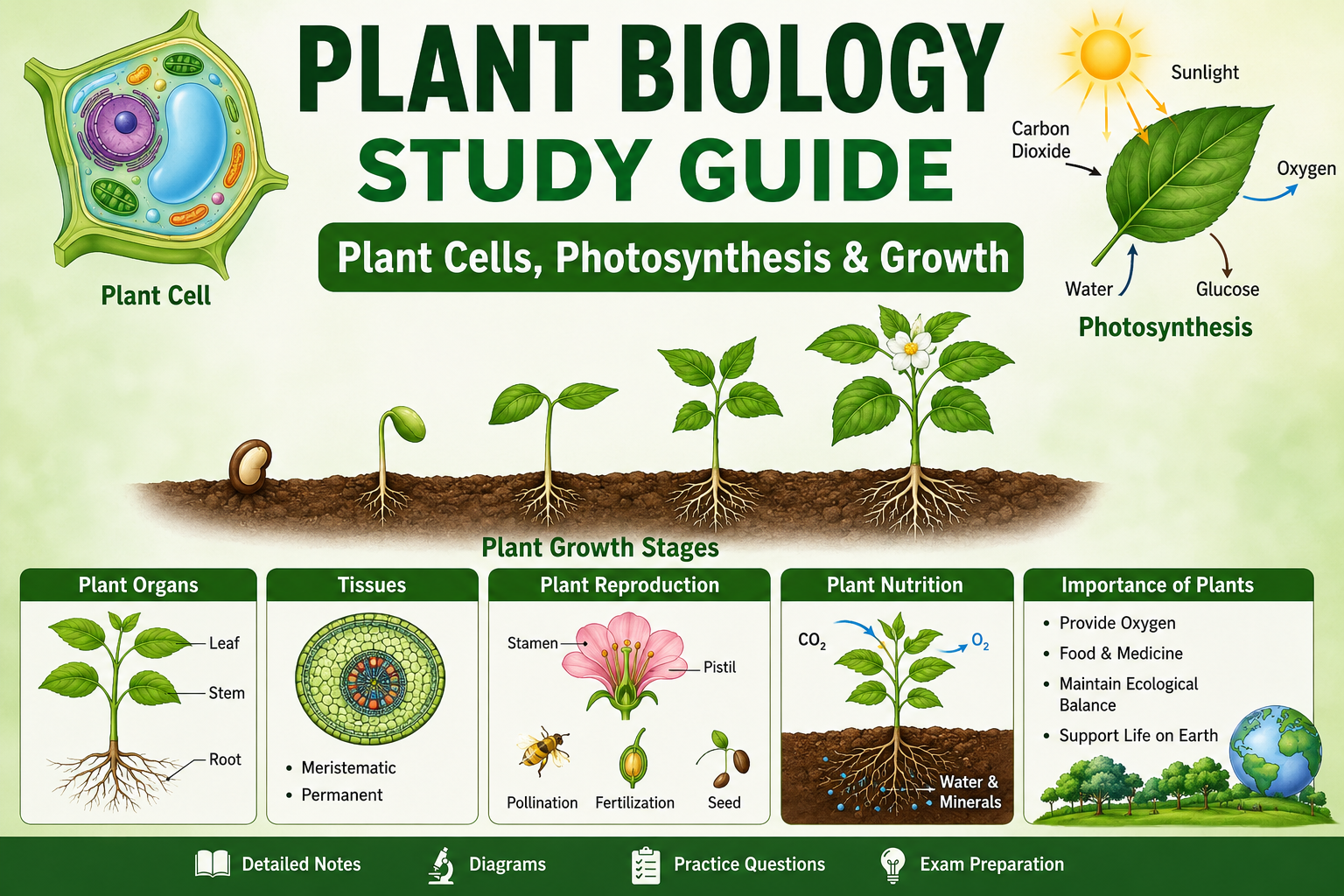
This plant biology study guide is designed to give you a complete, clear, and genuinely useful understanding of everything plants do—from the microscopic machinery inside a single cell to the large-scale processes that make life on Earth possible. Whether you’re preparing for a biology exam, reviewing for a nursing or medical entrance test, or simply trying to get a solid grip on one of the most important areas of biology, you’re in the right place.
Plants are easy to overlook. They don’t move, they don’t make noise, and they don’t do anything dramatic enough to grab attention the way animals do. But spend a little time understanding plant biology and you’ll quickly realize they’re doing something far more impressive than running or hunting—they’re capturing energy from sunlight and using it to build complex molecules from thin air. Without that process, no animal, including you, would be alive.
In this guide, we’ll cover plant cell structure in detail, walk through photosynthesis step by step, explore how plants grow and reproduce, examine plant adaptations, and look at why plants matter economically and ecologically. We’ll also give you practice questions, a revision checklist, study tips, and everything else you need to feel genuinely prepared.
Let’s start with something as small as a single cell and work our way up to forests.
Key Takeaways
Here’s what you’ll understand by the end of this guide:
- Plants are multicellular, eukaryotic, autotrophic organisms that produce their own food through photosynthesis
- Plant cells differ from animal cells in having a cell wall, chloroplasts, and a large central vacuole
- Photosynthesis occurs in two stages: the light-dependent reactions and the Calvin cycle (light-independent reactions)
- Plants are classified into four major groups: non-vascular plants, seedless vascular plants, gymnosperms, and angiosperms
- Water moves through plants via xylem (upward) and sugars move via phloem (up and down)
- Plant hormones—including auxin, gibberellins, and ethylene—regulate growth, flowering, and fruit development
- Plants reproduce both sexually (through flowers, seeds) and asexually (through runners, bulbs, cuttings)
- Plants are economically vital—providing food, medicine, timber, fibers, and countless industrial materials
What Is Plant Biology?
Plant biology—also called botany—is the scientific study of plants. This includes everything about their structure, growth, reproduction, metabolism, evolution, diseases, chemical properties, and relationships with their environment. It’s one of the oldest branches of biology, and one of the most far-reaching in terms of practical impact on human civilization.
The word “botany” comes from the Greek botanē, meaning herb or plant. For most of human history, plant knowledge was inseparable from medicine, agriculture, and survival. Ancient healers were essentially botanists. Ancient farmers were selecting and improving plant varieties long before the science of genetics existed.
Today, plant biology is a sophisticated field with dozens of subspecialties:
- Plant physiology – How plants function internally (water transport, photosynthesis, respiration)
- Plant anatomy – The internal structure of plant tissues and organs
- Plant ecology – How plants interact with other organisms and their environment
- Plant genetics and genomics – The study of plant DNA, gene expression, and heredity
- Ethnobotany – How human cultures use and have historically used plants
- Palaeobotany – The study of fossil plants
- Economic botany – Plants as sources of food, fiber, medicine, and industrial materials
Plants are the primary producers in nearly every terrestrial ecosystem. They fix carbon, produce oxygen, stabilize soil, regulate water cycles, and provide the foundational energy source for virtually all food chains on land. Understanding them isn’t optional knowledge for biology students—it’s fundamental.
Why Is Plant Biology Important?
If you’ve ever eaten a meal, taken a painkiller, worn cotton clothes, sat in a wooden chair, or simply breathed, you’ve benefited from plants. Their importance is so pervasive that it’s genuinely difficult to overstate.
Oxygen Production
Every breath you take depends on plant photosynthesis. Plants and photosynthetic algae are responsible for producing essentially all of Earth’s atmospheric oxygen. The oxygen in the air right now was, not long ago, a carbon dioxide molecule that a plant captured and split.
Food Security
Virtually all human food either comes directly from plants (grains, vegetables, fruits, legumes, nuts) or from animals that eat plants. Wheat, rice, and corn—three grass species—together feed most of humanity. Understanding plant biology is inseparable from understanding how to feed a growing global population.
Medicine
Approximately 25% of pharmaceutical drugs in use today are derived from or modeled after plant compounds. Aspirin originated from willow bark. Morphine comes from the opium poppy. Taxol, a powerful cancer drug, comes from Pacific yew trees. Plants have been humanity’s pharmacy for most of history, and they continue to yield new therapeutic compounds.
Climate Regulation
Forests are often called the lungs of the Earth, and for good reason. Plants absorb CO₂ through photosynthesis, sequestering carbon in wood, roots, and soil. Tropical rainforests alone store approximately 250 billion metric tons of carbon. Deforestation doesn’t just destroy ecosystems—it releases that stored carbon and accelerates climate change.
Ecological Stability
Plant root systems hold soil together, preventing erosion. Tree canopies regulate local temperatures and humidity. Wetland plants filter water. Without plants, most terrestrial ecosystems would collapse within years.
History of Plant Biology
Plants have been studied systematically for as long as recorded history. Let’s trace the major milestones that brought plant biology to where it is today.
Ancient Foundations
Theophrastus of ancient Greece (371–287 BCE) is often called the “Father of Botany.” His works Enquiry into Plants and On the Causes of Plants described hundreds of species and laid the groundwork for plant classification. Meanwhile, ancient Indian, Chinese, and Mesoamerican civilizations developed sophisticated botanical knowledge in parallel.
The Renaissance and Classification
The 16th and 17th centuries saw an explosion of botanical exploration as European naturalists documented plants from around the world. Andrea Cesalpino pioneered plant classification in 1583. John Ray developed the first modern definition of “species” in the context of plants in the late 1600s.
Linnaeus and the Modern Classification System
Carl Linnaeus (1707–1778) transformed botany by developing the binomial nomenclature system—assigning each species a two-part Latin name—and by systematically classifying thousands of plant species. His Species Plantarum (1753) remains the starting point for modern plant taxonomy.
Key Discoveries in Plant Physiology
| Year | Scientist | Discovery |
|---|---|---|
| 1648 | Jan Baptiste van Helmont | Plants gain mass from water, not soil (early photosynthesis insight) |
| 1771 | Joseph Priestley | Plants restore oxygen to air |
| 1779 | Jan Ingenhousz | Photosynthesis requires light |
| 1804 | Nicolas de Saussure | Plants absorb CO₂ during photosynthesis |
| 1865 | Gregor Mendel | Laws of inheritance (using pea plants) |
| 1937 | Robin Hill | Discovered the light reactions of photosynthesis |
| 1950s–60s | Calvin, Benson, Bassham | Elucidated the Calvin cycle |
Characteristics of Plants
Plants share a set of fundamental characteristics that distinguish them from animals, fungi, bacteria, and other organisms. Knowing these cold will serve you well on any biology exam.
1. Multicellular Eukaryotes
All plants are multicellular organisms whose cells contain a true membrane-bound nucleus. This distinguishes them from bacteria (prokaryotes) and places them alongside animals and fungi in the domain Eukarya.
2. Autotrophic Nutrition
Plants make their own food through photosynthesis, using light energy, carbon dioxide, and water to produce glucose and oxygen. This autotrophic ability is the single most consequential characteristic of plants for the rest of life on Earth.
3. Cell Walls Made of Cellulose
Unlike animal cells, plant cells are surrounded by a rigid cell wall composed primarily of cellulose—a complex polysaccharide. This gives plants structural support, determines cell shape, and prevents excessive water uptake.
4. Chloroplasts
Plants contain chloroplasts—organelles housing the pigment chlorophyll, which captures light energy for photosynthesis. Chlorophyll’s absorption of red and blue wavelengths (and reflection of green) is why most plants appear green.
5. Alternation of Generations
Plants have a life cycle that alternates between two distinct multicellular phases: the sporophyte (diploid, 2n) and the gametophyte (haploid, n). This pattern is unique to plants and some algae.
6. Sedentary Lifestyle
Plants are generally non-motile—they cannot move from place to place. Instead, they grow toward resources (light, water, nutrients) using directional growth responses called tropisms.
7. Reproduce Both Sexually and Asexually
Plants have remarkable reproductive flexibility, capable of producing new individuals through seeds (sexual) or through vegetative propagation, runners, bulbs, and rhizomes (asexual).
Classification of Plants
The plant kingdom is beautifully diverse, spanning tiny mosses that coat a rock in a forest to towering redwoods that can live for thousands of years. Here’s how they’re organized.
Non-Vascular Plants (Bryophytes)
Non-vascular plants lack the specialized transport tissues (xylem and phloem) found in more complex plants. They also lack true roots, stems, and leaves—instead having root-like rhizoids, leaf-like thalli, and stem-like structures.
Because they have no vascular system to move water efficiently, they’re restricted to moist environments and tend to be small.
Examples: Mosses (Bryophyta), liverworts (Marchantiophyta), hornworts (Anthocerotophyta)
Key features:
- No vascular tissue
- Gametophyte is the dominant generation
- Reproduce by spores
- Require water for fertilization
Seedless Vascular Plants
These plants have vascular tissue (xylem and phloem), allowing them to grow larger and live in drier environments than bryophytes, but they still reproduce by spores rather than seeds.
Examples: Ferns (Pteridophyta), horsetails (Equisetophyta), club mosses (Lycophyta)
Key features:
- Have true roots, stems, and leaves
- Vascular tissue present
- Sporophyte is the dominant generation
- Reproduce by spores, require water for fertilization
Gymnosperms
Gymnosperms were the first seed-bearing plants. Their seeds are “naked”—they develop on the surface of scales (in cones) rather than inside a fruit. The word “gymnosperm” comes from the Greek for “naked seed.”
Examples: Pines, spruces, firs, cycads, ginkgo (Ginkgo biloba)
Key features:
- Bear seeds in cones (strobili)
- No flowers or fruits
- Needle-like or scale-like leaves (often evergreen)
- Wind-pollinated
Angiosperms
Angiosperms are the flowering plants—the most diverse, successful, and widespread group of plants on Earth, with over 300,000 known species. Their seeds are enclosed within fruits developed from the flower’s ovary.
Examples: Roses, oaks, grasses, wheat, tomatoes, orchids
Angiosperms are divided into two subclasses:
- Monocots – One seed leaf (cotyledon); parallel leaf veins; flower parts in multiples of 3 (e.g., grasses, lilies, corn)
- Dicots – Two seed leaves; net-like leaf veins; flower parts in multiples of 4 or 5 (e.g., roses, oaks, beans)
Key features:
- Flowers and fruits
- Seeds enclosed in ovary
- Most economically important plant group
Plant Cell Structure
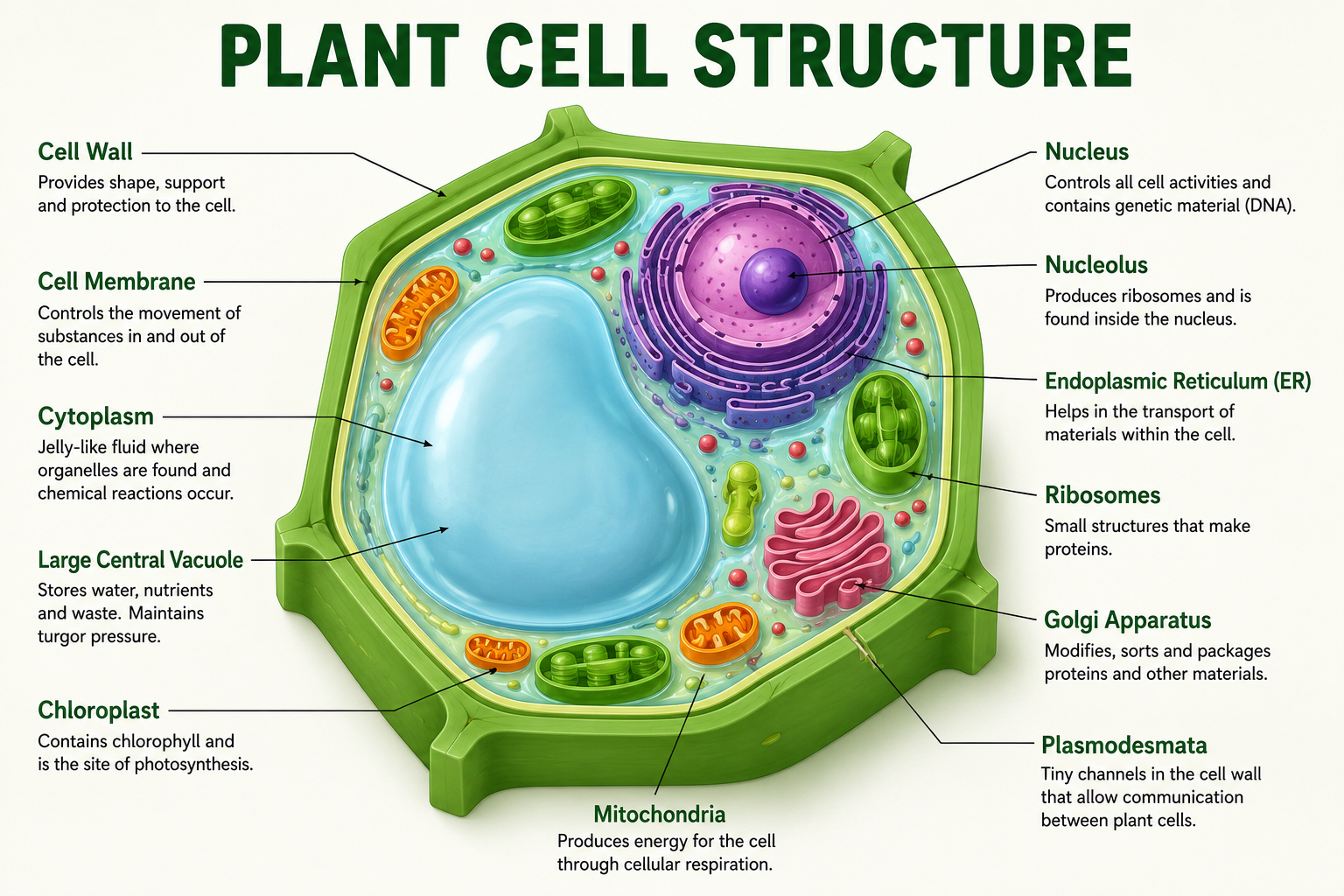
The plant cell is a masterpiece of biological engineering. It shares many features with animal cells but has several unique structures that make photosynthesis, water management, and structural support possible. Let’s examine each component in detail.
Cell Wall
The cell wall is perhaps the most defining feature of a plant cell. It’s a rigid layer made primarily of cellulose microfibrils embedded in a matrix of other polysaccharides and proteins. The wall lies outside the cell membrane and provides structural support, determines cell shape, prevents excessive water uptake, and protects against pathogens.
Plant cell walls have two layers: the primary cell wall (flexible, present in actively growing cells) and the secondary cell wall (thicker, deposited in cells that need extra strength, like those in wood). Neighboring cells are held together by a layer called the middle lamella, made largely of pectin—the same substance that makes jam gel.
Cell Membrane
Inside the cell wall lies the cell membrane (plasma membrane)—a phospholipid bilayer with embedded proteins that controls what enters and exits the cell. Everything that moves between the cytoplasm and the outside environment—nutrients, waste products, water—passes through or is regulated by this membrane.
Cytoplasm
The cytoplasm is the gel-like fluid filling the cell, excluding the nucleus. It’s the medium in which organelles are suspended and where many metabolic reactions occur. The cytoplasm also includes the cytoskeleton—a network of protein filaments that give the cell shape and allow organelle movement.
Nucleus
The nucleus is the cell’s control center, containing the plant’s DNA organized into chromosomes. It directs all cellular activity by controlling which proteins are produced. The nucleus is surrounded by a double membrane called the nuclear envelope, which contains pores allowing communication between the nucleus and cytoplasm.
Chloroplast
The chloroplast is the organelle where photosynthesis takes place—and it’s the structure that most fundamentally distinguishes plant cells from animal cells. Chloroplasts contain an internal membrane system organized into thylakoids (flattened membrane sacs stacked into structures called grana) and a surrounding fluid called the stroma.
Thylakoid membranes house chlorophyll and other photosynthetic pigments that capture light energy. The stroma is where the Calvin cycle—the second stage of photosynthesis—takes place. Chloroplasts are thought to have evolved from photosynthetic bacteria that were engulfed by early eukaryotic cells—a process called endosymbiosis.
Vacuole
Plant cells typically have one large central vacuole that can occupy up to 90% of the cell’s volume. It serves multiple functions:
- Storage – Stores water, ions, sugars, pigments, and waste products
- Turgor pressure – When the vacuole is full of water, it pushes outward on the cell wall, making the cell rigid. This is what keeps non-woody plants upright—wilting occurs when vacuoles lose water.
- Digestion – Contains enzymes that break down cellular waste
- Pigmentation – Anthocyanins stored in vacuoles give flowers, fruits, and autumn leaves their red, purple, and blue colors
Mitochondria
Despite being the site of photosynthesis, plant cells also need mitochondria for cellular respiration. Mitochondria convert glucose (produced during photosynthesis) into ATP through aerobic respiration—the cell’s energy currency. Plants respire continuously, day and night, while photosynthesis only occurs in light.
Ribosomes
Ribosomes are the sites of protein synthesis—translating messenger RNA into proteins. Plant cells have 80S ribosomes in the cytoplasm (on rough endoplasmic reticulum) and 70S ribosomes in chloroplasts and mitochondria—a fascinating remnant of their bacterial evolutionary origins.
Plant Cell vs Animal Cell
| Feature | Plant Cell | Animal Cell |
|---|---|---|
| Cell wall | Present (cellulose) | Absent |
| Chloroplasts | Present | Absent |
| Large central vacuole | Present | Absent or small |
| Shape | Fixed, rectangular | Variable, irregular |
| Centrioles | Absent (in most) | Present |
| Lysosomes | Rare | Common |
| Energy storage | Starch | Glycogen |
| Plasmodesmata | Present | Absent |
| Nucleus position | Often peripheral | Usually central |
| Size | Generally larger (10–100 µm) | Generally smaller (10–30 µm) |
Plant Tissues Explained
Just as organs are made of tissues, plant organs are composed of distinct tissue types, each with specialized functions.
Meristematic Tissue
Meristematic tissues are regions of actively dividing, undifferentiated cells. They’re the plant’s growth zones—the equivalent of stem cells in animals. Unlike animal growth (which is mostly diffuse), plant growth is localized in meristems.
Types of meristems:
- Apical meristems – Located at root and shoot tips; responsible for primary growth (elongation)
- Lateral meristems (Cambium) – Located along the sides of roots and stems; responsible for secondary growth (thickening); found in woody plants
- Intercalary meristems – Found at the base of internodes in grasses; allow grasses to regrow after grazing or mowing
Permanent Tissue
Once meristematic cells differentiate, they become permanent tissue and lose the ability to divide. Permanent tissues are classified as:
Simple Permanent Tissues:
- Parenchyma – The most common plant tissue; thin-walled, living cells that carry out photosynthesis, storage, and secretion. The flesh of most fruits is parenchyma tissue.
- Collenchyma – Provides flexible support in young plants; cell walls unevenly thickened with cellulose. Found in leaf stalks and stems.
- Sclerenchyma – Dead cells with thick, lignified walls providing rigid support. Includes fibers (like those in hemp and flax) and stone cells (that make pear flesh gritty).
Complex Permanent Tissues:
- Xylem – Transports water and dissolved minerals upward from roots to leaves
- Phloem – Transports dissolved sugars and other organic compounds throughout the plant
Plant Organs and Their Functions
Roots
Roots anchor the plant in soil and absorb water and dissolved minerals. The root tip has an apical meristem covered by a root cap that protects it as it pushes through soil. Behind the tip, root hairs dramatically increase the surface area for absorption.
Roots also store food (think carrots and turnips), anchor the plant against wind and gravity, and in some species (like mangroves) provide structural support above ground.
Stem
The stem is the structural backbone of the plant, connecting roots to leaves. It transports water and minerals upward through xylem and sugars downward through phloem. The stem also positions leaves for maximum light exposure and, in some plants, stores food and water (cacti stems are enlarged water storage organs).
Leaves
Leaves are the primary organs of photosynthesis. They’re typically flat and thin—maximizing surface area for light capture while minimizing the distance CO₂ has to diffuse to reach photosynthetic cells. The internal structure of a leaf is remarkably well-designed:
- Upper epidermis – Transparent, waxy-coated layer that lets light through and reduces water loss
- Palisade mesophyll – Column-shaped cells packed with chloroplasts; the primary site of photosynthesis
- Spongy mesophyll – Loosely arranged cells with large air spaces facilitating CO₂ diffusion
- Lower epidermis – Contains stomata (pores) and guard cells that regulate gas exchange and water vapor loss
Flowers
Flowers are the reproductive organs of angiosperms. A complete flower contains:
- Sepals – Leaf-like structures protecting the flower bud
- Petals – Often colorful; attract pollinators
- Stamens – Male reproductive organs producing pollen (anther + filament)
- Carpels/Pistil – Female reproductive organs (stigma + style + ovary) containing ovules
Fruits
A fruit is a mature ovary containing seeds. It develops after fertilization and serves to protect seeds and aid their dispersal—by being eaten (berries, apples), by hooking onto fur (burrs), or by wind (maple samaras).
Seeds
A seed contains an embryonic plant, a food reserve (endosperm or cotyledons), and a protective seed coat. Seeds allow plants to survive unfavorable conditions in a dormant state and colonize new locations when dispersed.
Photosynthesis Explained
Photosynthesis is arguably the most important chemical process on Earth. It’s the mechanism by which plants, algae, and some bacteria convert light energy into chemical energy stored in glucose. Without it, nearly all life on Earth would not exist.
Definition
Photosynthesis is the process by which organisms use light energy to convert carbon dioxide and water into glucose and oxygen. It occurs in the chloroplasts of plant cells.
Chemical Equation
The overall equation for photosynthesis is:
6CO₂ + 6H₂O + Light Energy → C₆H₁₂O₆ + 6O₂In plain English: Six molecules of carbon dioxide plus six molecules of water, using light energy, produce one molecule of glucose and six molecules of oxygen.
Light-Dependent Reactions
The light-dependent reactions take place in the thylakoid membranes of the chloroplast. Here’s what happens:
- Light absorption – Chlorophyll and accessory pigments in photosystems I and II absorb light energy (primarily red and blue wavelengths)
- Water splitting (photolysis) – Water molecules are split: 2H₂O → 4H⁺ + 4e⁻ + O₂. The oxygen released is a byproduct—the oxygen we breathe
- Electron transport chain – Excited electrons from Photosystem II pass through a series of electron carriers, releasing energy used to pump H⁺ ions across the thylakoid membrane
- ATP synthesis – H⁺ ions flow back through ATP synthase enzyme, generating ATP (the cell’s energy currency) through chemiosmosis
- NADPH production – At Photosystem I, electrons are used to reduce NADP⁺ to NADPH—an electron carrier for the Calvin cycle
Outputs of light-dependent reactions: ATP, NADPH, and O₂
Calvin Cycle
The Calvin cycle (also called the light-independent reactions or dark reactions) takes place in the stroma of the chloroplast. It uses the ATP and NADPH produced in the light reactions to build glucose from CO₂.
Three stages:
- Carbon fixation – CO₂ is attached to a 5-carbon molecule called RuBP by the enzyme RuBisCO, producing an unstable 6-carbon compound that immediately splits into two 3-carbon molecules (3-PGA)
- Reduction – ATP and NADPH from the light reactions are used to convert 3-PGA into G3P (glyceraldehyde-3-phosphate), a 3-carbon sugar that can be used to build glucose
- Regeneration of RuBP – Most G3P molecules are used to regenerate RuBP so the cycle can continue; ATP is required for this stage
For every 3 CO₂ molecules fixed, one net G3P is produced—it takes two G3P molecules to build one glucose.
Factors Affecting Photosynthesis
The rate of photosynthesis is affected by several environmental variables:
| Factor | Effect |
|---|---|
| Light intensity | Higher intensity increases rate until a saturation point is reached |
| CO₂ concentration | Higher concentration increases rate until other factors become limiting |
| Temperature | Optimum typically 25–35°C; too high denatures enzymes |
| Water availability | Water stress causes stomata to close, reducing CO₂ entry |
| Wavelength of light | Chlorophyll absorbs red (~680 nm) and blue (~450 nm) best; green is reflected |
Importance of Photosynthesis
- Produces oxygen that sustains aerobic life
- Fixes carbon from CO₂ into organic molecules, forming the base of most food chains
- Regulates atmospheric CO₂ levels, influencing global climate
- Produces the raw materials for all plant-based products—food, fiber, timber, medicine
Cellular Respiration in Plants
Plants are autotrophs, but that doesn’t mean they skip respiration. Quite the opposite—plants perform cellular respiration continuously, using the glucose produced by photosynthesis to generate ATP for their own cellular processes.
The equation:
C₆H₁₂O₆ + 6O₂ → 6CO₂ + 6H₂O + ATPDuring daylight, photosynthesis typically produces more oxygen than the plant uses in respiration, and absorbs more CO₂ than it releases. At night, only respiration occurs, so plants release CO₂ and consume oxygen. The compensation point is the light intensity at which photosynthesis and respiration rates are equal—net gas exchange is zero.
This is why the myth that you shouldn’t keep plants in your bedroom at night (because they’ll “steal your oxygen”) is largely unfounded—the amount of oxygen consumed by a houseplant’s nighttime respiration is negligible compared to what humans breathe.
Plant Nutrition
Plants are autotrophs, but they still require mineral nutrients from the soil to grow properly. These are absorbed in ionic form through root hairs.
Macronutrients (needed in large amounts):
- Nitrogen (N) – For amino acids, proteins, and chlorophyll
- Phosphorus (P) – For DNA, RNA, ATP, and cell membranes
- Potassium (K) – For enzyme activation and stomatal function
- Calcium (Ca) – For cell wall structure
- Magnesium (Mg) – Central atom of chlorophyll
Micronutrients (needed in small amounts):
Iron, manganese, zinc, copper, boron, molybdenum—all required for specific enzymatic functions.
Nutrient deficiency symptoms are often visible and diagnostically useful. Nitrogen deficiency causes yellowing of older leaves (chlorosis). Iron deficiency causes yellowing of young leaves. Phosphorus deficiency causes purple/reddish discoloration of leaves.
Water Transport in Plants
Xylem
Xylem is the plant’s water highway. It transports water and dissolved minerals from roots upward to leaves. Mature xylem cells are dead—they form hollow tubes (tracheids and vessel elements) through which water moves by bulk flow.
Water moves up through xylem by a mechanism called the cohesion-tension theory:
- Water evaporates from leaf surfaces (transpiration)
- This creates tension (negative pressure) that pulls water upward
- Water molecules stick together (cohesion) and to xylem walls (adhesion), forming an unbroken column from roots to leaves
This is how a 100-meter tall tree moves water to its topmost leaves—no pump required.
Phloem
Phloem transports dissolved sugars (primarily sucrose) and other organic compounds from source regions (leaves, where photosynthesis produces sugar) to sink regions (roots, developing fruits, growing tips—wherever sugar is needed or stored). This process is called translocation.
Phloem sap moves by pressure flow:
- Sugar is loaded into phloem at source tissues, lowering water potential
- Water enters phloem by osmosis, creating pressure
- The pressure drives sap toward sink tissues where sugar is unloaded
- Water exits phloem at sink tissues
Unlike xylem (one-directional, upward), phloem can move material in both directions simultaneously in different parts of the plant.
Transpiration
Transpiration is the evaporation of water from plant surfaces, primarily through stomata in leaves. It drives the cohesion-tension mechanism pulling water up through xylem, cools leaf surfaces, and facilitates mineral transport.
The rate of transpiration is controlled by stomatal opening—regulated by guard cells. When water is plentiful, guard cells become turgid and stomata open, allowing gas exchange and transpiration. When water is scarce, guard cells lose turgor, stomata close, reducing water loss but also slowing CO₂ uptake and photosynthesis.
Factors increasing transpiration:
- High temperature
- Low humidity
- High wind speed
- High light intensity
Plant Growth and Development
Germination
Germination is the process by which a seed resumes growth and a seedling emerges. Conditions required:
- Water – Rehydrates the seed and activates metabolic enzymes
- Oxygen – For aerobic respiration to provide energy for growth
- Appropriate temperature – Most seeds germinate within a specific temperature range
During germination, the radicle (embryonic root) emerges first, anchoring the seedling and beginning water absorption. Then the plumule (embryonic shoot) emerges and grows upward toward light.
Growth Stages
- Germination – Seed sprouts; radicle and plumule emerge
- Seedling stage – First leaves appear; plant begins photosynthesis
- Vegetative growth – Rapid production of leaves, stems, and roots
- Reproductive stage – Flowers form; pollination and fertilization occur
- Senescence – Aging; leaves may be reabsorbed or shed; the plant prepares for dormancy or death
Plant Hormones
Plant hormones (phytohormones) are chemical messengers that regulate growth, development, and responses to the environment. Unlike animal hormones, plant hormones often work at their site of production or are transported to nearby tissues.
| Hormone | Primary Function | Practical Example |
|---|---|---|
| Auxin (IAA) | Cell elongation; phototropism; apical dominance | Causes shoots to bend toward light |
| Gibberellins | Stem elongation; seed germination; fruit development | Spraying grapes increases fruit size |
| Cytokinins | Cell division; delay of senescence; lateral bud development | Used in tissue culture to promote cell division |
| Ethylene | Fruit ripening; leaf abscission; response to stress | Placing a ripe banana with unripe fruit accelerates ripening |
| Abscisic acid (ABA) | Stomatal closure; seed dormancy; stress response | Causes stomata to close during drought |
Plant Reproduction
Sexual Reproduction
Sexual reproduction in plants involves the fusion of gametes (egg and sperm cells) and produces genetically varied offspring. In angiosperms, this occurs through flowers.
Asexual Reproduction
Asexual reproduction produces genetically identical offspring (clones) from a single parent plant without fertilization.
Natural methods:
- Runners/stolons – Horizontal stems that produce new plants at nodes (e.g., strawberries)
- Bulbs – Underground storage organs that produce offsets (e.g., tulips, onions)
- Rhizomes – Underground horizontal stems (e.g., ginger, mint)
- Tubers – Swollen underground stems storing starch (e.g., potatoes)
Artificial/horticultural methods:
- Cuttings, grafting, and tissue culture
Pollination
Pollination is the transfer of pollen from anther (male) to stigma (female). It can be:
- Self-pollination – Pollen from the same flower or plant
- Cross-pollination – Pollen from a different plant of the same species
Pollination agents:
- Insects (entomophily) – Most common; flowers are often colorful and fragrant to attract bees, butterflies, and beetles
- Wind (anemophily) – Flowers are typically small and inconspicuous; pollen is light and produced in large quantities (grasses, conifers)
- Water (hydrophily) – Occurs in aquatic plants
- Animals (zoophily) – Including birds (hummingbirds), bats, and other mammals
Fertilization
After pollination, pollen germinates on the stigma and grows a pollen tube down through the style to the ovary. The pollen tube delivers two sperm cells to the ovule.
In angiosperms, double fertilization occurs:
- One sperm fuses with the egg → forms the zygote (embryo, 2n)
- Second sperm fuses with two polar nuclei → forms endosperm (3n), the nutritive tissue for the developing seed
Seed Dispersal
Seeds must be dispersed away from the parent plant to reduce competition. Dispersal mechanisms:
- Wind (anemochory) – Dandelion parachutes, maple samaras
- Water (hydrochory) – Coconuts, mangrove propagules
- Animals-external (epizoochory) – Burrs and hooks catching on fur
- Animals-internal (endozoochory) – Fruits eaten; seeds pass through digestive system intact
- Explosive mechanisms (ballochory) – Plants like squirting cucumbers eject seeds under pressure
Plant Adaptations
Plants have evolved extraordinary adaptations to survive in virtually every environment on Earth.
Desert adaptations (Xerophytes):
- Thick waxy cuticles to reduce water loss
- Sunken stomata to reduce transpiration
- Succulent stems/leaves for water storage (cacti)
- Shallow, wide-spreading root systems to capture rain
- CAM photosynthesis—opening stomata only at night to minimize water loss
Aquatic plant adaptations (Hydrophytes):
- Air spaces (aerenchyma) in stems for buoyancy and oxygen transport
- Leaves floating on surface for light and gas exchange
- Stomata on upper leaf surface only
- Flexible stems that bend with water currents rather than breaking
Arctic/alpine adaptations:
- Low-growing growth forms to stay below snow and avoid wind damage
- Dark-colored leaves to absorb maximum heat
- Antifreeze compounds in cell fluid
- Short growing seasons exploited rapidly
Forest understory adaptations:
- Large, broad leaves to capture limited light
- High chlorophyll concentration
- Efficient light harvesting systems
Importance of Plants in Daily Life
Plants weave through virtually every aspect of human life, often in ways we don’t consciously notice.
Food: Every grain, vegetable, fruit, nut, and legume comes from plants. Tea, coffee, and cocoa are plant-derived. Even meat, dairy, and eggs come from animals that eat plants.
Medicine: Aspirin (willow bark), quinine for malaria (Cinchona bark), morphine (opium poppy), digoxin for heart conditions (foxglove), and taxol for cancer (yew trees) are among hundreds of plant-derived medicines.
Textiles: Cotton (from Gossypium plants), linen (from flax), and hemp are plant-based fibers. Rayon and other semi-synthetic fabrics are made from plant cellulose.
Construction: Timber from trees provides building materials. Bamboo is used for scaffolding, flooring, and construction in many parts of Asia.
Fuel: Wood is still the primary cooking fuel for much of the world’s rural population. Coal—formed from ancient plant material—powers much of global electricity generation. Biofuels are produced from plants like corn, sugarcane, and soya.
Economic Importance of Plants
| Category | Examples | Economic Value |
|---|---|---|
| Food crops | Wheat, rice, corn, soybeans | Multi-trillion dollar global industry |
| Cash crops | Coffee, tea, cocoa, tobacco | Billions in trade annually |
| Medicinal plants | Cinchona, foxglove, opium poppy | 25%+ of pharmaceuticals |
| Timber | Oak, teak, pine, mahogany | Global timber industry worth hundreds of billions |
| Fiber crops | Cotton, flax, hemp, jute | Textile industry backbone |
| Ornamental plants | Roses, tulips, orchids | Billion-dollar floriculture industry |
| Essential oils | Lavender, peppermint, rose | Perfumery, aromatherapy, food flavoring |
Common Plant Diseases
Plants are susceptible to a wide range of diseases caused by pathogens and environmental stresses.
| Disease | Causative Agent | Affected Plant | Symptoms |
|---|---|---|---|
| Late blight | Phytophthora infestans (oomycete) | Potato, tomato | Dark lesions on leaves; tuber rot |
| Powdery mildew | Various fungi | Wheat, roses, cucumbers | White powdery coating on leaves |
| Rust | Puccinia species (fungi) | Wheat, corn | Orange-red pustules on leaves |
| Tobacco mosaic virus | Tobacco mosaic virus (TMV) | Tobacco, tomatoes, peppers | Mosaic mottling of leaves |
| Crown gall | Agrobacterium tumefaciens (bacterium) | Various woody plants | Tumor-like growths at soil line |
| Wheat smut | Ustilago species (fungi) | Wheat | Black spore masses replacing grain |
| Fire blight | Erwinia amylovora (bacterium) | Apples, pears | Wilting, blackening shoots (“fire-scorched” appearance) |
Common Plant Biology Terms Every Student Should Know
| Term | Definition |
|---|---|
| Photosynthesis | Process of converting light energy into chemical energy (glucose) |
| Transpiration | Loss of water vapor from plant surfaces, mainly through stomata |
| Stomata | Pores in leaf epidermis regulating gas exchange |
| Chlorophyll | Green pigment in chloroplasts that absorbs light for photosynthesis |
| Turgor pressure | Pressure exerted by the vacuole’s water content on the cell wall |
| Meristem | Region of actively dividing plant cells |
| Apical dominance | Suppression of lateral bud growth by auxin produced at the shoot tip |
| Germination | Process by which a seed begins to grow |
| Pollination | Transfer of pollen from anther to stigma |
| Double fertilization | Unique angiosperm process producing both embryo and endosperm |
| Tropism | Directional growth response to an external stimulus |
| Alternation of generations | Life cycle alternating between haploid (gametophyte) and diploid (sporophyte) phases |
| Xylem | Vascular tissue transporting water upward |
| Phloem | Vascular tissue transporting sugars throughout the plant |
| Endosperm | Nutritive tissue in seeds, formed from double fertilization |
| Xerophyte | Plant adapted to dry conditions |
| Hydrophyte | Plant adapted to aquatic conditions |
Common Mistakes Students Make
Here are the errors that cost students marks most often in plant biology—and how to avoid them.
1. Saying photosynthesis only happens during the day
The Calvin cycle doesn’t directly need light—it needs ATP and NADPH (which come from light reactions). Technically the Calvin cycle can proceed briefly in the dark using stored ATP and NADPH. But in practice, without continuous light supply, the Calvin cycle stops. The key point: the light-dependent reactions require light; the Calvin cycle does not require light directly.
2. Confusing xylem and phloem
Remember: Xylem carries water (think: eXit the roots going up), and phloem carries food (sugars flow in phloem, coming from photosynthesis). Get these backwards and you’ll lose marks consistently.
3. Describing photosynthesis as happening in the “leaf cells” without specifying chloroplasts
Always specify that photosynthesis occurs in chloroplasts—and more precisely, that light reactions occur in thylakoid membranes while the Calvin cycle occurs in the stroma.
4. Forgetting that plants also respire
Students sometimes assume plants only photosynthesize. Plants respire continuously—24 hours a day. Photosynthesis only happens in light. At night, only respiration occurs.
5. Mixing up pollination and fertilization
Pollination is pollen transferring to the stigma. Fertilization is sperm fusing with egg inside the ovule. These are two separate events, and a significant time gap can occur between them.
6. Saying water “climbs” xylem due to pumping
There is no pump in xylem water transport. The cohesion-tension mechanism driven by transpiration is what pulls water upward. Osmotic pressure from roots provides some additional push (root pressure), but transpiration pull is the dominant mechanism in tall plants.
Best Tips to Study Plant Biology
1. Build concept maps, not just notes
Plant biology topics are deeply interconnected. Instead of linear notes, draw concept maps showing how photosynthesis connects to nutrition, how nutrition connects to growth, how growth connects to reproduction. Seeing the connections makes everything more memorable.
2. Study the chemistry behind photosynthesis, not just the summary equation
The equation 6CO₂ + 6H₂O → C₆H₁₂O₆ + 6O₂ is just the start. Understanding why light reactions and the Calvin cycle are separate stages, and what each stage produces, gives you the tools to answer unfamiliar exam questions about photosynthesis.
3. Use real plants as study aids
Keep a houseplant nearby. When you study transpiration, actually check whether the leaves feel slightly moist. When you study tropism, notice how your plant grows toward the window. Physical connection to the subject makes abstract concepts far more concrete.
4. Practice drawing diagrams from memory
Draw the cross-section of a leaf, the chloroplast, the water transport diagram, and the flower structure repeatedly until you can produce them without looking. In biology exams, labeled diagrams can earn full marks and take far less writing than prose answers.
5. Learn plant hormones with the mnemonic AGE-C:
Auxin (elongation), Gibberellins (growth/germination), Ethylene (ripening), Cytokinins (cell division) + ABA (stomatal closure and stress). Associating each hormone with its primary function makes multiple-choice questions straightforward.
6. Connect to agriculture and food
Every time you eat something, think about which plant produced it, how it was pollinated, how its seeds were dispersed, and which hormones were involved in its development. Making these connections transforms abstract concepts into things you genuinely care about understanding.
Plant Biology Practice Questions
20 Multiple Choice Questions with Answers
- Which organelle is the site of photosynthesis in plant cells?
- A) Mitochondria
- B) Ribosomes
- C) Chloroplast ✓
- D) Vacuole
- What is the main component of plant cell walls?
- A) Chitin
- B) Peptidoglycan
- C) Lignin
- D) Cellulose ✓
- Which of the following is produced during the light-dependent reactions of photosynthesis?
- A) Glucose
- B) ATP and NADPH ✓
- C) CO₂
- D) RuBP
- Where does the Calvin cycle take place?
- A) Thylakoid membrane
- B) Stroma ✓
- C) Grana
- D) Cell wall
- Which plant hormone is responsible for fruit ripening?
- A) Auxin
- B) Gibberellin
- C) Cytokinin
- D) Ethylene ✓
- Xylem transports:
- A) Sugars from leaves to roots
- B) Water and minerals from roots to leaves ✓
- C) Hormones downward
- D) Amino acids throughout the plant
- Which type of plant lacks vascular tissue?
- A) Ferns
- B) Gymnosperms
- C) Mosses ✓
- D) Angiosperms
- The large central vacuole in plant cells primarily contains:
- A) Starch granules
- B) Ribosomes
- C) Water ✓
- D) Chlorophyll
- Photolysis during the light reactions splits:
- A) CO₂
- B) Glucose
- C) NADP⁺
- D) Water ✓
- Which tissue is responsible for primary growth in plants?
- A) Sclerenchyma
- B) Apical meristem ✓
- C) Phloem
- D) Parenchyma
- Double fertilization is unique to:
- A) Gymnosperms
- B) Ferns
- C) Angiosperms ✓
- D) Mosses
- Transpiration primarily occurs through:
- A) Root hairs
- B) Stomata ✓
- C) Lenticels
- D) Cuticle
- Which of the following is an adaptation of xerophytes?
- A) Aerenchyma tissue
- B) Stomata on upper leaf surface
- C) Thick waxy cuticle ✓
- D) Large floating leaves
- The enzyme that fixes CO₂ in the Calvin cycle is:
- A) ATP synthase
- B) DNA polymerase
- C) RuBisCO ✓
- D) Amylase
- Abscisic acid (ABA) primarily causes:
- A) Cell division
- B) Stomatal closure ✓
- C) Fruit ripening
- D) Stem elongation
- Which of the following is a monocot?
- A) Rose
- B) Oak
- C) Bean
- D) Corn ✓
- The cohesion-tension theory explains:
- A) Sugar transport in phloem
- B) Water transport in xylem ✓
- C) Mineral absorption by roots
- D) Carbon fixation in leaves
- Which nutrient is central to the chlorophyll molecule?
- A) Nitrogen
- B) Phosphorus
- C) Magnesium ✓
- D) Iron
- Apical dominance is caused by high concentrations of:
- A) Gibberellin
- B) Cytokinin
- C) Auxin ✓
- D) Ethylene
- Which of the following is NOT a method of asexual reproduction in plants?
- A) Runners
- B) Bulbs
- C) Pollination ✓
- D) Rhizomes
10 Short Answer Questions
- Describe the two stages of photosynthesis, explaining where each takes place and what each produces.
- Explain the cohesion-tension theory of water transport in plants. Why is no active pumping required?
- What is double fertilization? Why is it significant, and in which plant group does it occur?
- Compare the functions of xylem and phloem in a flowering plant.
- Describe three structural differences between plant cells and animal cells, explaining the functional significance of each difference.
- Explain how guard cells regulate stomatal opening and closing, and why this is important for the plant.
- What are the four main groups of plants? List one defining characteristic and one example for each.
- Explain how auxin causes phototropism—the bending of shoots toward light.
- Describe the conditions required for seed germination and explain why each condition is necessary.
- Compare self-pollination and cross-pollination. What are the evolutionary advantages of each?
5 Long Answer Questions
- Describe the process of photosynthesis in detail, including the light-dependent reactions and the Calvin cycle. Name the locations within the chloroplast where each stage occurs, identify all major inputs and outputs, and explain how the two stages are interconnected. Discuss at least three factors that affect the rate of photosynthesis and explain the biological mechanism behind each.
- Compare and contrast the structure and function of xylem and phloem in plants. Explain the mechanisms of water transport in xylem (cohesion-tension theory) and sugar transport in phloem (pressure flow hypothesis). Include a discussion of how transpiration drives water movement and how environmental factors affect transpiration rate.
- Describe the reproductive process of a flowering plant from pollination to seed dispersal. Include an explanation of pollination mechanisms, double fertilization, seed and fruit development, and at least four methods of seed dispersal. Explain the adaptive significance of each dispersal mechanism.
- Discuss plant hormones in detail. For each of the five major classes (auxin, gibberellins, cytokinins, ethylene, and abscisic acid), describe its primary functions, where it is produced, how it acts, and at least one practical agricultural application.
- Explain how plants are adapted to three contrasting environments: deserts (xerophytes), aquatic habitats (hydrophytes), and shaded forest understories. For each environment, identify the key challenges the plant faces and describe at least three specific structural or physiological adaptations that help the plant overcome those challenges.
Plant Biology Revision Checklist
Use this checklist before any exam. Be honest with yourself—if you can’t check a box, revisit that section.
- I can define plant biology and list the major subdisciplines
- I can describe eight key characteristics that define plants
- I can classify plants into four groups and name key features and examples of each
- I can draw and label a plant cell, including all major organelles
- I can list five differences between plant and animal cells with functional explanations
- I can explain both stages of photosynthesis—light reactions and Calvin cycle—with locations and products
- I can write and interpret the overall chemical equation for photosynthesis
- I can describe four factors affecting the rate of photosynthesis and explain why each affects it
- I can explain the cohesion-tension theory of water transport in xylem
- I can describe pressure flow in phloem and distinguish it from xylem transport
- I can explain transpiration, its role in water transport, and how stomata regulate it
- I can name and describe the five major plant hormones and their functions
- I can describe germination conditions and the stages of plant growth
- I can explain pollination, double fertilization, and four methods of seed dispersal
- I can describe adaptations of xerophytes and hydrophytes
- I have completed at least 20 MCQs and 3 long answer practice questions
Best Books for Learning Plant Biology
- “Plant Biology” by Linda Graham, James Graham, and Lee Wilcox – An excellent undergraduate-level text covering plant structure, function, ecology, and evolution with strong visual support. Clear and accessible without sacrificing scientific depth.
- “Raven Biology of Plants” by Peter Raven, Ray Evert, and Susan Eichhorn – The definitive comprehensive plant biology textbook used in universities worldwide. If you want to go deep on any plant biology topic, this is where you go.
- “Botany: An Introduction to Plant Biology” by James Mauseth – Highly readable with excellent integration of evolutionary context. Particularly strong on explaining why plants are structured the way they are.
- “The Private Life of Plants” by David Attenborough – Not a textbook, but the companion book to Attenborough’s landmark television series. Brings plant biology to vivid life through stunning narrative and examples. Excellent for developing genuine enthusiasm for the subject.
- Campbell Biology (any recent edition), Chapters on Plants – The gold-standard general biology textbook has outstanding chapters on plant structure, photosynthesis, and plant responses. Perfect for AP Biology and equivalent-level study.
Free Online Plant Biology Resources
- OpenStax Biology 2e – Plant Chapters – Free, peer-reviewed, comprehensive coverage of plant structure, function, growth, and reproduction. Fully accessible online with no cost.
- Khan Academy – Plant Biology – Well-structured video lessons and practice questions covering photosynthesis, plant structure, and plant reproduction. Ideal for visual learners and AP Biology preparation.
- Biology LibreTexts – Botany – Open-access academic content covering all aspects of plant biology at university level. Well-organized by topic and continuously updated.
- Royal Botanic Gardens, Kew – Science and Conservation – The world’s leading botanical research institution provides educational resources, plant databases, and conservation science content of exceptional quality.
- National Geographic Education – Plants – Beautifully presented educational content on plant biology, ecosystems, and conservation with stunning photography and accessible explanations for a wide age range.
Frequently Asked Questions
1. What is plant biology in simple terms?
Plant biology (botany) is the scientific study of plants—how they’re built, how they function, how they grow, how they reproduce, and how they interact with their environment. It covers everything from the biochemistry inside a single cell to the ecology of entire forest ecosystems.
2. What is the most important process in plant biology?
Photosynthesis is arguably the most important process—not just in plant biology, but in all of biology. It produces the oxygen we breathe and the organic compounds that form the base of virtually every food chain on Earth.
3. How are plant cells different from animal cells?
Plant cells have three structures animal cells lack: a rigid cellulose cell wall, chloroplasts for photosynthesis, and a large central vacuole for water storage and turgor pressure. Animal cells have centrioles and more prominent lysosomes, which plant cells typically lack.
4. What do plants need to photosynthesize?
Plants need light energy (absorbed by chlorophyll), carbon dioxide (absorbed through stomata), and water (absorbed through roots). These inputs, along with specific enzymes and the biochemical machinery in chloroplasts, allow plants to produce glucose and oxygen.
5. Why do leaves appear green?
Chlorophyll—the primary photosynthetic pigment—absorbs red and blue light wavelengths for use in photosynthesis but reflects green wavelengths. The reflected green light is what our eyes detect, making leaves appear green.
6. What are plant hormones and what do they do?
Plant hormones are chemical signals that regulate virtually every aspect of plant growth and development. The five major classes are: auxin (cell elongation, phototropism), gibberellins (stem elongation, seed germination), cytokinins (cell division), ethylene (fruit ripening, leaf drop), and abscisic acid (stress responses, stomatal closure).
7. How does water travel from roots to leaves?
Water moves upward through xylem tissue by the cohesion-tension mechanism. Transpiration (water evaporation from leaves) creates tension that pulls water upward. Water molecules stick together (cohesion) and to xylem walls (adhesion), maintaining an unbroken column from roots to leaves.
8. What is the difference between gymnosperms and angiosperms?
Both are seed plants, but gymnosperms bear naked seeds in cones (no fruit) and generally don’t have flowers. Angiosperms are flowering plants whose seeds are enclosed within fruits. Angiosperms are by far the larger and more diverse group.
9. How do plants reproduce without seeds?
Many plants reproduce asexually through vegetative propagation—runners (strawberries), bulbs (tulips), rhizomes (mint), tubers (potatoes), or through artificial methods like cuttings and grafting. These produce genetically identical offspring (clones).
10. What is transpiration and why is it important?
Transpiration is the evaporation of water from plant surfaces, primarily through stomata. It drives the upward movement of water in xylem (cohesion-tension), cools the plant, and facilitates mineral transport from roots to leaves.
11. Why do plants wilt when they don’t have enough water?
When water is scarce, the large central vacuoles in plant cells lose water and shrink. This reduces turgor pressure—the outward pressure of the vacuole against the cell wall that keeps cells rigid. Without adequate turgor pressure, cells become flaccid and the plant wilts.
12. What are the economic uses of plants?
Plants provide food (grains, vegetables, fruits), medicines (aspirin, morphine, taxol), fibers (cotton, hemp, flax), timber for construction, fuels (wood, biofuels), ornamental plants, essential oils for perfumery and flavoring, and industrial chemicals. Virtually every human industry depends on plants directly or indirectly.
Summary
This plant biology study guide has covered the full sweep of the discipline—from the evolutionary history of botanical science to the biochemistry of photosynthesis to the practical economic importance of plants. Let’s pull together the most essential threads.
Plants are multicellular, eukaryotic autotrophs that produce their own food through photosynthesis. They’re classified into four major groups—non-vascular plants, seedless vascular plants, gymnosperms, and angiosperms—each with distinct characteristics and evolutionary innovations. Plant cells differ from animal cells in possessing a cellulose cell wall, chloroplasts, and a large central vacuole.
Photosynthesis—the defining process of plant biology—occurs in chloroplasts in two stages: light-dependent reactions (in thylakoid membranes, producing ATP and NADPH) and the Calvin cycle (in the stroma, using ATP and NADPH to fix CO₂ into glucose). Water moves upward through xylem by cohesion-tension, while sugars move through phloem by pressure flow.
Plant hormones—auxin, gibberellins, cytokinins, ethylene, and abscisic acid—regulate every aspect of growth, development, and environmental response. Reproduction occurs both sexually (through flowers, pollination, double fertilization, seeds) and asexually (through runners, bulbs, rhizomes, and human propagation techniques).
Plants are economically, ecologically, and medically indispensable. Understanding them is not an academic exercise—it’s understanding the foundations of life on Earth.
Final Thoughts
If there’s one thing I hope this guide has conveyed, it’s that plants are not passive, boring background elements of the natural world. They are biochemically sophisticated, evolutionarily diverse, ecologically essential organisms that have been quietly running the chemistry of life on this planet for hundreds of millions of years.
The more deeply you study plant biology, the more astonishing it becomes. The fact that a leaf can capture a photon of light from a star 93 million miles away and use it to split a water molecule and build a carbon compound from atmospheric CO₂—all within microseconds, in organelles smaller than you can see—is one of the genuine wonders of the biological world.
For your exam preparation: work through the practice questions, complete the revision checklist honestly, and revisit any section that still feels uncertain. The concepts in plant biology build on each other—a solid understanding of cell structure makes photosynthesis easier to follow, which makes plant nutrition clearer, which makes growth and development more logical.
Keep exploring, stay curious, and remember: every tree you walk past, every piece of fruit you eat, every breath of oxygen you take—plant biology made all of it possible.
Good luck with your studies.
References
- OpenStax Biology 2e – Plant Chapters – openstax.org/books/biology-2e
- Khan Academy – AP Biology: Plant Biology – khanacademy.org
- Biology LibreTexts – Botany – bio.libretexts.org
- Royal Botanic Gardens, Kew – kew.org/science
- National Geographic Education – Plants – education.nationalgeographic.org
Article Disclaimer
This article is intended for educational and informational purposes only. While LearnMinto strives to provide accurate, well-researched, and up-to-date information, plant biology is a scientific field that continues to evolve through ongoing research and discoveries. Readers should verify important academic concepts through official textbooks, educational institutions, examination boards, or trusted scientific resources before relying on this content for exams or academic purposes. LearnMinto is not affiliated with any specific school, university, research institution, or examination board. This content is designed solely to support learning and educational development.