
Introduction
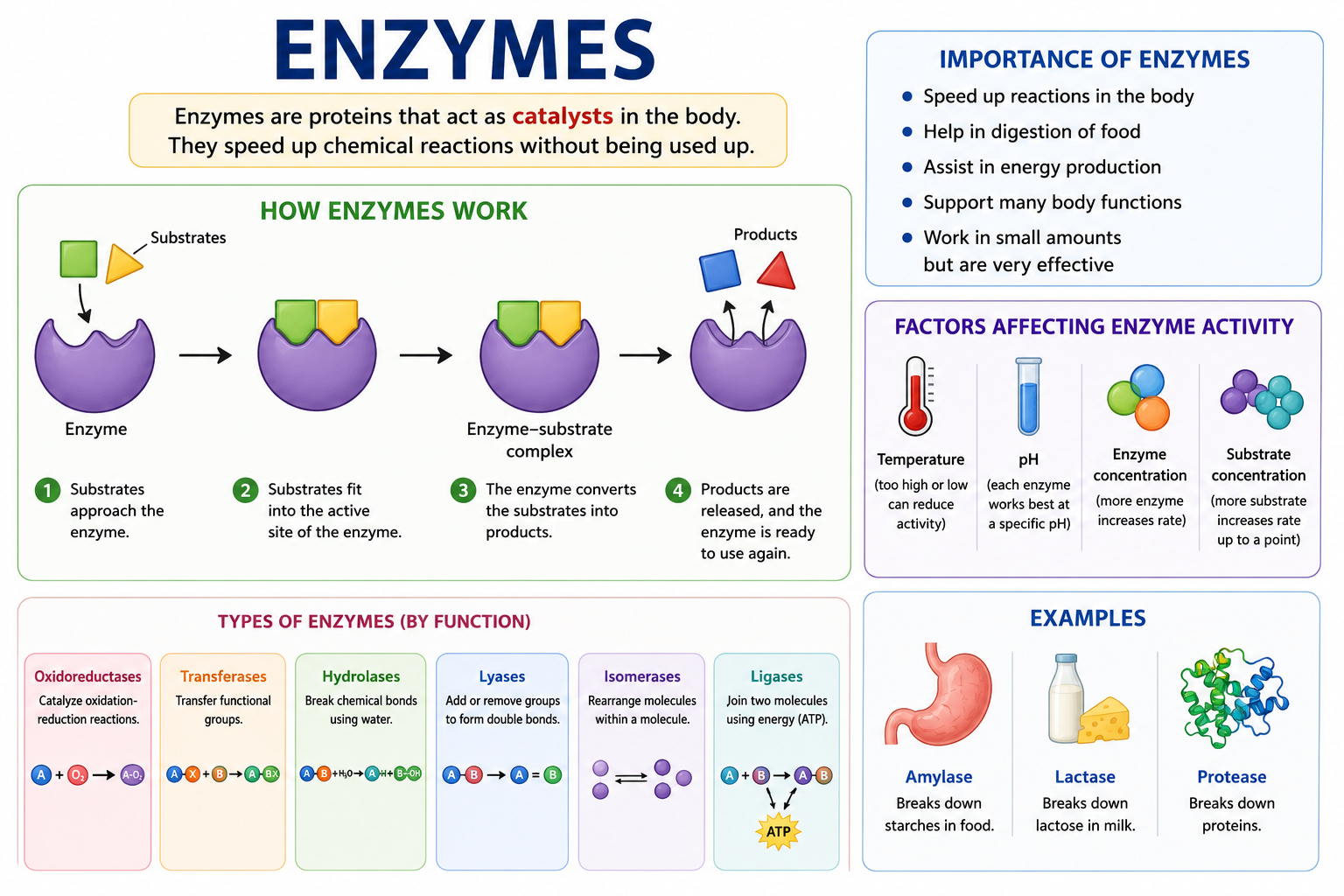
Imagine trying to light a campfire in a rainstorm with wet wood. It’s not impossible, but it would take enormous energy and a very long time. Now imagine having a chemical lighter that makes the whole process quick and efficient. That’s essentially what enzymes do inside your body—they make chemical reactions that would otherwise take hours, days, or longer happen in fractions of a second, under the mild, watery conditions that living cells require.
Every single moment your body is alive, thousands of chemical reactions are happening simultaneously. Your cells are breaking down glucose to release energy, copying DNA before cell division, building proteins from amino acids, dismantling old cellular components, and synthesizing hormones and neurotransmitters. Without enzymes, virtually none of these reactions would proceed fast enough to support life. You wouldn’t digest a meal in a lifetime. Your cells couldn’t replicate. Your muscles couldn’t contract.
This Enzymes Study Guide is built to give you a genuinely thorough understanding of what enzymes are, how they work, what affects their activity, and where they show up in digestion, medicine, and industry. Whether you’re preparing for a high school biology exam, tackling university biochemistry, or studying for a nursing or medical entrance test, this guide covers everything you need—clearly, accurately, and with real-world examples to make the concepts stick.
We’ll go through enzyme structure, the lock and key versus induced fit models, all six enzyme classes, the major factors that control enzyme activity, enzyme inhibition, and a detailed look at digestive enzymes. There’s also a full set of practice questions, a revision checklist, and an FAQ section to make sure you walk away exam-ready.
Let’s get into it.
Key Takeaways
Before You Dive In — Key Takeaways
- Enzymes are biological catalysts made of protein that speed up chemical reactions without being consumed.
- Each enzyme has an active site that binds to a specific substrate, forming an enzyme-substrate complex.
- Two main models explain how enzymes bind substrates: the lock and key model and the induced fit model.
- Enzyme activity is affected by temperature, pH, enzyme concentration, substrate concentration, inhibitors, and cofactors.
- There are six main classes of enzymes: oxidoreductases, transferases, hydrolases, lyases, isomerases, and ligases.
- Competitive inhibitors block the active site; non-competitive inhibitors bind elsewhere and change the enzyme’s shape.
- Key digestive enzymes include amylase (starch), pepsin (protein in stomach), trypsin (protein in small intestine), and lipase (fats).
- Enzymes are used industrially in food production, textiles, and biofuels, and medically in diagnostics and therapeutics.
What Are Enzymes?
Enzymes are biological catalysts—molecules that speed up chemical reactions in living organisms without being permanently altered or consumed in the process. Almost all enzymes are proteins, meaning they’re long chains of amino acids folded into specific three-dimensional shapes. A small group of catalytic RNA molecules called ribozymes also exist, but the vast majority of enzymes you’ll encounter in biology courses are proteins.
The word “enzyme” comes from the Greek word enzymos, meaning “leavened” or “in yeast.” This is fitting, because early scientists first noticed enzyme activity in yeast cells long before they understood what was happening at a molecular level.
In chemical terms, enzymes work by lowering the activation energy of a reaction—the minimum energy required for reactants to transform into products. Think of activation energy as a hill that reactants need to climb before they can roll down to become products. Enzymes essentially lower the height of that hill, making it far easier for the reaction to proceed.
A few crucial points to understand from the start:
- Enzymes speed up reactions but do not change the products formed or the overall energy released.
- They are highly specific—most enzymes catalyze only one particular reaction or act on one type of substrate.
- They are reusable. After a reaction is complete, the enzyme is released unchanged and can catalyze the same reaction again.
- They work under the mild conditions found in living cells (moderate temperatures, near-neutral pH) rather than the extreme conditions often required for industrial chemical reactions.
Why Are Enzymes Important?
The short answer: without enzymes, life as we know it wouldn’t be possible.
Chemical reactions that enzymes catalyze in milliseconds might take years without them. The conversion of hydrogen peroxide (a toxic byproduct of metabolism) into harmless water and oxygen, for example, takes about 300 years to occur spontaneously. The enzyme catalase does this job in microseconds—one catalase molecule can break down up to 6 million hydrogen peroxide molecules per minute.
Beyond raw speed, enzymes are important because they allow cells to control metabolism with extraordinary precision. Cells can turn enzyme production on or off, adjust enzyme activity in response to conditions, and target specific molecules—all of which gives living organisms the kind of metabolic flexibility needed to survive in changing environments.
From a clinical perspective, enzymes matter enormously. Many diseases involve malfunctioning enzymes. Certain cancers alter enzyme expression. Inherited metabolic disorders like phenylketonuria (PKU) result from enzyme deficiencies. Many drugs work by targeting specific enzymes. Blood enzyme levels measured in diagnostic tests reveal organ damage and disease.
Important Fact: The human body contains more than 75,000 different enzymes, each one catalyzing a specific reaction or set of reactions. Every pathway in your metabolism—from glycolysis to DNA replication—depends on a precisely orchestrated series of enzyme-catalyzed steps.
History of Enzyme Discovery
The story of enzyme discovery is a fascinating piece of scientific history that shows how understanding in biology develops over generations.
In the early 19th century, scientists noticed that certain substances in living organisms could break down compounds in ways that heat or simple chemicals couldn’t replicate efficiently. In 1833, French chemists Anselme Payen and Jean-François Persoz isolated a substance from malt that could break down starch into sugars—they called it diastase, and it was effectively the first enzyme ever isolated. We now know it as amylase.
In 1835, the Swedish chemist Jöns Jacob Berzelius coined the term “catalysis” to describe reactions accelerated by substances that weren’t consumed in the process, setting the conceptual stage for understanding enzymes as catalysts.
The term “enzyme” itself was introduced in 1878 by German physiologist Wilhelm Kühne, who used it specifically to describe the active component in yeast responsible for fermentation.
A landmark moment came in 1926 when American biochemist James Sumner crystallized the enzyme urease from jack bean extract and demonstrated conclusively that it was a protein—a claim that was initially controversial but ultimately earned him the Nobel Prize in Chemistry in 1946.
The lock and key model of enzyme action was proposed by Emil Fischer in 1894, and it remained the dominant explanation for decades before Daniel Koshland’s induced fit model in 1958 provided a more nuanced and accurate picture.
Structure of Enzymes
Protein Structure
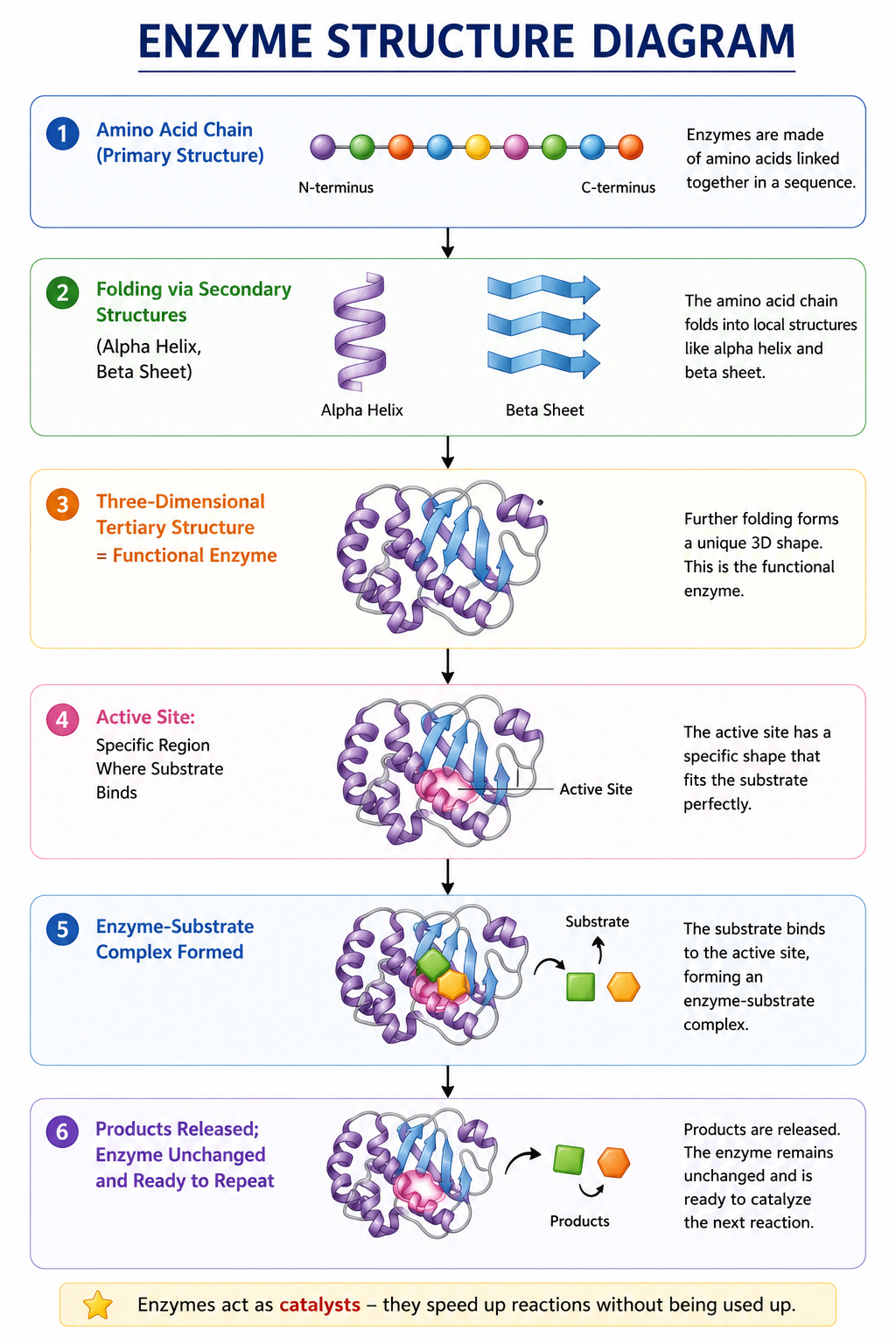
Since most enzymes are proteins, understanding enzyme structure starts with understanding protein structure. Proteins are polymers of amino acids linked by peptide bonds. The sequence of amino acids (the primary structure) determines how the protein folds into its characteristic three-dimensional shape—through secondary structures like alpha helices and beta sheets, then the overall tertiary structure, and in some cases quaternary structure when multiple protein subunits assemble together.
This three-dimensional shape is everything. If you disrupt it—by heat, extreme pH, or certain chemicals—the enzyme loses its shape and stops working. This process is called denaturation.
Active Site
The active site is a specific region on the enzyme’s surface—a pocket or groove formed by the precise arrangement of certain amino acid residues—where the substrate binds and the chemical reaction takes place. The shape, charge distribution, and chemical properties of the active site are uniquely suited to binding one particular substrate (or a group of very similar substrates).
The active site typically makes up only a small fraction of the total enzyme surface, but it’s the most critical part. The rest of the enzyme provides structural support and helps maintain the active site’s shape.
Substrate
The substrate is the specific molecule (or molecules) that an enzyme acts upon. The substrate binds to the active site, is transformed by the reaction, and leaves as a product. For example, the enzyme lactase acts on the substrate lactose (milk sugar), breaking it into glucose and galactose. People who lack sufficient lactase experience lactose intolerance because undigested lactose passes into the large intestine and causes discomfort.
Enzyme-Substrate Complex
When the substrate binds to the active site, the resulting structure is called the enzyme-substrate (ES) complex. This is a temporary arrangement. Once the reaction occurs, the products are released, the enzyme returns to its original shape, and the active site is free to accept another substrate molecule.
The formation of the ES complex is often represented in chemical notation as:
E + S → ES → E + P
Where E = enzyme, S = substrate, and P = products.
How Enzymes Work
Lock and Key Model
Proposed by Emil Fischer in 1894, the lock and key model describes the relationship between an enzyme and its substrate as a precise, pre-formed fit—like a specific key fitting into a specific lock.
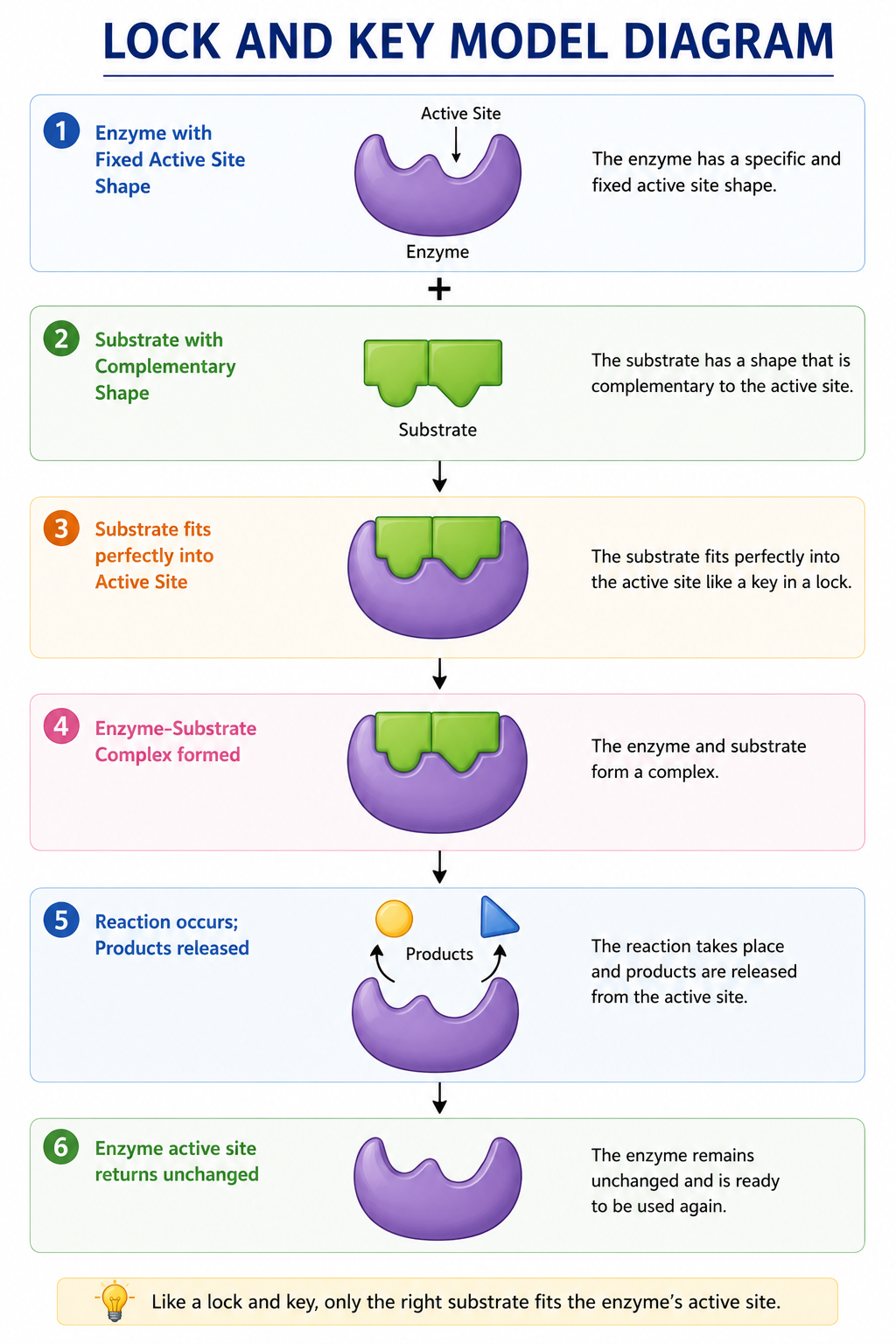
In this model, both the enzyme’s active site and the substrate have rigid, complementary shapes. Only the correct substrate can fit—anything with a different shape won’t bind, which explains enzyme specificity.
The lock and key model was revolutionary for its time and is still useful as a basic introduction to enzyme specificity. However, it turned out to be an oversimplification.
Induced Fit Model
In 1958, Daniel Koshland proposed the induced fit model, which has since become the more scientifically accepted explanation. According to this model, the enzyme’s active site is not a perfectly rigid structure—it’s somewhat flexible. When the substrate approaches and begins to bind, the active site undergoes a conformational change (it shifts shape slightly) to better accommodate the substrate. This induced adjustment optimizes the fit and positions the substrate precisely for the reaction.
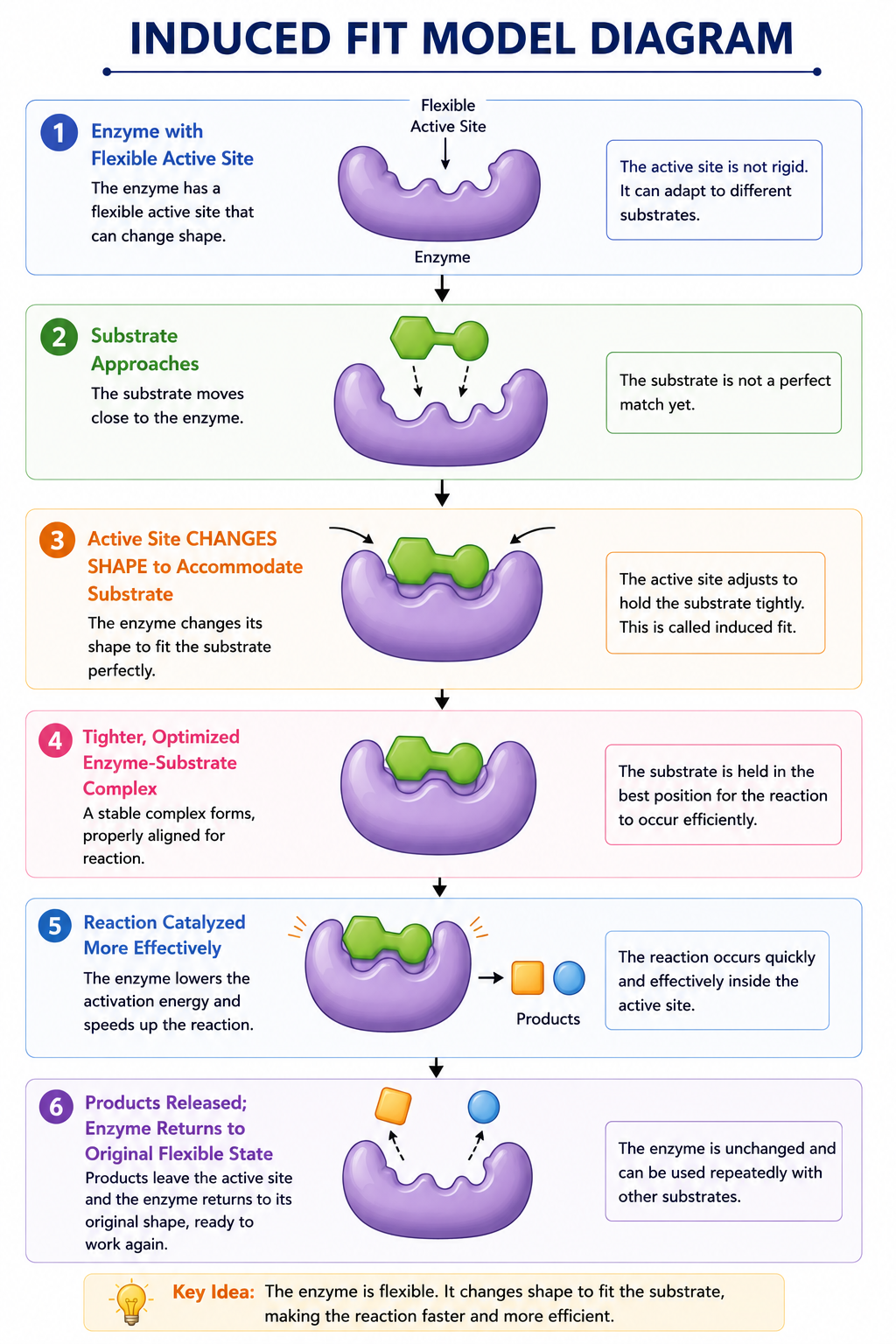
A useful analogy: think of the enzyme’s active site as a hand, and the substrate as a ball. In the lock and key model, the hand is always molded into the exact shape of the ball. In the induced fit model, the hand starts in a relaxed position and curls around the ball as it’s grasped—adjusting to fit better in real time.
The induced fit model explains why enzymes can catalyze reactions more effectively than a perfectly rigid active site would allow, and it also helps explain how certain inhibitors affect enzyme shape even when they don’t bind to the active site.
Characteristics of Enzymes
Understanding the defining properties of enzymes is essential both for exams and for genuinely understanding biochemistry:
- They are biological catalysts: Enzymes speed up reactions by lowering activation energy without being consumed.
- They are highly specific: Each enzyme typically catalyzes one specific reaction or acts on one specific substrate (or type of substrate).
- They are reusable: Because enzymes emerge from reactions unchanged, each molecule can catalyze the same reaction thousands of times per second.
- They are sensitive to conditions: Temperature, pH, and the presence of inhibitors or activators all affect enzyme activity.
- They are regulated: Cells control when and how much an enzyme is active through various regulatory mechanisms.
- They reduce activation energy: This is the fundamental mechanism by which they speed up reactions.
- They do not alter reaction equilibrium: Enzymes affect the rate at which equilibrium is reached, not the final ratio of reactants to products.
- Most are proteins: With the notable exception of ribozymes (catalytic RNA molecules).
Classification of Enzymes
The International Union of Biochemistry and Molecular Biology (IUBMB) has classified enzymes into six main classes based on the type of reaction they catalyze. Each class has a corresponding Enzyme Commission (EC) number.
Oxidoreductases
Oxidoreductases catalyze oxidation-reduction reactions—the transfer of electrons (or hydrogen atoms) between molecules. These reactions are fundamental to cellular respiration and many metabolic pathways.
Examples:
- Lactate dehydrogenase — converts pyruvate to lactate during anaerobic respiration
- Catalase — breaks down hydrogen peroxide into water and oxygen
- Alcohol dehydrogenase — oxidizes alcohol in the liver
Transferases
Transferases catalyze the transfer of a functional group (such as a methyl, phosphate, or amino group) from one molecule to another.
Examples:
- Hexokinase — transfers a phosphate group from ATP to glucose during glycolysis
- Aminotransferases (transaminases) — transfer amino groups between molecules; important in amino acid metabolism
Hydrolases
Hydrolases catalyze hydrolysis reactions—the breaking of chemical bonds through the addition of water. These are the most commonly encountered enzymes in digestion.
Examples:
- Amylase — hydrolyzes starch into maltose/glucose
- Lipase — hydrolyzes triglycerides into fatty acids and glycerol
- Pepsin — hydrolyzes peptide bonds in proteins
Lyases
Lyases catalyze the addition or removal of groups from molecules without using water (non-hydrolytic) or oxidation-reduction. They typically break or form double bonds.
Examples:
- Aldolase — cleaves fructose-1,6-bisphosphate during glycolysis
- Carbonic anhydrase — catalyzes the interconversion of carbon dioxide and bicarbonate
Isomerases
Isomerases catalyze structural rearrangements within a single molecule—converting a molecule into one of its isomers without changing its chemical formula.
Examples:
- Phosphoglucose isomerase — converts glucose-6-phosphate to fructose-6-phosphate in glycolysis
- Triose phosphate isomerase — interconverts glyceraldehyde-3-phosphate and dihydroxyacetone phosphate
Ligases
Ligases catalyze the joining of two molecules using energy from ATP hydrolysis. The name “ligase” comes from the Latin ligare, meaning “to bind.”
Examples:
- DNA Ligase — joins DNA fragments by forming phosphodiester bonds (critical in DNA replication and repair)
- Aminoacyl-tRNA synthetases — attach amino acids to their corresponding tRNA molecules during protein synthesis
Enzyme Classification Summary Table
| Class | Type of Reaction | Key Example | Where It’s Important |
|---|---|---|---|
| Oxidoreductases | Electron/hydrogen transfer (oxidation-reduction) | Catalase | Cellular respiration, antioxidant defense |
| Transferases | Transfer of functional groups | Hexokinase | Glycolysis, amino acid metabolism |
| Hydrolases | Hydrolysis (bond breaking with water) | Amylase, Pepsin | Digestion |
| Lyases | Addition/removal of groups; breaking double bonds | Aldolase | Glycolysis, carbon fixation |
| Isomerases | Structural rearrangement of molecules | Phosphoglucose isomerase | Glycolysis, sugar metabolism |
| Ligases | Joining two molecules using ATP | DNA Ligase | DNA replication, protein synthesis |
Factors Affecting Enzyme Activity
This is one of the most important sections for exam preparation. Understanding what controls enzyme activity helps you understand metabolism, disease, and pharmacology.
Temperature
Temperature has a dramatic two-phase effect on enzyme activity:
- As temperature increases from low levels, enzyme and substrate molecules move faster, collide more frequently, and the rate of enzyme-substrate complex formation increases. Reaction rate rises accordingly.
- However, beyond a certain optimum temperature, the increased heat energy disrupts the weak bonds (hydrogen bonds, hydrophobic interactions) maintaining the enzyme’s three-dimensional shape. The enzyme denatures—its active site changes shape and it can no longer bind substrate effectively. Enzyme activity drops sharply.
For most human enzymes, the optimum temperature is around 37°C (body temperature). Thermophilic bacteria that live in hot springs have enzymes with optima above 70°C—a fascinating adaptation that is commercially exploited (Taq polymerase, used in PCR, comes from one such organism).
pH
Every enzyme has an optimal pH at which it functions most effectively. Deviations above or below this optimum alter the charges on amino acid residues in and around the active site, disrupting the enzyme’s shape and its ability to bind substrate.
Some notable examples:
- Pepsin (stomach) — optimal pH around 2; functions in the highly acidic stomach environment
- Trypsin (small intestine) — optimal pH around 8; works in the alkaline conditions of the duodenum
- Salivary amylase — optimal pH around 7; functions in the near-neutral conditions of the mouth
- Most intracellular enzymes — optimal pH between 6 and 8
Enzyme Concentration
If substrate is in excess (not the limiting factor), increasing enzyme concentration proportionally increases the reaction rate. More enzyme molecules mean more active sites available to bind substrate simultaneously. However, in biological systems, enzyme concentration is tightly regulated—cells don’t simply make unlimited quantities of every enzyme.
Substrate Concentration
At low substrate concentrations, increasing substrate concentration increases reaction rate—more substrate means more enzyme-substrate complexes forming at any given moment. However, at a certain point, all available enzyme active sites are occupied (the enzyme is said to be saturated). Beyond this point, adding more substrate has no further effect on rate. The maximum rate achieved at enzyme saturation is called Vmax. The substrate concentration at which the reaction rate is half of Vmax is called Km (Michaelis constant)—a measure of enzyme-substrate affinity.
Inhibitors
Inhibitors are molecules that reduce enzyme activity. They are broadly divided into two categories:
Competitive Inhibitors: Structurally similar to the substrate; they compete directly with the substrate for binding at the active site. The effect can be overcome by increasing substrate concentration—essentially outnumbering the inhibitor with substrate molecules.
Non-Competitive Inhibitors: Bind at a different location on the enzyme (the allosteric site), causing a conformational change that alters the shape of the active site. Because they don’t compete with the substrate for the active site, increasing substrate concentration does NOT overcome non-competitive inhibition. Vmax is reduced.
A third type worth knowing is irreversible inhibition, where the inhibitor permanently inactivates the enzyme by forming a strong covalent bond with it. Certain nerve agents and antibiotics work through irreversible inhibition.
Cofactors
Some enzymes require non-protein helper molecules called cofactors to function. Cofactors are typically inorganic ions—metal ions such as zinc (Zn²⁺), magnesium (Mg²⁺), iron (Fe²⁺), or copper (Cu²⁺). They help stabilize the enzyme’s structure or participate directly in the catalytic mechanism.
An enzyme without its cofactor is called an apoenzyme and is catalytically inactive. When the cofactor is bound, the complete, active enzyme is called a holoenzyme.
Apoenzyme + Cofactor = Holoenzyme
Coenzymes
Coenzymes are organic (carbon-containing) non-protein molecules that work alongside enzymes. Many vitamins function as coenzymes or as precursors to coenzymes. For example:
- NAD⁺ (derived from niacin/Vitamin B3) — carries electrons in cellular respiration
- FAD (derived from riboflavin/Vitamin B2) — also an electron carrier
- Coenzyme A (CoA) (derived from pantothenic acid/Vitamin B5) — carries acetyl groups in metabolism
- Thiamine pyrophosphate (TPP) (derived from Vitamin B1) — involved in carbohydrate metabolism
This is one reason vitamin deficiencies can have such profound metabolic consequences—without the vitamin, the coenzyme can’t be made, and certain enzyme-catalyzed reactions slow or stop.
Factors Affecting Enzyme Activity Summary Table
| Factor | Effect of Increase | Effect of Decrease | Notes |
|---|---|---|---|
| Temperature | Increases rate up to optimum; then denaturation | Decreases rate; enzymes slow but not denatured | Optimum ~37°C for human enzymes |
| pH | Varies; optimal pH exists for each enzyme | Activity declines away from optimum; denaturation at extremes | Pepsin: pH 2; Trypsin: pH 8 |
| Enzyme Concentration | Increases rate (if substrate not limiting) | Decreases rate | Cells regulate enzyme production tightly |
| Substrate Concentration | Increases rate until Vmax (saturation) | Decreases rate | Km measures enzyme-substrate affinity |
| Competitive Inhibitor | Decreases rate (reversible; substrate can overcome) | — | Structural analog of substrate |
| Non-Competitive Inhibitor | Decreases Vmax regardless of substrate | — | Binds allosteric site; irreversible effect on Vmax |
| Cofactors/Coenzymes | Required for full activity; their presence enables catalysis | Absence creates inactive apoenzyme | Many vitamins serve as coenzyme precursors |
Competitive vs Non-Competitive Inhibition (Comparison Table)
| Feature | Competitive Inhibition | Non-Competitive Inhibition |
|---|---|---|
| Binding Site | Active site (same as substrate) | Allosteric site (different from active site) |
| Structural Similarity to Substrate | Yes, usually structurally similar | Not necessarily similar to substrate |
| Effect on Vmax | Unchanged (same maximum rate possible) | Reduced (lower maximum rate) |
| Effect on Km | Increases (apparent lower affinity) | Unchanged |
| Can Be Overcome by Substrate? | Yes, by increasing substrate concentration | No |
| Reversibility | Usually reversible | Can be reversible or irreversible |
| Example | Malonate inhibiting succinate dehydrogenase | Heavy metals inhibiting various enzymes |
| Drug Example | Statins competing with HMG-CoA reductase | Penicillin irreversibly inhibiting transpeptidase |
Enzymes in Digestion
Digestive enzymes are some of the most practically important and heavily tested enzymes in biology courses. They are produced in specific organs, secreted into the digestive tract, and each targets a specific category of food molecule.
Amylase
Amylase is produced in two locations: the salivary glands (salivary amylase) and the pancreas (pancreatic amylase). It catalyzes the hydrolysis of starch (a polysaccharide) into maltose and other shorter carbohydrate chains.
This is why bread or plain crackers start to taste slightly sweet if you chew them for a long time—salivary amylase is already breaking down the starch into sugars while the food is still in your mouth.
Optimal pH for salivary amylase: approximately 7 (neutral, matching the mouth environment).
Pepsin
Pepsin is produced in the stomach, initially as an inactive precursor called pepsinogen (a clever safety mechanism—if pepsin were active immediately, it would start digesting the cells that produce it). The acidic environment of the stomach converts pepsinogen into active pepsin.
Pepsin is a protease—it catalyzes the hydrolysis of peptide bonds in proteins, breaking proteins down into shorter polypeptide chains. Its optimal pH is approximately 2, making it well-suited for the highly acidic stomach.
Trypsin
Trypsin is produced by the pancreas as an inactive precursor called trypsinogen, which is activated in the small intestine. It continues the digestion of proteins (working on the shorter polypeptide chains that pepsin produced), breaking them further into smaller peptides. Trypsin works best at a pH of around 8, which matches the slightly alkaline environment of the duodenum after bicarbonate from the pancreas neutralizes stomach acid.
Lipase
Pancreatic lipase is produced by the pancreas and secreted into the small intestine, where it catalyzes the hydrolysis of triglycerides (fats) into fatty acids and glycerol. Bile salts produced by the liver emulsify fat globules first, increasing the surface area available for lipase to work on. Optimal pH for pancreatic lipase is approximately 8.
Digestive Enzymes Summary Table
| Enzyme | Produced In | Substrate | Products | Optimal pH |
|---|---|---|---|---|
| Salivary Amylase | Salivary glands | Starch | Maltose, shorter chains | ~7 |
| Pancreatic Amylase | Pancreas | Starch | Maltose, glucose | ~7–8 |
| Pepsin | Stomach (from pepsinogen) | Proteins | Polypeptides | ~2 |
| Trypsin | Pancreas (from trypsinogen) | Polypeptides | Shorter peptides | ~8 |
| Lipase | Pancreas | Triglycerides | Fatty acids, glycerol | ~8 |
| Lactase | Small intestine lining | Lactose | Glucose, galactose | ~6–7 |
| Maltase | Small intestine lining | Maltose | Glucose | ~6–7 |
Enzymes in Human Cells
Beyond digestion, enzymes drive virtually every metabolic process inside your cells:
- Hexokinase — phosphorylates glucose to begin glycolysis; this traps glucose inside the cell
- DNA Polymerase — synthesizes new DNA strands during cell replication; works in the 5′ to 3′ direction and requires a primer
- RNA Polymerase — transcribes DNA into mRNA during gene expression
- ATP Synthase — synthesizes ATP from ADP and inorganic phosphate during cellular respiration; it’s embedded in the inner mitochondrial membrane
- Catalase — breaks down toxic hydrogen peroxide (produced as a metabolic byproduct) into harmless water and oxygen; found abundantly in the liver
- Lysozyme — found in tears, saliva, and mucus; breaks down bacterial cell walls and is part of the body’s innate immune defense
- Ribonuclease (RNase) — degrades RNA molecules when they’re no longer needed
- Proteases of the proteasome — break down old or damaged proteins inside cells for recycling
Industrial Uses of Enzymes
The pharmaceutical and food industries have recognized for over a century that enzymes can do precisely controlled chemistry at room temperature and with minimal waste—making them enormously valuable commercially.
- Food industry: Amylases are used in bread-making to improve texture and extend shelf life; proteases are used to tenderize meat; lactase is added to dairy products for lactose-intolerant consumers; pectinases clarify fruit juices.
- Detergent industry: Proteases (breaking protein stains), lipases (breaking fat stains), and amylases (breaking starch stains) are added to biological laundry detergents, allowing effective cleaning at lower temperatures—saving energy.
- Biofuels: Cellulases break down plant cellulose into fermentable sugars that can be converted to bioethanol.
- Textile industry: Amylases remove starch-based sizes from fabrics; cellulases are used to create the “stonewashed” effect on denim without actual stones.
- Paper and pulp industry: Lipases and other enzymes help remove pitch (natural resin) from wood pulp during paper production.
- PCR and biotechnology: Taq polymerase—a heat-stable DNA polymerase from Thermus aquaticus—is essential to the polymerase chain reaction, the technique underlying genetic testing, forensic DNA analysis, and countless research applications.
Medical Uses of Enzymes
Enzymes have a prominent role in medicine, both as diagnostic tools and therapeutic agents:
- Diagnostic biomarkers: Elevated blood levels of certain enzymes indicate organ damage. Raised troponin and creatine kinase (CK-MB) levels indicate heart muscle damage (heart attack). Elevated alanine transaminase (ALT) and aspartate transaminase (AST) suggest liver damage. Amylase and lipase in blood can signal pancreatitis.
- Thrombolytics: Enzymes like streptokinase and tissue plasminogen activator (tPA) are used to dissolve blood clots in heart attacks and strokes.
- Enzyme replacement therapy (ERT): Patients with inherited enzyme deficiencies can receive replacement enzymes. For example, patients with Gaucher’s disease (caused by a deficiency of glucocerebrosidase) receive enzyme replacement to prevent harmful lipid accumulation.
- Drug design — enzyme inhibitors as drugs:
- Statins inhibit HMG-CoA reductase, reducing cholesterol synthesis in the liver.
- ACE inhibitors block angiotensin-converting enzyme, lowering blood pressure.
- Antibiotics like penicillin irreversibly inhibit bacterial enzymes involved in cell wall synthesis.
- HIV protease inhibitors block viral proteases essential for HIV replication.
- ELISA tests: The enzyme-linked immunosorbent assay—a cornerstone of diagnostic testing—uses enzyme-linked antibodies to detect and quantify proteins, hormones, and pathogens in clinical samples.
Enzymes in Everyday Life
You interact with enzymes constantly, often without realizing it:
- The ripening of fruit involves enzymes breaking down cell wall components and converting starches to sugars.
- Cheese-making relies on rennet (containing the enzyme chymosin) to coagulate milk proteins.
- Brewing and fermentation depend on enzymes in yeast to convert sugars into alcohol.
- Contact lens cleaning solutions often contain protease enzymes to break down protein deposits on lenses.
- Some wound-care products use enzymes to debride (clean) wounds by digesting dead tissue.
- Meat tenderizers sold in grocery stores often contain papain (from papaya) or bromelain (from pineapple)—natural proteases that partially digest muscle proteins, making the meat softer.
Common Enzyme Terms Every Student Should Know
| Term | Definition |
|---|---|
| Active Site | The specific region on the enzyme where substrate binds and catalysis occurs |
| Substrate | The molecule(s) acted upon by an enzyme |
| Enzyme-Substrate Complex | Temporary complex formed when substrate binds to enzyme active site |
| Activation Energy | Minimum energy required to initiate a chemical reaction |
| Denaturation | Irreversible loss of enzyme structure and function due to heat, pH extremes, etc. |
| Competitive Inhibition | Inhibitor competes with substrate for the active site |
| Non-Competitive Inhibition | Inhibitor binds allosteric site; alters active site shape without competing with substrate |
| Allosteric Site | Region of the enzyme other than the active site where regulatory molecules bind |
| Cofactor | Inorganic ion required by some enzymes for activity |
| Coenzyme | Organic molecule (often vitamin-derived) that assists enzyme function |
| Apoenzyme | Inactive enzyme without its cofactor |
| Holoenzyme | Complete, active enzyme with cofactor bound |
| Vmax | Maximum reaction rate achieved when enzyme is fully saturated with substrate |
| Km (Michaelis Constant) | Substrate concentration at which reaction rate is half of Vmax; indicates enzyme-substrate affinity |
| Turnover Number | Number of substrate molecules one enzyme molecule converts to product per unit time |
| Feedback Inhibition | Regulatory mechanism in which the product of a metabolic pathway inhibits an enzyme earlier in that pathway |
| Zymogen (Proenzyme) | Inactive enzyme precursor activated by cleavage (e.g., pepsinogen, trypsinogen) |
| Ribozyme | Catalytic RNA molecule with enzymatic activity |
Common Mistakes Students Make
Being aware of the most frequent errors will help you avoid them in exams:
- Confusing the lock and key with the induced fit model. The lock and key model proposes a rigid, pre-formed complementary fit. The induced fit model recognizes that the active site is flexible and adjusts its shape when the substrate approaches. Most exam questions require you to explain the difference clearly.
- Thinking enzymes are consumed in reactions. They are not. Enzymes emerge from each reaction chemically unchanged and can catalyze the same reaction again and again.
- Assuming denaturation always happens at high temperatures only. Extreme pH values also denature enzymes by disrupting the ionic and hydrogen bonds that maintain their shape—not just heat.
- Believing competitive inhibition is always irreversible. Most competitive inhibition is reversible; adding more substrate can displace the inhibitor from the active site. Don’t confuse this with irreversible inhibition.
- Mixing up cofactors and coenzymes. Cofactors are inorganic (metal ions); coenzymes are organic (carbon-containing, often vitamin-derived). Both are non-protein helpers, but they’re different categories.
- Forgetting that Vmax is unchanged in competitive inhibition. This is a classic exam trick. In competitive inhibition, Vmax stays the same (because the inhibitor can always be displaced by excess substrate); Km increases. In non-competitive inhibition, Vmax decreases; Km stays the same.
- Treating all enzymes as working best at pH 7. Different enzymes have very different pH optima. Pepsin (pH 2), trypsin (pH 8), and intracellular enzymes (near neutral) all differ.
- Confusing substrate concentration effects with enzyme saturation. Past a certain substrate concentration, adding more substrate has no effect because all active sites are occupied. Understanding Vmax and saturation is essential.
Best Tips to Study Enzymes
Exam Tips Box
- Draw the lock and key and induced fit models side by side and practice explaining the difference in plain language. Most exam questions on this topic reward clarity of explanation over memorization of diagrams.
- Memorize the six enzyme classes with one real example each—don’t try to memorize every enzyme in a class, just have one solid, recalled example per class.
- For factors affecting enzyme activity, link each factor to a specific biological example. For temperature: body temperature and human enzymes. For pH: pepsin in the stomach, trypsin in the small intestine.
- Create a flashcard specifically for competitive vs non-competitive inhibition showing what happens to Vmax and Km in each case. This comparison is asked on almost every major exam.
- Understand the logic behind zymogens (inactive enzyme precursors) rather than just memorizing the names. Ask yourself: why would the body produce an inactive form? The answer—to prevent the enzyme from digesting the tissues that produce it—makes the concept unforgettable.
- When studying digestive enzymes, trace the meal: starch enters the mouth (amylase), protein enters the stomach (pepsin), and both continue in the small intestine (trypsin for protein, lipase for fats). Thinking about the meal’s journey organizes the enzymes logically.
- For the Michaelis-Menten concept, don’t get lost in the mathematics. Focus on what Vmax and Km tell you biologically: Vmax is the maximum speed; low Km means the enzyme has high affinity for its substrate.
Enzymes Practice Questions
20 Multiple Choice Questions (MCQs) with Answers
1. Which of the following best describes an enzyme?
- A) A lipid that stores energy
- B) A biological catalyst that speeds up chemical reactions ✓
- C) A molecule that provides energy for reactions
- D) A structural protein in cell membranes
2. What is the region of an enzyme where the substrate binds called?
- A) Active site ✓
- B) Allosteric site
- C) Binding groove
- D) Catalytic cleft
3. According to the induced fit model, what happens when a substrate approaches the active site?
- A) The substrate changes shape to fit the fixed active site
- B) The active site and substrate are always complementary
- C) The active site changes shape to better fit the substrate ✓
- D) The enzyme breaks the substrate without changing shape
4. Which enzyme class catalyzes oxidation-reduction reactions?
- A) Oxidoreductases ✓
- B) Hydrolases
- C) Transferases
- D) Isomerases
5. At which pH does pepsin work most effectively?
- A) pH 7
- B) pH 8
- C) pH 2 ✓
- D) pH 5
6. What happens to an enzyme when it denatures?
- A) It speeds up permanently
- B) It changes its substrate specificity
- C) It loses its three-dimensional shape and activity ✓
- D) It becomes a coenzyme
7. Which of the following is a cofactor?
- A) NAD⁺
- B) Zinc ion (Zn²⁺) ✓
- C) Coenzyme A
- D) FAD
8. A competitive inhibitor works by:
- A) Binding to the allosteric site
- B) Permanently destroying the active site
- C) Occupying the active site in competition with the substrate ✓
- D) Changing the enzyme’s pH optimum
9. What is Vmax?
- A) The substrate concentration at half-maximum velocity
- B) The maximum rate of reaction when enzyme is saturated with substrate ✓
- C) The minimum enzyme concentration needed
- D) The rate of enzyme denaturation
10. Which enzyme breaks down starch in the mouth?
- A) Pepsin
- B) Trypsin
- C) Salivary amylase ✓
- D) Lipase
11. Pepsinogen is an example of a:
- A) Cofactor
- B) Coenzyme
- C) Zymogen (proenzyme) ✓
- D) Competitive inhibitor
12. Which enzyme class joins two molecules using ATP?
- A) Lyases
- B) Isomerases
- C) Hydrolases
- D) Ligases ✓
13. In non-competitive inhibition, what happens to Vmax and Km?
- A) Both increase
- B) Both decrease
- C) Vmax decreases; Km is unchanged ✓
- D) Vmax is unchanged; Km increases
14. Which enzyme destroys toxic hydrogen peroxide in cells?
- A) Catalase ✓
- B) Lactase
- C) Hexokinase
- D) Lipase
15. The Michaelis constant (Km) indicates:
- A) The maximum reaction rate
- B) The enzyme’s molecular weight
- C) The substrate concentration at half-maximum velocity; reflects enzyme-substrate affinity ✓
- D) The inhibitor concentration needed to stop the reaction
16. Which vitamin group commonly serves as coenzyme precursors?
- A) Fat-soluble vitamins (A, D, E, K)
- B) B vitamins ✓
- C) Vitamin C only
- D) Minerals and trace elements
17. Taq polymerase is significant because it:
- A) Digests RNA at high temperatures
- B) Is found only in mammals
- C) Is heat-stable and essential for PCR ✓
- D) Inhibits DNA replication
18. An apoenzyme is:
- A) An enzyme with its cofactor attached
- B) An inactive enzyme lacking its cofactor ✓
- C) An enzyme precursor activated by cleavage
- D) An enzyme that catalyzes RNA synthesis
19. Which of the following statements about enzymes is FALSE?
- A) They lower activation energy
- B) They are specific to their substrates
- C) They are permanently altered after catalyzing a reaction ✓
- D) Their activity is affected by pH
20. The enzyme DNA ligase belongs to which class?
- A) Isomerases
- B) Transferases
- C) Ligases ✓
- D) Lyases
10 Short Answer Questions
- Explain the difference between the lock and key model and the induced fit model of enzyme action. Which is considered more accurate, and why?
- What is activation energy, and how do enzymes reduce it? Use a simple analogy to explain.
- Describe how temperature affects enzyme activity, referencing both the rise in rate at moderate temperatures and the effect of temperatures beyond the optimum.
- Distinguish between a cofactor and a coenzyme. Give one example of each and the biological process it is involved in.
- What is competitive inhibition? How can its effect be overcome, and why does this not change Vmax?
- Name the six classes of enzymes and give one example and one function for each class.
- Why are digestive enzymes like pepsin and trypsin secreted as inactive zymogens? What activates them?
- Explain the concept of enzyme saturation and how it relates to Vmax.
- Describe two industrial applications of enzymes, explaining which enzyme is used and what it does.
- What is feedback inhibition, and why is it a useful regulatory mechanism in metabolism? Give one example.
5 Long Answer Questions
- Compare and contrast competitive and non-competitive enzyme inhibition in detail. For each type, describe the mechanism, the effect on Vmax and Km, whether it can be reversed by increasing substrate concentration, and provide a real biological or pharmaceutical example. Include a discussion of how understanding inhibition is important for drug design.
- Describe all the major factors that affect enzyme activity, explaining the mechanism behind each factor’s effect. For pH and temperature, explain both the ascending and descending phases of the activity curve and explain what is happening at the molecular level at each phase.
- Trace the digestion of a meal containing bread, grilled chicken, and butter through the gastrointestinal tract. For each major food component (starch, protein, fat), identify the enzymes involved at each stage, where they’re produced, their optimal pH, and the products they generate. Explain how zymogens fit into this picture.
- Describe the six classes of enzymes recognized by the IUBMB. For each class, explain the type of reaction catalyzed, name and describe a specific example enzyme, and explain where and why that enzyme’s function matters in human biology.
- Enzymes have a wide range of applications outside the human body. Discuss the industrial, medical, and everyday applications of enzymes, giving specific examples. Explain why enzymes are often preferred over conventional chemical methods in industrial settings, and discuss how enzyme inhibition is exploited in medicine.
Revision Checklist
Use this before your exam to confirm you’re fully prepared:
- I can define what an enzyme is and explain why enzymes are described as biological catalysts
- I understand what activation energy is and how enzymes lower it
- I can describe the structure of an enzyme, including the active site and enzyme-substrate complex
- I can explain both the lock and key model and the induced fit model, and state which is more accurate
- I know the six classes of enzymes with at least one example each
- I understand how temperature affects enzyme activity, including denaturation
- I understand how pH affects enzyme activity and know the pH optima of pepsin, trypsin, and amylase
- I can explain enzyme saturation, Vmax, and Km
- I can describe competitive and non-competitive inhibition and their effects on Vmax and Km
- I know the difference between cofactors (inorganic) and coenzymes (organic), with examples
- I can explain what a zymogen is and why zymogens exist
- I can name and describe the major digestive enzymes (amylase, pepsin, trypsin, lipase)
- I understand industrial and medical applications of enzymes
- I’ve completed all MCQs and checked my answers without looking first
- I can explain feedback inhibition with a biological example
Best Books for Learning Enzymes
These are the resources that consistently earn the highest praise from students and educators at every level:
- “Lehninger Principles of Biochemistry” by Nelson & Cox — The gold standard undergraduate biochemistry textbook; its enzyme chapters are thorough, beautifully illustrated, and clearly written. Essential for anyone serious about biochemistry.
- “Biochemistry” by Jeremy Berg, John Tymoczko & Gregory Gatto — Another leading university biochemistry text with excellent coverage of enzyme kinetics, mechanism, and regulation. Widely used in medical school preparatory courses.
- “Biology” by Campbell & Reece (AP Edition or University Edition) — Covers enzyme biology at the level appropriate for high school AP and introductory college biology courses; accessible and well-illustrated.
- “Harper’s Illustrated Biochemistry” — Popular among medical and nursing students; connects enzyme biochemistry directly to clinical medicine, making it especially useful for understanding enzyme-related diseases and drug mechanisms.
- “Enzyme Kinetics: Behavior and Analysis of Rapid Equilibrium and Steady State Enzyme Systems” by Irwin Segel — For students who want a deep mathematical and mechanistic understanding of enzyme kinetics beyond what standard biology textbooks cover.
Free Online Biology Resources
These freely accessible resources are trustworthy, educationally rigorous, and excellent for enzyme study:
- OpenStax Biology — Free, peer-reviewed biology textbook with comprehensive enzyme chapters covering structure, function, factors affecting activity, and inhibition. Perfect for high school through early university level.
- Khan Academy Biology — Free video lessons and practice exercises on enzymes, including the lock and key model, factors affecting enzyme activity, and enzyme kinetics. Visually clear and easy to follow.
- Biology LibreTexts — Open-access collection of biology and biochemistry materials including detailed enzyme chapters with diagrams, worked examples, and conceptual explanations.
- National Center for Biotechnology Information (NCBI) — Access to peer-reviewed research and review articles on enzyme biology; also home to databases like UniProt where you can look up information on specific enzymes.
- HHMI BioInteractive — Free, high-quality animations and resources from the Howard Hughes Medical Institute; includes excellent visual resources on enzyme mechanisms and metabolic pathways.
Related Articles on LearnMinto
If this enzymes guide has been helpful, these related LearnMinto articles will build on your understanding of related biochemistry and cell biology topics:
- Biology Study Guide — A comprehensive overview of all major biology topics for exam success
- Cell Biology Study Guide — Understand cells, organelles, and the biochemistry that happens inside them
- Cellular Respiration Study Guide — Enzymes like hexokinase, pyruvate kinase, and ATP synthase are central to this topic
- Photosynthesis Study Guide — Learn about enzyme-driven reactions including the Calvin cycle (RuBisCO)
- DNA and RNA Study Guide — Covers DNA polymerase, RNA polymerase, and ligase in DNA replication and transcription
Frequently Asked Questions
Q1: What are enzymes and what do they do?
Enzymes are biological catalysts—almost always proteins—that speed up chemical reactions in living organisms by lowering the activation energy required for those reactions to proceed. They are highly specific, reusable, and sensitive to conditions like temperature and pH. Without enzymes, the chemical reactions that sustain life would occur far too slowly to support living cells.
Q2: What is the difference between the lock and key model and the induced fit model?
In the lock and key model, the enzyme’s active site is rigid and precisely shaped to match the substrate—like a key fitting a specific lock. In the induced fit model, the active site is flexible; when the substrate approaches, the active site adjusts its shape to better accommodate it. The induced fit model is currently the more widely accepted explanation because it better accounts for how enzymes actually function at the molecular level.
Q3: What factors affect enzyme activity?
The main factors are temperature (activity increases with temperature up to an optimum, then drops as denaturation occurs), pH (each enzyme has an optimal pH; deviations reduce activity), enzyme concentration (more enzyme means faster rate if substrate is available), substrate concentration (rate increases with substrate up to the saturation point), inhibitors (both competitive and non-competitive types reduce activity), and the availability of cofactors and coenzymes.
Q4: What is the difference between competitive and non-competitive inhibition?
A competitive inhibitor resembles the substrate and competes with it for the active site. Increasing substrate concentration can overcome this inhibition, and Vmax remains unchanged while Km increases. A non-competitive inhibitor binds to the allosteric site, changes the enzyme’s shape, and reduces its activity regardless of substrate concentration. Vmax decreases; Km is unchanged.
Q5: What is a zymogen?
A zymogen (also called a proenzyme) is an inactive enzyme precursor. Certain enzymes—particularly digestive proteases like pepsin and trypsin—are synthesized and stored in inactive form and then activated when needed. This prevents the enzyme from digesting the very tissues that produce it. Pepsinogen becomes pepsin in the acidic stomach; trypsinogen becomes trypsin in the small intestine.
Q6: What is the difference between a cofactor and a coenzyme?
A cofactor is an inorganic molecule—typically a metal ion such as zinc, magnesium, or iron—that some enzymes require for activity. A coenzyme is an organic (carbon-containing) non-protein molecule that assists enzyme function, and many are derived from vitamins. Both are non-protein helpers, but cofactors are inorganic and coenzymes are organic.
Q7: What does Km mean, and why does it matter?
Km, the Michaelis constant, is the substrate concentration at which an enzyme operates at half its maximum rate (Vmax). It is a measure of the enzyme’s affinity for its substrate—a low Km means the enzyme reaches half-maximum rate at a low substrate concentration, indicating high affinity. A high Km indicates low affinity. Km values are useful for comparing different enzymes’ efficiency and for understanding how inhibitors affect enzyme behavior.
Q8: Can enzyme activity ever be permanent lost?
Yes. If an enzyme is denatured by extreme heat or harsh pH, the bonds maintaining its three-dimensional structure are disrupted and the protein unfolds permanently—it cannot refold to recover its active site. Similarly, irreversible inhibitors form covalent bonds with the enzyme that permanently inactivate it. Reversible inhibition, by contrast, can be overcome by removing the inhibitor or adjusting conditions.
Q9: What are the six classes of enzymes?
The six classes are oxidoreductases (catalyze oxidation-reduction reactions), transferases (transfer functional groups between molecules), hydrolases (catalyze hydrolysis using water), lyases (add or remove groups without water or oxidation), isomerases (rearrange molecules into isomers), and ligases (join two molecules using ATP energy).
Q10: Why are enzymes important in medicine?
Enzymes matter medically in several ways: abnormal blood enzyme levels (like elevated troponin or liver transaminases) serve as diagnostic markers of disease; enzyme deficiencies cause inherited metabolic disorders; many drugs work by inhibiting specific enzymes (statins, ACE inhibitors, penicillin, HIV protease inhibitors); thrombolytic enzymes dissolve dangerous blood clots; and enzyme replacement therapy helps patients with enzyme deficiency diseases.
Q11: Are all enzymes proteins?
Almost all enzymes are proteins, but a small group of catalytic RNA molecules called ribozymes also possess enzymatic activity. The most biologically important ribozyme is the ribosome’s catalytic RNA, which catalyzes the peptide bond formation during protein synthesis. Ribozymes challenged the long-held assumption that catalysis was exclusively a protein function and earned Sidney Altman and Thomas Cech the Nobel Prize in Chemistry in 1989.
Q12: Why do we study enzymes in biology?
Enzymes are the molecular machinery of life. Every metabolic pathway, every genetic process, every physiological function depends on enzyme-catalyzed reactions. Understanding enzymes explains how nutrients are digested, how cells generate energy, how genes are copied, and how drugs work. Enzyme dysfunction underlies many diseases. For anyone studying biology, biochemistry, nursing, or medicine, a thorough understanding of enzymes is genuinely foundational to everything else.
Summary
Enzymes are the catalytic workhorses of all living systems—proteins precisely shaped to accelerate specific chemical reactions by lowering activation energy, binding their substrates at a dedicated active site, and emerging from each reaction unchanged and ready to work again.
Two models explain substrate binding: the older lock and key model (rigid complementary fit) and the more accurate induced fit model (flexible active site that adjusts when substrate binds). Enzymes are classified into six functional groups—oxidoreductases, transferases, hydrolases, lyases, isomerases, and ligases—each defined by the type of reaction they catalyze.
Activity is controlled by temperature, pH, enzyme and substrate concentration, inhibitors, and the availability of cofactors and coenzymes. Competitive inhibitors block the active site and can be overcome by excess substrate; non-competitive inhibitors bind allosteric sites and reduce Vmax regardless of substrate levels.
Digestive enzymes—amylase, pepsin, trypsin, and lipase—illustrate the practical importance of enzyme specificity and pH optima in real biological systems. Beyond digestion, enzymes drive cellular respiration, DNA replication, immune defense, and virtually every other metabolic process. Industrially and medically, enzymes are used in food production, detergents, diagnostics, thrombolysis, and drug design.
Understanding enzymes is not just an exam requirement—it’s a window into understanding how life actually works at the molecular level.
Final Thoughts
Enzymes sit right at the intersection of chemistry and biology, and that’s exactly what makes them such a rewarding topic to study. Once you truly understand how an enzyme’s shape determines its function, and how conditions like temperature and pH influence that shape, the rest of biochemistry starts to make logical sense in a way that pure memorization never achieves.
This Enzymes Study Guide has aimed to give you both the conceptual understanding and the factual detail you need to perform confidently on any exam that covers this material. Work through the practice questions honestly, use the revision checklist to identify any gaps, and revisit the sections that challenge you most.
The enzymes in your cells have been working perfectly without any conscious effort from you your entire life. Now you know how they do it.
Disclaimer
This article is intended for educational and informational purposes only. While LearnMinto strives to provide accurate and up-to-date information, readers should verify important academic concepts through official textbooks, educational institutions, examination boards, or trusted scientific resources before relying on this content for exams or academic purposes. LearnMinto is not affiliated with any specific school, university, research institution, or examination board.