
Introduction
Microbiology is one of those subjects that feels overwhelming at first—there are bacteria, viruses, fungi, protozoa, countless diseases, and an enormous amount of terminology that all seem to arrive at once. But here’s what I’ve seen in years of teaching: once students understand the logic behind microbiology, the details start to click into place surprisingly fast.
This microbiology study guide is built to give you exactly that—a logical, structured, and genuinely useful walkthrough of everything you need to know. Whether you’re studying for a high school biology exam, preparing for nursing boards, tackling a medical entrance test, or simply trying to understand how invisible organisms shape the visible world, this guide was written with you in mind.
Microbiology matters in ways that most people don’t fully appreciate until something goes wrong—a global pandemic, a sudden outbreak of food poisoning, antibiotic treatments failing for the first time. Behind all of those events are microorganisms doing exactly what they’ve evolved to do. Understanding them isn’t just academic; it’s one of the most practical things you can learn.
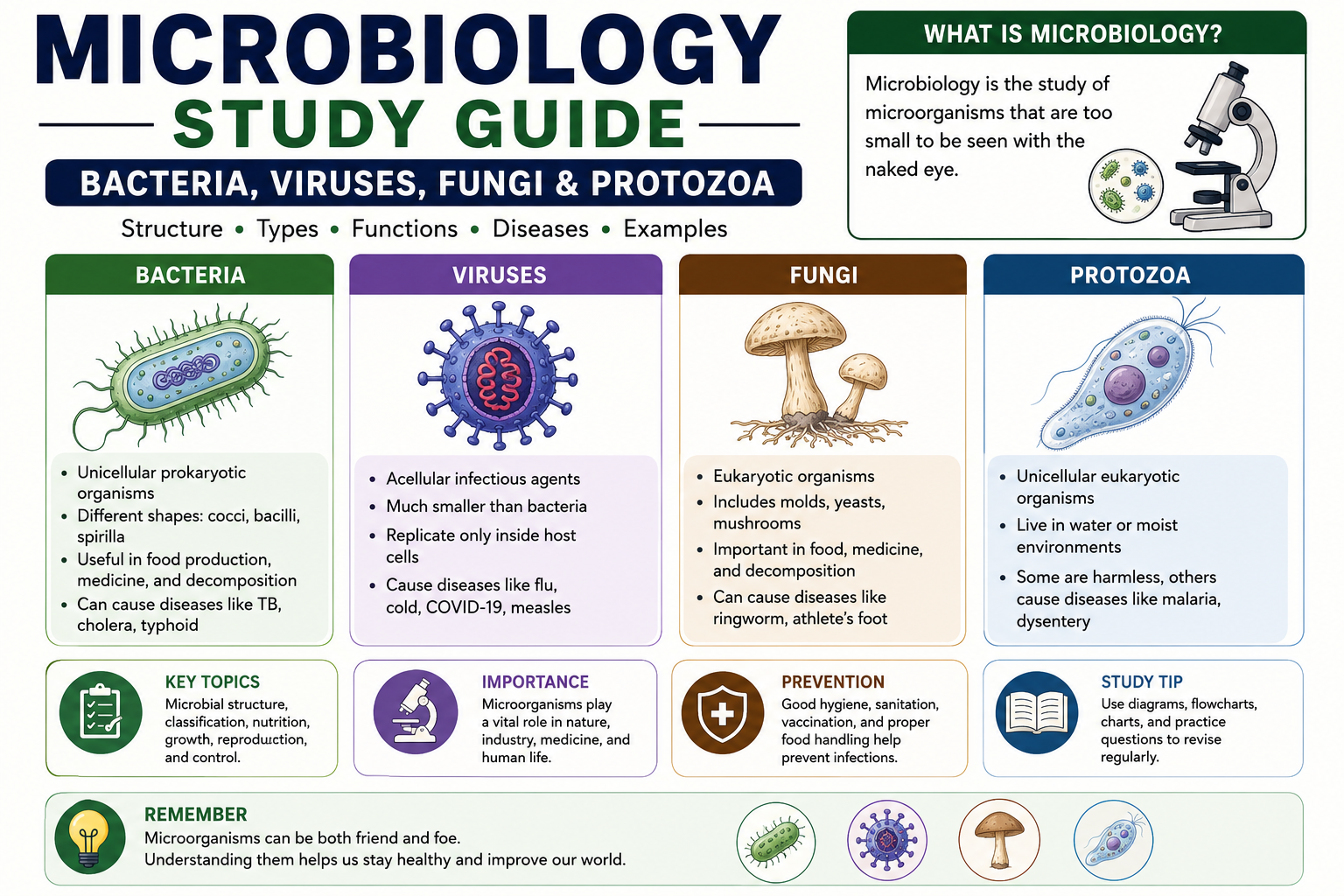
In this guide, we’ll cover the four major groups of microorganisms: bacteria, viruses, fungi, and protozoa. We’ll look at how they’re structured, how they reproduce, what diseases they cause, and how we fight back. We’ll also explore how microorganisms benefit us—in medicine, agriculture, food production, and biotechnology.
By the time you finish reading, you won’t just have notes to memorize. You’ll have a mental framework that makes microbiology genuinely understandable—and maybe even a little fascinating.
Let’s start small. Very, very small.
Key Takeaways
Here’s what you’ll understand by the end of this guide:
- Microbiology is the study of microorganisms too small to see with the naked eye—including bacteria, viruses, fungi, protozoa, algae, and prions
- Bacteria are prokaryotes—single-celled organisms without a nucleus—that can be beneficial or harmful
- Viruses are not technically living organisms; they require a host cell to reproduce
- Fungi are eukaryotes that absorb nutrients from their environment and include both beneficial and harmful species
- Protozoa are single-celled eukaryotes, many of which are parasitic and cause serious diseases
- Microorganisms play critical roles in medicine, food production, agriculture, and environmental cycling
- Infectious diseases caused by microorganisms remain among the leading causes of death globally
- Understanding microbiology is essential for nursing, medicine, pharmacy, environmental science, and biotechnology
What Is Microbiology?
Microbiology is the scientific study of microorganisms—living things so small they cannot be seen with the naked eye. The word itself comes from three Greek roots: mikros (small), bios (life), and logos (study). Put them together and you get the study of small life. Simple enough, right?
But don’t let the simplicity of the definition fool you. The field of microbiology covers an extraordinarily diverse range of organisms and processes. We’re talking about bacteria that can survive in boiling hot springs, viruses that can dismantle the human immune system, fungi that can break down dead trees into rich soil, and protozoa that have shaped the course of human history through diseases like malaria.
The primary organisms studied in microbiology include:
- Bacteria – Prokaryotic single-celled organisms
- Viruses – Acellular, non-living infectious agents
- Fungi – Eukaryotic organisms including molds and yeasts
- Protozoa – Single-celled eukaryotic organisms, many parasitic
- Algae – Photosynthetic microorganisms
- Prions – Misfolded proteins that cause neurological disease
Microorganisms were the first forms of life on Earth, appearing approximately 3.8 billion years ago. For most of Earth’s history, microbial life was the only life. Everything that came after—plants, animals, humans—evolved in a world that microorganisms had already been shaping for billions of years.
Here’s a practical perspective: you have approximately 38 trillion bacteria living in and on your body right now. They help you digest food, train your immune system, protect your skin, and produce vitamins. The relationship between humans and microorganisms is ancient, complex, and absolutely essential to your survival.
Why Is Microbiology Important?
The short answer is that microbiology touches almost every aspect of modern life. The longer answer is worth exploring carefully, especially if you’re a student trying to understand why this subject deserves your full attention.
Public Health and Disease Control
The majority of infectious diseases—from the common cold to tuberculosis, HIV, and COVID-19—are caused by microorganisms. Without microbiology, we couldn’t identify pathogens, develop vaccines, design antibiotics, or contain outbreaks. Every major advance in public health over the past 150 years—from pasteurization to germ-free surgery to vaccine programs—was built on microbiological discoveries.
Food Safety
Foodborne illnesses affect hundreds of millions of people every year globally. Microbiology helps us understand which organisms contaminate food, how they grow, and how to prevent or destroy them. The pasteurization of milk, the fermentation of cheese and yogurt, and the safety standards in food manufacturing all depend on microbiological knowledge.
Environmental Science
Microorganisms drive the nitrogen cycle, carbon cycle, and decomposition of organic matter. Without bacteria and fungi breaking down dead material and recycling nutrients, terrestrial ecosystems would collapse. Environmental microbiologists study how microbial communities respond to pollution and how they can be used to clean up contaminated environments.
Biotechnology and Medicine
Insulin for diabetics was first produced using genetically engineered bacteria. Many antibiotics are derived from fungi. Vaccines are developed using knowledge of viral and bacterial biology. The entire pharmaceutical industry is deeply intertwined with microbiology.
Agriculture
Soil microbiology is fundamental to crop health. Nitrogen-fixing bacteria convert atmospheric nitrogen into forms plants can use. Mycorrhizal fungi extend the root systems of plants. Understanding microbial life in soil is inseparable from understanding sustainable agriculture.
History of Microbiology
Microbiology as a formal science is surprisingly young—but the organisms it studies have been part of human experience since the beginning.
Ancient Observations
Long before microscopes existed, ancient cultures recognized that certain practices prevented illness—boiling water, avoiding contact with sick individuals, and preserving food with salt. They didn’t know why these things worked, but the empirical observation was there.
Antonie van Leeuwenhoek (1670s)
The real beginning of microbiology as a science came with a Dutch draper and amateur lens maker named Antonie van Leeuwenhoek. Using microscopes he ground himself—far more powerful than anything available at the time—Leeuwenhoek became the first person to observe living microorganisms. He called them “animalcules.” His letters to the Royal Society of London describing these tiny organisms caused a sensation.
The Debate Over Spontaneous Generation
For centuries, people believed microorganisms arose spontaneously from non-living matter. Francesco Redi challenged this for larger organisms in the 1600s. But it took Louis Pasteur’s elegant swan-neck flask experiments in 1859 to definitively disprove spontaneous generation for microorganisms and establish that microbial life comes from pre-existing microbial life.
Germ Theory of Disease
Robert Koch formalized the connection between specific microorganisms and specific diseases through his famous postulates (1876–1884). Koch identified the bacteria responsible for tuberculosis, anthrax, and cholera, establishing that specific germs cause specific diseases—a revolutionary idea at the time.
Key Historical Milestones:
| Year | Scientist | Discovery |
|---|---|---|
| 1670s | Antonie van Leeuwenhoek | First observation of bacteria |
| 1796 | Edward Jenner | First vaccine (smallpox) |
| 1859 | Louis Pasteur | Disproved spontaneous generation |
| 1876 | Robert Koch | Developed Koch’s postulates |
| 1928 | Alexander Fleming | Discovery of penicillin |
| 1953 | Watson & Crick | Structure of DNA |
| 1983 | Luc Montagnier | Discovery of HIV |
Branches of Microbiology
Microbiology isn’t one unified discipline—it’s a family of related fields, each focused on a specific type of organism or application.
Pure (Basic) Microbiology:
- Bacteriology – The study of bacteria, their structure, physiology, and ecology
- Virology – The study of viruses, their replication cycles, and pathogenic effects
- Mycology – The study of fungi, including molds, yeasts, and mushrooms
- Parasitology – The study of parasites, including protozoa and helminths
- Phycology – The study of algae
- Immunology – The study of the immune system’s responses to microorganisms
Applied Microbiology:
- Medical Microbiology – Focused on pathogens causing human disease and their treatment
- Environmental Microbiology – Studies microbial roles in ecosystems and environmental processes
- Food Microbiology – Examines microorganisms in food production, safety, and spoilage
- Industrial Microbiology – Uses microorganisms to produce pharmaceuticals, enzymes, and biofuels
- Agricultural Microbiology – Studies microbes that affect crop and soil health
- Pharmaceutical Microbiology – Focuses on developing drugs and ensuring pharmaceutical safety
Each of these branches is a career in itself. Medical microbiologists work in hospitals identifying pathogens. Environmental microbiologists work at contaminated sites. Industrial microbiologists work in pharmaceutical and biotech companies. The career opportunities in this field are genuinely broad.
Characteristics of Microorganisms
Despite their enormous diversity, microorganisms share several common characteristics that distinguish them from larger, more complex life forms.
1. Microscopic Size
By definition, microorganisms are too small to see with the naked eye. Bacteria typically range from 1–10 micrometers (µm) in size. Viruses are even smaller—typically 20–300 nanometers (nm). To put that in perspective, if a bacterium were the size of a human, a virus would be roughly the size of a car.
2. Ubiquitous Distribution
Microorganisms exist everywhere—in soil, water, air, deep ocean sediments, hot springs, glaciers, and inside other organisms. Certain bacteria called extremophiles can survive conditions that would instantly kill any other form of life.
3. Rapid Reproduction
Many bacteria can divide every 20 minutes under ideal conditions. This means one bacterium can theoretically produce millions of descendants within hours. This rapid reproduction is both a key survival strategy and the reason infections can escalate so quickly.
4. Metabolic Diversity
Microorganisms display an extraordinary range of metabolic capabilities. Some are autotrophs (making their own food through photosynthesis or chemosynthesis). Others are heterotrophs (consuming organic matter). Some thrive with oxygen; others are killed by it.
5. Genetic Adaptability
Microorganisms can acquire new genes through horizontal gene transfer—sharing genetic material directly between cells without reproduction. This is a major mechanism behind antibiotic resistance spreading rapidly between bacterial species.
Classification of Microorganisms
Microorganisms are classified using the same hierarchical system used for all life: Domain, Kingdom, Phylum, Class, Order, Family, Genus, Species.
The three-domain system, proposed by Carl Woese in the 1970s based on ribosomal RNA analysis, is the framework modern microbiology uses:
| Domain | Description | Examples |
|---|---|---|
| Bacteria | Prokaryotes with bacterial cell walls | E. coli, Streptococcus |
| Archaea | Prokaryotes with distinct biochemistry, often extremophiles | Methanobacterium, Halobacterium |
| Eukarya | Organisms with a true nucleus | Fungi, protozoa, algae, plants, animals |
Viruses sit outside this classification system entirely—they are not considered cells and don’t fit neatly into any domain. They are classified separately based on their type of genetic material (DNA or RNA), structure, and replication strategy.
Bacteria Explained
Bacteria are the most abundant and diverse organisms on Earth. There are estimated to be approximately 10^30 individual bacteria on the planet—a number so large it’s genuinely difficult to conceptualize. They inhabit every environment, perform critical ecological functions, cause devastating diseases, and also make foods like yogurt and cheese possible. Understanding bacteria is the cornerstone of microbiology.
Structure of Bacteria
Bacteria are prokaryotes—they lack a membrane-bound nucleus and other membrane-enclosed organelles. Their genetic material (a single circular chromosome) floats freely in a region called the nucleoid.
Key structural components:
- Cell Wall – Provides shape and protection; composed of peptidoglycan in most bacteria. The Gram staining technique differentiates bacteria based on cell wall structure
- Cell Membrane – A phospholipid bilayer controlling what enters and exits the cell
- Cytoplasm – The gel-like interior containing ribosomes, enzymes, and the nucleoid
- Ribosomes – 70S ribosomes for protein synthesis (different from eukaryotic 80S ribosomes—this difference is targeted by many antibiotics)
- Flagella – Whip-like appendages used for movement
- Pili – Hair-like projections used for attachment and genetic exchange
- Capsule – A polysaccharide outer layer found in some bacteria that protects against the host immune system
- Plasmids – Small circular DNA molecules carrying extra genes, often including antibiotic resistance genes
Types of Bacteria
Bacteria are classified by several criteria:
By Shape:
- Cocci – Spherical (e.g., Staphylococcus, Streptococcus)
- Bacilli – Rod-shaped (e.g., Escherichia coli, Bacillus anthracis)
- Spirilla – Spiral-shaped (e.g., Helicobacter pylori)
- Vibrio – Comma-shaped (e.g., Vibrio cholerae)
By Gram Staining:
- Gram-positive – Thick peptidoglycan wall retains crystal violet stain; appear purple (e.g., Staphylococcus aureus)
- Gram-negative – Thin peptidoglycan layer with outer membrane; appear red/pink after counterstain (e.g., E. coli)
By Oxygen Requirement:
- Aerobic – Require oxygen
- Anaerobic – Cannot survive in oxygen
- Facultative anaerobic – Can survive with or without oxygen
Beneficial Bacteria
Not all bacteria are enemies. In fact, most of them are either neutral or actively beneficial:
- Gut microbiome bacteria like Lactobacillus and Bifidobacterium aid digestion, produce vitamins, and support immune function
- Rhizobium bacteria live in the root nodules of legumes and fix atmospheric nitrogen, enriching soil fertility
- Streptomyces species produce many of our most important antibiotics, including streptomycin
- Lactic acid bacteria ferment milk into yogurt, cheese, and kefir
- Bacillus thuringiensis produces toxins used as natural pesticides in organic farming
Harmful Bacteria
Some bacteria cause serious, sometimes fatal diseases:
- Mycobacterium tuberculosis – Causes tuberculosis (TB), still one of the world’s deadliest infectious diseases
- Staphylococcus aureus – Causes skin infections, pneumonia, and sepsis; MRSA strains are antibiotic-resistant
- Vibrio cholerae – Causes cholera through contaminated water
- Clostridium botulinum – Produces botulinum toxin, one of the most potent toxins known
- Salmonella typhi – Causes typhoid fever
Examples of Common Bacteria
| Bacterium | Type | Effect on Humans |
|---|---|---|
| Escherichia coli | Gram-negative bacillus | Mostly harmless gut bacteria; some strains cause diarrhea |
| Streptococcus pneumoniae | Gram-positive coccus | Pneumonia, meningitis |
| Staphylococcus aureus | Gram-positive coccus | Skin infections, food poisoning |
| Lactobacillus acidophilus | Gram-positive bacillus | Gut health, yogurt production |
| Helicobacter pylori | Gram-negative spiral | Peptic ulcers, gastritis |
Viruses Explained
Viruses are arguably the strangest entities in biology. They’re smaller than bacteria, simpler in structure than any cell, incapable of independent reproduction, and yet they’ve shaped the course of human history more profoundly than any other category of microorganism. Every year, viruses cause billions of infections worldwide.
Structure of Viruses
Viruses are structurally simpler than any cell. At minimum, a virus consists of:
- Genetic material – Either DNA or RNA (never both), which may be single-stranded or double-stranded
- Capsid – A protein coat that surrounds and protects the genetic material; composed of protein subunits called capsomeres
- Envelope (in some viruses) – A lipid membrane derived from the host cell, surrounding the capsid. Enveloped viruses (like influenza and HIV) are generally more susceptible to disinfectants than non-enveloped viruses
Some viruses also have surface proteins (like the hemagglutinin and neuraminidase spikes on influenza viruses) that are critical for attaching to host cells and are the primary targets for vaccines and antiviral drugs.
How Viruses Reproduce
Viruses cannot reproduce independently—they must hijack the cellular machinery of a living host cell. There are two main replication strategies:
The Lytic Cycle (leads to immediate cell destruction):
- Attachment – Virus binds to specific receptors on host cell surface
- Penetration – Viral genetic material enters the host cell
- Biosynthesis – Host cell machinery produces viral components
- Assembly – New virus particles are assembled
- Release – New viruses burst out of the cell (lysis), destroying it, and infect neighboring cells
The Lysogenic Cycle (dormant integration):
- Viral DNA integrates into the host chromosome as a prophage
- The viral DNA replicates along with the host cell’s DNA during normal cell division
- Under certain triggers (stress, UV light), the viral DNA exits the chromosome and enters the lytic cycle
HIV uses a variation of this strategy—it integrates into human immune cells and can remain dormant for years before becoming active.
Common Viral Diseases
| Virus | Disease | Transmission |
|---|---|---|
| Influenza A/B | Flu | Respiratory droplets |
| HIV | AIDS | Bodily fluids |
| SARS-CoV-2 | COVID-19 | Respiratory droplets/aerosols |
| Hepatitis B | Hepatitis | Blood, bodily fluids |
| Poliovirus | Polio | Fecal-oral route |
| Varicella-zoster | Chickenpox/Shingles | Respiratory droplets, contact |
| Dengue virus | Dengue fever | Aedes mosquito bite |
| Rabies virus | Rabies | Animal bites |
Are Viruses Living or Non-Living?
This is one of the most genuinely interesting debates in biology, and it’s worth exploring carefully because it comes up in virtually every microbiology exam.
Arguments that viruses ARE living:
- They carry genetic information (DNA or RNA)
- They evolve through natural selection
- They respond to their environment
- They reproduce (albeit with host help)
Arguments that viruses are NOT living:
- They have no cells—the basic unit of life
- They cannot carry out metabolism independently
- They cannot reproduce without a host
- They have no ribosomes or energy-producing machinery
Most biologists currently classify viruses as non-living biological entities—occupying a gray zone between chemistry and life. The debate itself, though, is a fantastic entry point for understanding what we actually mean when we say something is “alive.”
Fungi Explained
Fungi occupy a unique ecological niche. They’re neither plants nor animals—they’re their own kingdom entirely. Most fungi you encounter are far larger than bacteria or viruses, but the field of medical mycology (the study of disease-causing fungi) is very much part of microbiology.
Types of Fungi
- Yeasts – Unicellular fungi that reproduce by budding. Saccharomyces cerevisiae (baker’s yeast) ferments sugars to produce carbon dioxide and ethanol—essential for bread, beer, and wine
- Molds – Multicellular fungi that grow as thread-like filaments called hyphae. Molds form fuzzy colonies visible on old bread or fruit
- Mushrooms – The fruiting bodies of certain fungi, which are the reproductive structures. The actual organism lives underground as a network of hyphae (the mycelium)
- Dimorphic fungi – Can exist as either yeast or mold depending on environmental conditions; many pathogenic fungi are dimorphic
Characteristics
- All fungi are eukaryotes with a true nucleus
- They have cell walls made of chitin (not cellulose like plants, not peptidoglycan like bacteria)
- Fungi are heterotrophic—they cannot make their own food through photosynthesis
- They obtain nutrients through absorption—secreting enzymes externally and absorbing the broken-down products
- Most reproduce through spores, which can be sexual or asexual
Uses of Fungi
The benefits of fungi are enormous and often underappreciated:
- Antibiotics – Penicillin was discovered when Alexander Fleming noticed that Penicillium mold was killing bacteria on his culture plate. Many antifungal and antibacterial drugs are still derived from fungal species
- Food production – Yeasts ferment bread, beer, wine, and spirits. Various molds produce cheeses like Roquefort and Camembert
- Decomposition – Fungi are nature’s primary decomposers, breaking down lignin in wood and recycling nutrients through ecosystems
- Biotechnology – Fungi are used to produce industrial enzymes, citric acid, and various pharmaceutical compounds
Harmful Fungi
- Candida albicans – Causes candidiasis (thrush), a common opportunistic infection in immunocompromised patients
- Aspergillus fumigatus – Causes aspergillosis, a serious lung infection in immunocompromised individuals
- Trichophyton species – Cause ringworm, athlete’s foot, and nail infections
- Cryptococcus neoformans – Causes cryptococcal meningitis, primarily in HIV/AIDS patients
Protozoa Explained
Protozoa are single-celled eukaryotic organisms that have caused more human suffering than perhaps any other category of microorganism. Malaria alone—caused by Plasmodium protozoa—has killed more humans throughout history than any war or other infectious disease. Understanding protozoa is essential for anyone studying global health.
Characteristics
- Single-celled eukaryotes with a true membrane-bound nucleus
- Most are heterotrophic, feeding on bacteria, algae, or organic matter
- Many are motile, moving by means of flagella, cilia, or pseudopods (false feet)
- Found in virtually all aquatic environments, soil, and as parasites within hosts
- Many form cysts—dormant, resistant stages that allow survival in harsh conditions
Types of Protozoa
Protozoa are classified primarily by their mode of movement:
| Group | Movement | Example | Disease |
|---|---|---|---|
| Amoebozoa | Pseudopods | Entamoeba histolytica | Amoebic dysentery |
| Flagellates | Flagella | Giardia lamblia | Giardiasis |
| Ciliates | Cilia | Balantidium coli | Balantidiasis |
| Sporozoa | No motility in adult stage | Plasmodium falciparum | Malaria |
Life Cycle
Many protozoa have complex life cycles involving multiple hosts and different developmental stages. Plasmodium, for example, requires both a human host and a female Anopheles mosquito to complete its life cycle:
- Infected mosquito bites a human, injecting sporozoites into the bloodstream
- Sporozoites travel to the liver and multiply as merozoites
- Merozoites enter red blood cells, reproduce, and cause cells to burst—producing the fever cycles characteristic of malaria
- Some merozoites develop into sexual forms (gametocytes)
- A mosquito biting an infected person ingests gametocytes, which undergo sexual reproduction in the mosquito’s gut
- New sporozoites develop and migrate to the mosquito’s salivary glands, completing the cycle
Diseases Caused by Protozoa
- Malaria – Plasmodium falciparum (most lethal), P. vivax, P. malariae; transmitted by Anopheles mosquito; approximately 250 million cases and 600,000 deaths annually
- Amoebic Dysentery – Entamoeba histolytica; causes bloody diarrhea and can spread to the liver
- Giardiasis – Giardia lamblia; common waterborne disease causing severe diarrhea and abdominal cramps
- Toxoplasmosis – Toxoplasma gondii; usually mild in healthy adults but dangerous to pregnant women and immunocompromised individuals; often transmitted through cat feces or undercooked meat
- African Sleeping Sickness – Trypanosoma brucei; transmitted by tsetse fly; affects the central nervous system
- Leishmaniasis – Leishmania species; transmitted by sandflies; can affect skin, mucous membranes, or internal organs
Bacteria vs Viruses
Students confuse these two all the time, and the confusion has real-world consequences—like expecting antibiotics to work on a viral infection (they won’t).
| Feature | Bacteria | Viruses |
|---|---|---|
| Cell type | Prokaryotic (no nucleus) | Acellular (not a cell) |
| Size | 1–10 micrometers | 20–300 nanometers |
| Genetic material | DNA (circular chromosome + plasmids) | DNA or RNA (never both) |
| Reproduction | Binary fission (independent) | Requires host cell |
| Living? | Yes | Debated; generally classified as non-living |
| Treatment | Antibiotics | Antiviral drugs; vaccines |
| Cell wall | Peptidoglycan (most) | No cell wall |
| Ribosomes | Yes (70S) | No |
| Examples of diseases | TB, cholera, pneumonia | COVID-19, flu, HIV, rabies |
Key exam point: Antibiotics work on bacteria by targeting structures like the cell wall or bacterial ribosomes—structures viruses don’t have. This is precisely why antibiotics are useless against viral infections.
Bacteria vs Fungi
| Feature | Bacteria | Fungi |
|---|---|---|
| Cell type | Prokaryotic | Eukaryotic |
| Cell wall composition | Peptidoglycan | Chitin |
| Nucleus | No membrane-bound nucleus | True membrane-bound nucleus |
| Reproduction | Binary fission | Spores, budding |
| Size | 1–10 µm | Varies; unicellular to large multicellular |
| Nutrition | Autotrophic or heterotrophic | Heterotrophic (absorptive) |
| Treatment of infection | Antibiotics | Antifungal drugs |
| Example diseases | Tuberculosis, cholera | Ringworm, candidiasis, aspergillosis |
Viruses vs Protozoa
| Feature | Viruses | Protozoa |
|---|---|---|
| Cell type | Acellular | Eukaryotic (single cell) |
| Size | 20–300 nm | 10–100 µm |
| Genetic material | DNA or RNA | DNA and RNA |
| Reproduction | Uses host machinery | Independent reproduction |
| Movement | None | Flagella, cilia, or pseudopods |
| Transmission | Droplets, vectors, contact | Water, vectors (mosquitoes, flies) |
| Treatment | Antiviral drugs, vaccines | Antiprotozoal drugs |
| Example diseases | HIV, influenza, COVID-19 | Malaria, giardiasis, toxoplasmosis |
Growth and Reproduction of Microorganisms
Understanding how microorganisms grow is fundamental to controlling them—in clinical settings, food production, and laboratory research.
Bacterial Growth Curve
When bacteria are placed in a new environment with adequate nutrients, their population follows a predictable growth pattern with four phases:
- Lag Phase – Bacteria adjust to the new environment, synthesize enzymes, and prepare for growth. Population size doesn’t increase yet.
- Exponential (Log) Phase – Bacteria divide at their maximum rate. Population doubles at regular intervals. This is the phase where bacteria are most metabolically active and most susceptible to antibiotics.
- Stationary Phase – Growth rate equals death rate. Nutrients are depleting, waste products accumulate. Population size stabilizes.
- Death (Decline) Phase – Death rate exceeds growth rate. Nutrient depletion and toxic waste accumulation kill cells faster than they reproduce.
Conditions Affecting Microbial Growth:
- Temperature – Each microorganism has an optimum temperature range. Most pathogens thrive near human body temperature (37°C). Food refrigeration works by keeping temperatures below the growth optimum of most pathogens.
- pH – Most bacteria prefer neutral pH (6.5–7.5). Some, like Helicobacter pylori, are adapted to survive in the acidic stomach environment.
- Oxygen – As discussed earlier, organisms range from obligate aerobes to strict anaerobes.
- Water activity – Microorganisms require water. Drying and salting foods reduce available water and inhibit microbial growth.
- Nutrients – Carbon, nitrogen, phosphorus, and trace minerals must be available.
Importance of Microorganisms in Daily Life
Here’s something that might surprise you: the vast majority of your daily interactions with microorganisms are either neutral or actively beneficial. The disease-causing minority gets most of the attention, but the helpful majority does the real work.
In Your Body:
- Your gut microbiome contains approximately 500–1000 different bacterial species working to digest complex carbohydrates, synthesize vitamins B12 and K, train your immune system, and prevent colonization by harmful pathogens
- The skin microbiome protects against infection by producing antimicrobial substances and competing with harmful organisms for space
In Your Food:
- Bread: Yeast ferments sugars in dough, producing CO₂ that makes bread rise
- Yogurt and cheese: Lactic acid bacteria ferment lactose in milk
- Beer and wine: Yeast converts sugars to alcohol and CO₂
- Vinegar: Acetic acid bacteria convert alcohol to acetic acid
- Soy sauce and miso: Fermentation by molds and bacteria over months or years
In the Environment:
- Nitrogen fixation: Bacteria like Rhizobium and free-living Azotobacter convert atmospheric nitrogen (N₂) to ammonia (NH₃), which plants can use
- Decomposition: Bacteria and fungi break down dead organic matter, returning nutrients to the soil
- Carbon cycling: Photosynthetic microorganisms (cyanobacteria, algae) fix CO₂; decomposers release it back into the atmosphere
Role of Microbiology in Medicine
Medical microbiology is where the discipline most directly affects human lives, and it’s a field that’s evolved dramatically in recent decades.
Vaccine Development
Vaccines work by training the immune system to recognize and respond to specific pathogens without causing disease. Modern vaccinology relies on detailed understanding of microbial surface antigens, immune system responses, and pathogen biology. mRNA vaccine technology—dramatically highlighted during COVID-19—was built on decades of basic virological and microbiological research.
Antibiotics and Antimicrobial Therapy
The discovery of penicillin in 1928 fundamentally changed medicine. Today, we have dozens of antibiotic classes, each targeting different aspects of bacterial biology. However, the rise of antimicrobial resistance (AMR) threatens to undo a century of progress—making microbiology research more urgent than ever.
Diagnostic Microbiology
In clinical laboratories, microbiologists identify the cause of infections through:
- Culture and sensitivity testing – Growing bacteria from patient samples and testing antibiotic sensitivity
- PCR (Polymerase Chain Reaction) – Detecting microbial DNA directly from samples
- Serology – Detecting antibodies in patient blood samples
- Microscopy – Direct visualization of microorganisms from samples
Infection Control
Hospital-acquired infections (nosocomial infections) are a major public health challenge. Medical microbiologists work with infection control teams to monitor outbreaks, enforce sterilization protocols, and prevent the spread of resistant organisms.
Microbiology in Food Industry
Food microbiology is a field where understanding microorganisms quite literally keeps people safe and healthy.
Fermentation Technology
Industrial fermentation uses microorganisms to produce a wide range of products beyond food and drink. Citric acid (produced by Aspergillus niger), amino acids, enzymes, and even pharmaceutical compounds are produced through microbial fermentation.
Food Preservation
Understanding microbial growth requirements has given us powerful preservation techniques:
- Pasteurization – Heating to kill pathogens without major changes to flavor
- Sterilization – Complete destruction of all microorganisms (used in canned foods)
- Refrigeration and freezing – Slowing or stopping microbial growth
- Fermentation – Creating acidic environments hostile to pathogens
- Drying and salting – Reducing water availability
Food Safety Testing
Food microbiologists routinely test products for pathogens like Salmonella, Listeria monocytogenes, E. coli O157:H7, and Campylobacter before products reach consumers. The HACCP (Hazard Analysis Critical Control Points) system used in food manufacturing is built entirely on microbiological principles.
Microbiology in Agriculture
Soil is not just dirt—it’s a complex, living ecosystem dominated by microorganisms. A single gram of healthy soil contains approximately one billion bacteria and thousands of fungal species.
Beneficial Agricultural Microorganisms:
- Nitrogen-fixing bacteria (Rhizobium, Azotobacter) – Reduce the need for synthetic nitrogen fertilizers
- Mycorrhizal fungi – Form symbiotic relationships with plant roots, dramatically extending the plant’s ability to absorb water and nutrients
- Phosphate-solubilizing bacteria – Convert insoluble phosphates into forms plants can absorb
- Biocontrol agents – Bacillus subtilis and Trichoderma species suppress soil-borne plant pathogens
Biopesticides
Bacillus thuringiensis (Bt) produces crystal proteins toxic to specific insects but harmless to mammals, birds, and most other organisms. It’s used extensively in organic farming. The Bt gene has also been inserted into crop plants to produce pest resistance genetically.
Plant Diseases
Not all agricultural microorganisms are beneficial. Agrobacterium tumefaciens causes crown gall disease. Various Phytophthora species (water molds) cause devastating crop diseases—Phytophthora infestans caused the Irish Potato Famine of the 1840s.
Microbiology in Biotechnology
Biotechnology and microbiology are so intertwined that separating them is almost artificial. Modern biotechnology grew directly from microbiological discoveries.
Recombinant DNA Technology
By inserting human genes into bacterial plasmids, scientists can use bacteria as tiny factories to produce human proteins:
- Insulin – Produced by E. coli engineered with the human insulin gene
- Human growth hormone – Similarly produced by recombinant bacteria
- Erythropoietin – Used to treat anemia, produced using mammalian cell cultures
Bioremediation
Some microorganisms can break down environmental pollutants—oil spills, heavy metals, pesticides. Pseudomonas putida can metabolize compounds found in petroleum. Microbiologists identify and sometimes engineer organisms to clean up contaminated environments more efficiently.
CRISPR and Gene Editing
The CRISPR-Cas9 gene editing system was derived from a bacterial immune mechanism. Bacteria use CRISPR sequences to recognize and destroy viral DNA. Scientists repurposed this system into a revolutionary gene editing tool that’s transforming medicine, agriculture, and research.
Common Infectious Diseases Caused by Microorganisms
| Disease | Causative Organism | Type | Transmission | Treatment |
|---|---|---|---|---|
| Tuberculosis | Mycobacterium tuberculosis | Bacterium | Airborne | Antibiotics (6-month course) |
| Malaria | Plasmodium species | Protozoan | Mosquito bite | Antimalarial drugs |
| COVID-19 | SARS-CoV-2 | Virus | Respiratory droplets | Antivirals, supportive care |
| HIV/AIDS | HIV | Virus | Bodily fluids | Antiretroviral therapy (ART) |
| Cholera | Vibrio cholerae | Bacterium | Contaminated water | Rehydration, antibiotics |
| Ringworm | Trichophyton species | Fungus | Direct contact | Antifungal creams |
| Typhoid | Salmonella typhi | Bacterium | Fecal-oral | Antibiotics |
| Influenza | Influenza virus | Virus | Respiratory droplets | Antivirals, supportive care |
| Candidiasis | Candida albicans | Fungus | Opportunistic | Antifungal drugs |
| Giardiasis | Giardia lamblia | Protozoan | Contaminated water | Metronidazole |
Prevention of Microbial Diseases
Understanding how to prevent microbial diseases is just as important as understanding what causes them.
Personal Hygiene:
- Regular handwashing with soap remains one of the most effective disease prevention measures known—it can reduce diarrheal diseases by up to 40%
- Proper food handling, cooking temperatures, and storage prevent foodborne illness
Vaccination:
- Vaccines have eradicated smallpox, nearly eliminated polio, and dramatically reduced the burden of measles, diphtheria, tetanus, and many other diseases
- Herd immunity—achieved when enough of a population is immune—protects those who cannot be vaccinated
Antibiotic Stewardship:
- Using antibiotics only when genuinely needed and completing full courses reduces the development of resistant strains
- Avoiding antibiotics for viral infections is a critical public health behavior
Water and Sanitation:
- Access to clean water and proper sewage disposal eliminates the transmission routes of cholera, typhoid, giardiasis, and many other waterborne diseases
Vector Control:
- Mosquito nets, insecticides, and eliminating standing water reduce malaria and dengue transmission
- Controlling rodent populations reduces hantavirus and leptospirosis risk
Healthcare Settings:
- Sterilization of surgical instruments, proper hand hygiene by healthcare workers, and isolation of infected patients prevent hospital-acquired infections
Common Microbiology Terms Every Student Should Know
| Term | Definition |
|---|---|
| Pathogen | A microorganism that causes disease |
| Virulence | The degree of pathogenicity; how severe a disease a pathogen causes |
| Antigen | A molecule (usually on a pathogen’s surface) that triggers an immune response |
| Antibody | Protein produced by the immune system that binds specifically to an antigen |
| Gram staining | A differential staining technique that classifies bacteria as Gram-positive or Gram-negative |
| Binary fission | Asexual reproduction in bacteria; one cell divides into two identical daughter cells |
| Endospore | A dormant, resistant structure formed by some bacteria (Bacillus, Clostridium) to survive harsh conditions |
| Prokaryote | An organism without a membrane-bound nucleus |
| Eukaryote | An organism with a membrane-bound nucleus |
| Capsid | The protein coat surrounding a virus’s genetic material |
| Prophage | Viral DNA integrated into the host’s chromosome |
| Mycorrhizae | Symbiotic associations between fungi and plant roots |
| Biofilm | A structured community of bacteria enclosed in a self-produced matrix, adhered to a surface |
| Nosocomial infection | An infection acquired in a healthcare setting |
| Zoonosis | A disease that can be transmitted from animals to humans |
| Septicemia | The presence of bacteria in the bloodstream; blood poisoning |
| Herd immunity | Indirect protection of unimmunized individuals when a sufficient proportion of a population is immune |
Common Mistakes Students Make in Microbiology
These are the errors I see most consistently on exams and in class—learn from them now rather than during a test.
1. Assuming antibiotics treat viral infections
This is the most common and potentially dangerous misconception. Antibiotics target bacterial structures—cell walls, ribosomes, DNA replication machinery—that viruses simply don’t have. Always identify the causative organism before expecting a treatment to work.
2. Confusing Gram-positive and Gram-negative staining results
Remember: Gram-positive bacteria have thicker peptidoglycan walls, retain the crystal violet stain, and appear purple. Gram-negative have thinner walls with an outer membrane, don’t retain crystal violet, and appear red/pink after counterstaining. Get these backwards and you’ll lose marks consistently.
3. Saying viruses are “alive”
Most biologists classify viruses as non-living. On an exam, unless specifically asked to argue both sides, go with the scientific consensus: viruses are acellular, non-living biological entities.
4. Mixing up lytic and lysogenic cycles
Lytic = immediate destruction of host cell. Lysogenic = integration into host DNA, dormant phase first. Know the steps of each cycle in order.
5. Forgetting that fungi have chitin cell walls
Students often confuse fungal cell walls (chitin) with plant cell walls (cellulose) or bacterial cell walls (peptidoglycan). This distinction matters for understanding why antifungal drugs are different from antibiotics.
6. Ignoring the clinical relevance sections
Microbiology exams—especially for nursing and medical students—heavily test clinical application. Don’t just memorize organism names; learn the diseases they cause, transmission routes, and first-line treatments.
Best Tips to Study Microbiology
1. Build a master comparison table
Create your own comprehensive table comparing bacteria, viruses, fungi, and protozoa across key features: cell type, size, genetic material, reproduction, treatment. Doing it yourself reinforces the information far better than reading someone else’s table.
2. Learn the “why” behind every treatment
When you understand why antibiotics don’t work on viruses, or why antifungals target ergosterol instead of cholesterol, you can reconstruct exam answers logically even if you’ve forgotten a specific detail.
3. Use mnemonics for disease associations
For example, for diseases caused by Clostridium species: “Clostridium Causes Terrible Dramatic Problems” = C. difficile (diarrhea), C. tetani (tetanus), C. botulinum (botulism), C. perfringens (gas gangrene).
4. Draw diagrams constantly
Draw the bacterial cell, the viral replication cycles, the bacterial growth curve, and the malaria life cycle. Visual memory is powerful, and the act of drawing forces active recall.
5. Study in the context of real outbreaks
Connecting concepts to actual historical events—the 1918 flu pandemic, the Zika outbreak, COVID-19, the cholera outbreaks in 19th-century London—makes material far more memorable than abstract memorization.
6. Practice clinical case questions
For medical and nursing students especially: practice questions that describe patient symptoms and ask you to identify the likely pathogen, appropriate test, and first-line treatment. This is how real clinical exams are structured.
7. Use active recall, not just re-reading
Close your notes and try to write everything you remember about a topic from scratch. This is consistently shown by learning science research to be more effective than passive re-reading.
Microbiology Practice Questions
20 Multiple Choice Questions with Answers
- Which of the following is a prokaryotic organism?
- A) Amoeba
- B) Yeast
- C) Escherichia coli ✓
- D) Plasmodium falciparum
- What is the cell wall of fungi composed of?
- A) Cellulose
- B) Peptidoglycan
- C) Chitin ✓
- D) Murein
- Which staining technique differentiates bacteria based on cell wall structure?
- A) Acid-fast staining
- B) Gram staining ✓
- C) Spore staining
- D) Flagella staining
- Viruses reproduce using which cycle that immediately destroys the host cell?
- A) Lysogenic cycle
- B) Lytic cycle ✓
- C) Binary fission
- D) Sporulation
- Which protozoan causes malaria?
- A) Giardia lamblia
- B) Trypanosoma brucei
- C) Entamoeba histolytica
- D) Plasmodium falciparum ✓
- Antibiotics are ineffective against viruses because:
- A) Viruses are too small
- B) Viruses reproduce too quickly
- C) Viruses lack the structures antibiotics target ✓
- D) Viruses produce antibiotic-degrading enzymes
- Which scientist first observed living microorganisms under a microscope?
- A) Louis Pasteur
- B) Robert Koch
- C) Antonie van Leeuwenhoek ✓
- D) Alexander Fleming
- The phase of bacterial growth in which population size remains stable is:
- A) Lag phase
- B) Exponential phase
- C) Stationary phase ✓
- D) Death phase
- Which organism is responsible for the antibiotic penicillin?
- A) Streptomyces bacteria
- B) Penicillium fungi ✓
- C) Bacillus bacteria
- D) Aspergillus fungi
- Koch’s postulates were established to:
- A) Classify bacteria by shape
- B) Prove that microorganisms cause disease ✓
- C) Develop vaccines
- D) Describe viral replication
- Which type of bacteria does NOT require oxygen to grow?
- A) Aerobic bacteria
- B) Facultative anaerobes
- C) Obligate anaerobes ✓
- D) Microaerophiles
- The genetic material of HIV is:
- A) Double-stranded DNA
- B) Single-stranded RNA ✓
- C) Double-stranded RNA
- D) Single-stranded DNA
- Which condition does Candida albicans cause?
- A) Ringworm
- B) Aspergillosis
- C) Candidiasis ✓
- D) Cryptococcal meningitis
- Biofilms are:
- A) Viruses integrated into host DNA
- B) Communities of bacteria enclosed in a self-produced matrix ✓
- C) Fungal spore networks
- D) Protozoan cysts
- Which mosquito transmits malaria?
- A) Aedes aegypti
- B) Culex species
- C) Anopheles species ✓
- D) Mansonia species
- Gram-positive bacteria appear which color after Gram staining?
- A) Red
- B) Pink
- C) Purple ✓
- D) Blue
- Which of the following is an example of a beneficial bacterium?
- A) Vibrio cholerae
- B) Mycobacterium tuberculosis
- C) Rhizobium ✓
- D) Clostridium botulinum
- The protein coat surrounding a virus is called:
- A) Envelope
- B) Capsid ✓
- C) Capsule
- D) Cell wall
- Which disease is caused by Giardia lamblia?
- A) Malaria
- B) Amoebic dysentery
- C) Toxoplasmosis
- D) Giardiasis ✓
- Pasteurization is used to:
- A) Completely sterilize food
- B) Kill pathogens while preserving most food qualities ✓
- C) Ferment dairy products
- D) Add beneficial bacteria to food
10 Short Answer Questions
- Describe the four phases of bacterial growth with a brief explanation of what occurs in each phase.
- Explain why antibiotics cannot treat viral infections. What structural and functional differences between bacteria and viruses make antibiotics specific to bacteria?
- What is the difference between the lytic and lysogenic replication cycles of viruses? Provide one example of a virus that uses each cycle.
- Describe three beneficial uses of fungi in human society, explaining the biological mechanism behind each use.
- Compare the cell structures of bacteria and eukaryotic cells, listing at least five structural differences.
- What are Koch’s postulates? Why were they significant in the history of microbiology?
- Explain how the malaria life cycle involves both a human host and a mosquito vector. Why does this complexity make malaria difficult to control?
- What is antibiotic resistance, and how does natural selection contribute to its development?
- Describe three methods of food preservation and explain the microbiological principle behind each.
- What distinguishes viruses from all other microorganisms? Discuss whether viruses should be considered living organisms.
5 Long Answer Questions
- Describe the structure of a bacterium in detail. Explain how each structural component contributes to the bacterium’s survival, reproduction, or pathogenicity. Include specific examples of how these structures are targeted by antibiotics or the immune system.
- Compare and contrast the four major groups of microorganisms—bacteria, viruses, fungi, and protozoa—across the following criteria: cell type, size, genetic material, reproduction method, examples of diseases caused, and treatment approaches. Use a combination of written explanation and comparison to make your answer comprehensive.
- Discuss the role of microorganisms in human health, including both beneficial roles (e.g., gut microbiome, antibiotic production) and harmful roles (e.g., infectious diseases, antibiotic resistance). How has modern medicine used microbiological knowledge to protect human health?
- Trace the history of microbiology from Leeuwenhoek’s first observations to modern biotechnology. Identify the five most significant milestones and explain why each was transformative for the field and for human society.
- Antibiotic resistance is described by the WHO as one of the greatest threats to global health. Explain the evolutionary mechanism by which resistance develops, describe how resistance genes can spread between bacteria, and propose three evidence-based strategies to slow the spread of antimicrobial resistance.
Microbiology Revision Checklist
Use this checklist before any exam. If you can’t honestly check a box, go back and review that section.
- I can define microbiology and list the major groups of microorganisms
- I can describe the key contributions of Leeuwenhoek, Pasteur, Koch, and Fleming
- I can draw and label a bacterial cell with all major structures
- I can explain Gram staining and differentiate Gram-positive from Gram-negative bacteria
- I can describe the lytic and lysogenic replication cycles of viruses
- I can explain why viruses are classified as non-living
- I can differentiate bacteria, viruses, fungi, and protozoa across key criteria
- I can describe the life cycle of Plasmodium and explain malaria transmission
- I can name five bacterial diseases, five viral diseases, two fungal diseases, and two protozoal diseases with their causative organisms and treatment approaches
- I can explain the four phases of bacterial growth
- I can describe the factors affecting microbial growth
- I can explain how antibiotic resistance develops through natural selection
- I understand beneficial roles of microorganisms in food, medicine, agriculture, and the environment
- I can explain three methods of food preservation and the microbiological rationale for each
- I have completed at least 20 MCQs and 3 long answer questions from this guide
Best Books for Learning Microbiology
- “Brock Biology of Microorganisms” by Madigan, Martinko, et al. – The gold standard textbook for university-level microbiology. Comprehensive, well-illustrated, and updated regularly. Essential for serious students.
- “Microbiology: An Introduction” by Tortora, Funke, and Case – Widely used in undergraduate and nursing programs. Clear writing, excellent clinical applications, and well-organized chapter structure make it ideal for health science students.
- “Prescott’s Microbiology” by Willey, Sherwood, and Woolverton – Another excellent comprehensive text with particularly strong coverage of microbial ecology and environmental microbiology.
- “Medical Microbiology” by Patrick Murray et al. – Focused specifically on clinical applications. Ideal for medical and nursing students who need to connect microbial biology directly to patient care.
- “The Hot Zone” by Richard Preston – Not a textbook, but this gripping true account of Ebola outbreaks is one of the most effective ways to make virology real and memorable for students who want narrative engagement alongside formal study.
Free Online Microbiology Resources
- OpenStax Microbiology – A fully free, peer-reviewed microbiology textbook that covers all major topics comprehensively. Excellent for students who want a rigorous but accessible text at no cost.
- Khan Academy – Microorganisms – Free video lessons and practice questions covering bacterial biology, viruses, and immune responses. Particularly strong for visual learners.
- Biology LibreTexts – Microbiology – Open-access academic microbiology content organized by topic, suitable for both introductory and advanced study.
- CDC – Diseases & Conditions A–Z – The Centers for Disease Control and Prevention provides accurate, up-to-date information on infectious diseases, their causative organisms, transmission, and prevention. Essential for clinical applications.
- World Health Organization – Infectious Diseases – Global epidemiological data, disease fact sheets, and public health guidelines from the world’s leading health authority. Invaluable for understanding the global burden of microbial diseases.
Frequently Asked Questions
1. What is the main difference between bacteria and viruses?
Bacteria are living, prokaryotic cells capable of independent reproduction. Viruses are acellular, non-living entities that require a host cell to replicate. Antibiotics kill bacteria but have no effect on viruses.
2. Are all bacteria harmful?
Absolutely not. The vast majority of bacteria are either harmless or actively beneficial. Your gut microbiome—essential for digestion, immunity, and vitamin production—is entirely bacterial. Only a small minority of bacterial species cause disease.
3. Why can’t viruses be killed by antibiotics?
Antibiotics work by targeting bacterial-specific structures—cell walls made of peptidoglycan, 70S ribosomes, bacterial DNA replication enzymes. Viruses don’t have these structures. There’s nothing for the antibiotic to attack.
4. What is the difference between a bacterium and an archaeon?
Both are prokaryotes without a nucleus, but they differ significantly in cell membrane chemistry, cell wall composition, and genetic machinery. Archaea often live in extreme environments (volcanic springs, highly saline lakes) and are more closely related to eukaryotes than to bacteria on a genetic level.
5. What makes fungi different from plants?
Both are eukaryotes, but plants are autotrophic (photosynthetic) with cellulose cell walls. Fungi are heterotrophic (absorptive feeders) with chitin cell walls. Fungi are actually more closely related to animals than to plants genetically.
6. What is herd immunity and why does it matter?
Herd immunity occurs when a sufficient proportion of a population is immune to an infection—either through vaccination or prior infection—such that transmission is disrupted and even unimmunized individuals are protected. The required proportion varies by pathogen; for measles it’s approximately 95%.
7. How does antibiotic resistance develop?
Through natural selection. In a bacterial population, a few individuals may carry mutations conferring resistance. When antibiotics are applied, sensitive bacteria are killed while resistant ones survive and reproduce. Over generations, the resistant genotype becomes dominant in the population.
8. What is the difference between infection and disease?
Infection occurs when a pathogen successfully colonizes or enters a host. Disease occurs only when the infection causes noticeable harm or symptoms. Many infections are subclinical—the pathogen is present but the host shows no symptoms.
9. Why is malaria so difficult to eradicate?
Several reasons: Plasmodium has a complex two-host life cycle requiring both mosquito control and human treatment; the parasite develops drug resistance; some patients carry the parasite without symptoms, maintaining the transmission cycle; and the Anopheles mosquito vector is widespread and difficult to eliminate in tropical environments.
10. What is a biofilm and why does it matter clinically?
A biofilm is a structured community of bacteria enclosed in a self-produced polysaccharide matrix, attached to a surface (like a medical device, catheter, or tooth surface). Biofilms are extremely resistant to antibiotics—up to 1,000 times more resistant than free-floating bacteria—making biofilm-associated infections very difficult to treat.
11. What’s the difference between sterilization and disinfection?
Sterilization destroys ALL microorganisms including spores. Disinfection reduces the number of pathogenic microorganisms to safe levels but doesn’t necessarily eliminate all organisms. Sterilization is used for surgical instruments; disinfection is used for surfaces and skin.
12. Can microorganisms help clean up pollution?
Yes—this is called bioremediation. Certain bacteria can metabolize petroleum products, chlorinated solvents, and other pollutants. Pseudomonas putida can degrade compounds in crude oil. This field is growing rapidly as a sustainable approach to environmental cleanup.
Summary
This microbiology study guide has covered the full landscape of the discipline—from the history of the field to the practical applications that affect your life every day. Let’s bring the key threads together.
Microbiology is the study of microscopic organisms including bacteria, viruses, fungi, and protozoa. These organisms are extraordinarily diverse—ranging from the beneficial bacteria in your gut to the viruses that cause global pandemics—and they play fundamental roles in human health, food production, environmental cycling, and biotechnology.
Bacteria are prokaryotic cells capable of independent reproduction through binary fission, classified by shape and Gram-staining characteristics. Viruses are acellular entities that hijack host cells to reproduce, existing in that fascinating gray zone between living and non-living. Fungi are eukaryotic heterotrophs with chitin cell walls, essential for decomposition, food production, and antibiotic manufacture. Protozoa are single-celled eukaryotes, many of which are parasitic and responsible for some of humanity’s most devastating diseases.
Understanding these organisms—how they’re structured, how they reproduce, how they interact with hosts, and how we can treat or prevent the diseases they cause—is the core competency of microbiology. The comparison tables throughout this guide highlight the key distinctions that exam questions consistently test.
For exam preparation: build your comparison tables, practice long answer questions with clinical applications, use mnemonics for disease associations, and make sure you understand the mechanisms behind treatments rather than just memorizing drug names.
Final Thoughts
Microbiology is a field that rewards curiosity. The more deeply you explore it, the more you realize how profoundly the invisible world shapes the visible one. Every piece of food you eat, every breath you take, every time your immune system fights off an infection—microorganisms are involved.
The students who do best in microbiology aren’t necessarily the ones who memorize the most facts. They’re the ones who build a genuine mental model of how microorganisms work—and then use that model to reason through questions they’ve never seen before. When you understand why Gram-negative bacteria are harder to kill with certain antibiotics (because the outer membrane blocks drug entry), you can answer related questions you’ve never specifically studied.
That kind of conceptual understanding is what this guide has aimed to give you. Not just names and definitions—but logic, relationships, and reasons.
The field of microbiology is also more exciting right now than perhaps at any point in its history. CRISPR gene editing, mRNA vaccines, antibiotic resistance, the human microbiome, and pandemic preparedness are all stories being written in real time, by microbiologists working right now in labs around the world. If you go on to study this field further, you’ll be entering one of the most consequential areas of science.
For now, use the revision checklist, work through the practice questions, and revisit any sections that still feel unclear. Good luck with your exams—the invisible world is waiting for you to understand it.
External References
- OpenStax Microbiology – openstax.org/books/microbiology
- Khan Academy – Biology: Microorganisms – khanacademy.org
- Biology LibreTexts – Microbiology – bio.libretexts.org
- Centers for Disease Control and Prevention (CDC) – cdc.gov
- World Health Organization – Health Topics – who.int
Article Disclaimer
This article is intended for educational and informational purposes only. While LearnMinto strives to provide accurate, well-researched, and up-to-date information, microbiology is a rapidly evolving field of science, and new discoveries may influence current understanding. Readers should verify important academic concepts through official textbooks, educational institutions, examination boards, or trusted scientific resources before relying on this content for exams or academic purposes. This article is not intended to provide medical advice, diagnosis, or treatment. LearnMinto is not affiliated with any specific school, university, healthcare institution, or examination board.